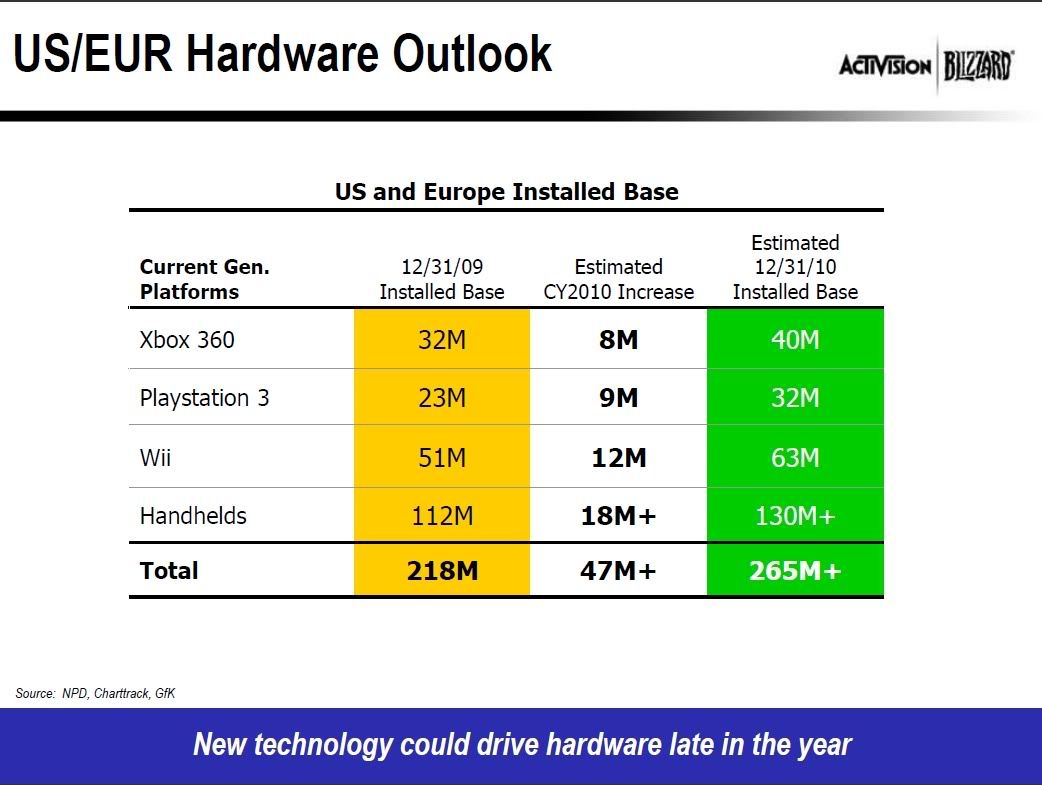
But what I don't get about this argument, is VGChartz isn't the only one saying this. Other trackers put the PS3 in their respective regions in about the same area. According to NPD, at the end of 2009, about 11.12 million PS3's had been sold in the U.S. VGC total Americas sales at that same time was 12,343,133 which is probably a pretty good representation of the rest of Americas outside of US for PS3 sales. We've seen GFK, Chart Track, and Media Create/Famitsu numbers all come up and either confirm our numbers, we adjust for their numbers (as Nintendo's financial report showed in a few areas which provided their numbers, or our differences between them are minimal.
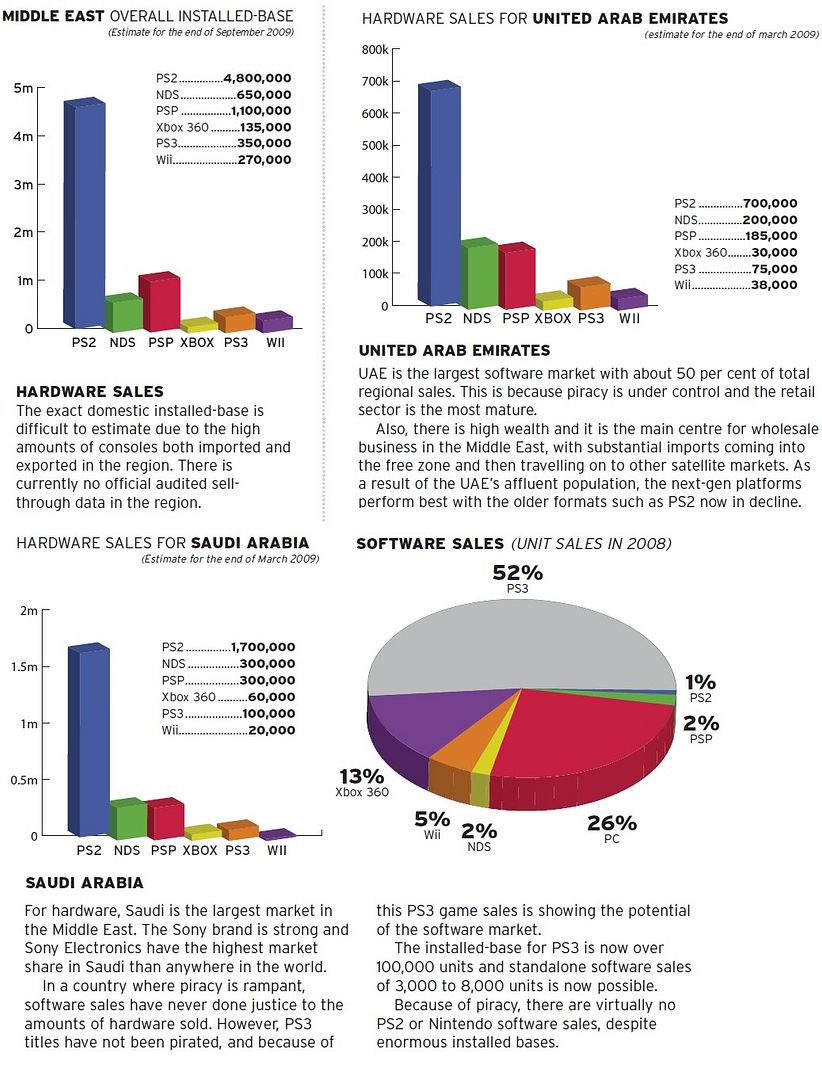
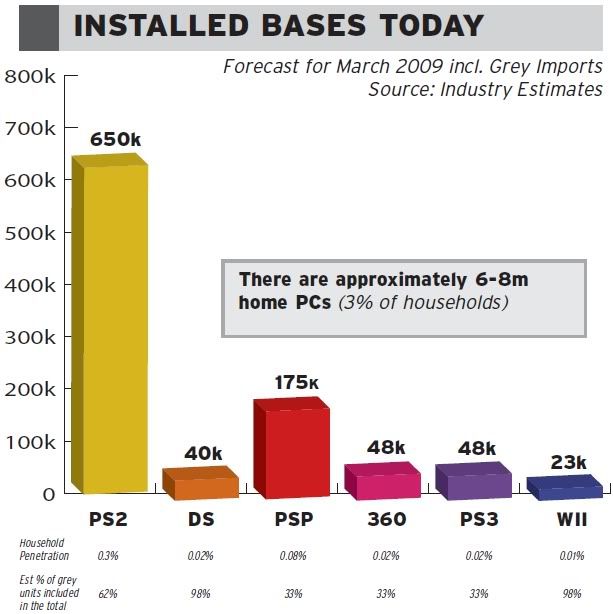
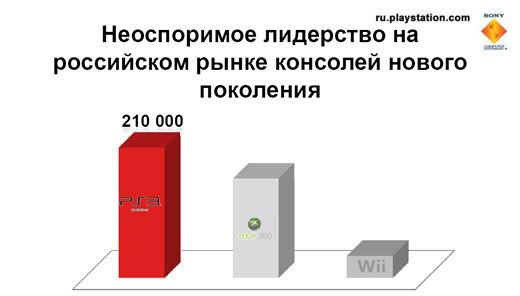
The point is, the other trackers agree with our numbers. If we are wrong, so are all of they. They are showing this same difference in shipped to sold that we are. The only territories that go unspoken for are of course the ones in Asia and central/south America. And it's hard to think we'd have a large enough discrepancy to be off by that much, and to even think that those markets are even big enough to cause that large difference.
I understand if there is only one source saying something, that we should be a little more skeptical. But there are multiple sources saying similar things to us or within a range where if we said exactly what they said the changes wouldn't matter.
But we are looking at this from to narrow of a view. 360 back at the end of 2006 had 10.4 million shipped and only about 6.75 million of that had been sold. And we understood why that happened. MS needed to hit a certain number that they have promised and they used some common moves by companies to get those sold to retailers or potentially "put in warehouses" kinda thing.
So when looking at Sony's numbers, why have such a narrow view. This kinda thing happened once before where us and the other trackers showed the exact same thing and a large discrepancy existed. I don't like arguing that Sony is trying to deceive us here, but they had numbers they had to hit as well. It's possible they did something like MS did. Even with shortages they could have gone back to their own method of counting ones sold to warehouses for storage rather than actually distributed out to retailers (I looked through their financial report and didn't see the usual asterisk pointing out what the numbers meant). Or they could have done something like MS did.
Hopefully this gives you the answer you were looking for and a little more insight than others have been giving, but I've been saying this for awhile. Not in any defense or attack on anything, but just pointing out the stuff others aren't.



















 ). However, after analyzing some of the numbers, I found some looking rather strange.