SvennoJ said:
haxxiy said:
That's still a shrinking potential market vs. older generations, though. I dare say it could be more monetized among younger cohorts only because radio is more prevalent among the old. 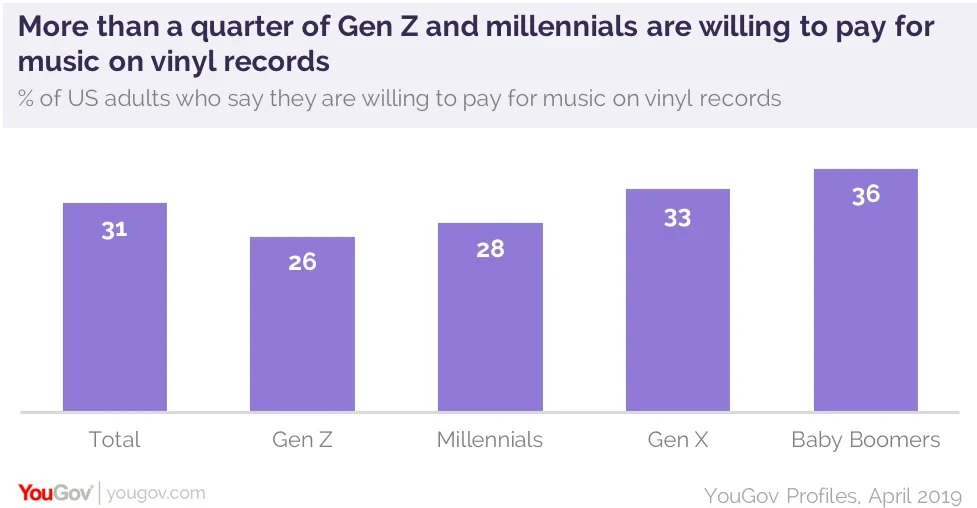
I wouldn't be surprised if Gen Alpha and beyond are even less willing to engage with physical, as their very definitions of 'retro' are different. |
It's 6 years later now, new data suggests otherwise:
https://www.musicweek.com/labels/read/vinyl-alliance-says-gen-z-is-now-the-driving-force-behind-the-format-s-popularity/091294 The proportion of people listening to physical music (vinyl, cassette and CDs) is greatest amongst those aged 18 to 24, based on research by Key Production. A new report from the Vinyl Alliance has explored why Gen-Z is embracing the format – including integrating it into their digital lives.
The survey of more than 2,500 vinyl fans worldwide found that over a quarter (76%) of Gen-Z vinyl fans buy records at least once a month, with eight in 10 (80%) owning a record player.
With nearly 30% declaring themselves as a ‘die-hard collector’, the report says Gen-Z vinyl fans are committed to regularly buying records and actively listening to them – rather than to keep just as collectible items.
Unlike Millennials or Gen-X, Gen-Z were born and raised during vinyl’s mainstream downturn during the mid-2000s (in favour of CDs, MP3 and streaming). The Vinyl Alliance says Gen-Z has adopted the format, giving a new meaning to vinyl culture. Gen-Z is the first ‘digital native’ generation to use social media to further their interest in records, collecting, set-ups and more.
The report shows half (50%) of the respondents collect vinyl as it provides a break from digital life, more than both Millennials (49%) and Gen-X (34%). Gen-Z is more likely (61%) than Millennials (53%) and Gen-X (27%) to replace digital habits with vinyl listening to improve their mental well-being.
For the spirit of this thread:
The carbon footprint of music streaming is significant on a global scale due to energy consumption by data centers, internet infrastructure, and user devices, even though per-hour emissions are lower than physical formats like vinyl or CDs. The impact comes from the massive volume of streaming data and the energy needed for powering and cooling servers, transmitting data, and running end-user devices. - An hour of streaming produces approximately
 5555 55 - This is significantly lower than the emissions for physical formats:
- A CD produces around
172172 172 CO2cap C cap O sub 2 𝐶𝑂2 - A vinyl record produces about $2.2kg of
CO2cap C cap O sub 2 𝐶𝑂2 - The carbon footprint of one vinyl record is roughly equivalent to streaming about 40 hours of music.
- Although streaming has a lower per-unit footprint, the sheer volume of global streaming adds up.
- In 2021, Spotify's total
CO2cap C cap O sub 2 𝐶𝑂2 - When considering all streaming services globally, the total emissions are substantial, highlighting the environmental impact of this convenience
And the cool thing about Vinyl is, you don't even need electricity to listen to them. Battery powered, still works when the power goes out ;) (Or one of those old time wind up ones with a big horn lol)
I'm sticking to CDs though as I mostly listen to music while driving. |