









Well. We actually came pretty close to a massive extinction event in the last few ice ages. Our carbon dioxide levels are so dangerously low most plant life would literally stop to grow if the ice ages sequestered a little more of it. The world's biomes would then be dominated by the few C4 plants that still thrive in such a low CO2 atmosphere. A fairly bleak scenario...
Anyways. If we had started climate research in tropical areas instead of temperate ones the ice ages would probably be known as the dry ages. Looking at our past the correlation between warm = wet and cold = dry is pretty much a reality for most of the planet.
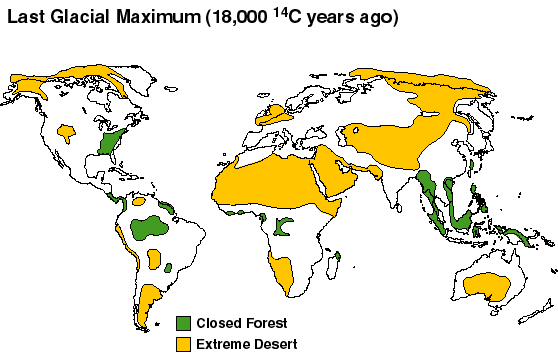
The last ice age.
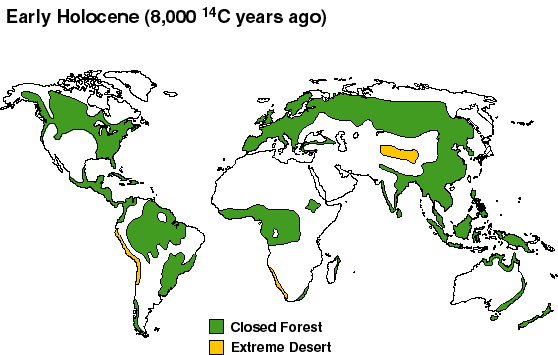
The last time the planet was a bit warmer than today.
So I don't know why we still believe we live on some sort of climatic optimum where every temperature increase would be catastrophic. Again, looking at the past, we are still on a less-than-ideal-for-life icehouse Earth, not a greenhouse one. As for the oceans - they were much, much hotter and acidic on the Eocene and the Paleocene, and overall biomass and diversity still increased, despite the loss of a number of benthic microorganisms.
Of course the effects of such a rapid climate transition on the environment are still to be known. Historically the planet had centuries and even millenia to adapt to climate change, though a few significant events still happened on the span of a few decades, like the younger dryas.


