










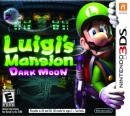
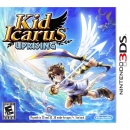
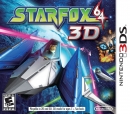
The Nintendo 3DS is like the second coming of the PS2.
It has 160Mtriangle/s which is 160 million polygons, and it also has way more better textures & shader abilities then the Wii.
The 3DS GPU drains 0.5 Hz when clock at 400 MHz (max clock frequency)
The 3DS has 2 advantages over the PS3:
More shader cores
More open world (it has 240p graphics with 160 million polygons on a 128 MB FCRAM)
Heres a list of 3DS library:
http://en.wikipedia.org/wiki/List_of_Nintendo_3DS_games
The 3DS has a 4-core 1 GHz CPU (Nintendo ARM11), but the PS3 has a 7-core 3 GHz CPU, so I can't brag here LOL.
The 3DS gets longer battery life with each firmware update.
You will be able to download full 3D movies from the eShop for $9.99¢, but with the PS3 you will need to buy $30 3D Blu-Rays, as well as a 3D TV to see any 3D movies on the PS3.
The 3DS takes 3D photos & records 3D videos & does 3D Augmented Reality.
the PS3 can only do sub-HD 3D in 24 fps per image, while the 3DS does sub-HD 3D in 60 fps per image with firmware 5.0.0-11 for all games.
The 3DS will continue to get new games for many years to come.
The 3DS is the best system to have if you like Japanese games, like I do.
The 3DS does 6 speaker surround sound via earphone jack VS. the PS3 5.1 speaker sound surround sound via USB.
The 3DS has lots of Zelda games like Virtual Console, as well as Zelda Ocarina of Time & Zelda A Lonk Between 2 Worlds, and Zelda Majora's Mask 3D.
The 3DS has a lot of New IPs, both 1st party & 3rd party, for example:
Dillon's Rollong Western
Sakura Samurai: Art of the Sword
Ketzal's Corridors
Spirit Camera: The Cursed Memior
And here's 3rd parties:
King of Pirates
Bravely Default
Project X Zone
Rodea the Sky Soldier
There are a lot more, 1st & 3rd party New IPs, but right now that's all I can think of off the top if my head.
I would suggest getting "Plantronics Gamecom 777" for surround sound headphones.
So here's what I found about the 3DS Tech: ARM11 In terms of instruction set, the ARM11 builds on the preceding ARM9 generation. It incorporates all ARM926EJ-S features and adds the ARMv6 instructions for media support (SIMD) and accelerating IRQ response. Microarchitecture improvements in ARM11 cores include: JTAG debug support (for halting, stepping, breakpoints, and watchpoints) was simplified. The EmbeddedICE module was replaced with an interface which became part of the ARMv7 architecture. The hardware tracing modules (ETM and ETB) are compatible, but updated, versions of those used in the ARM9. In particular, trace semantics were updated to address parallel instruction execution and data transfers. ARM makes an effort to promote good Verilog coding styles and techniques. This ensures semantically rigorous designs, preserving identical semantics throughout the chip design flow, which included extensive use of formal verification techniques. Without such attention, integrating an ARM11 with third party designs could risk exposing hard-to-find latent bugs. Due to ARM cores being integrated into many different designs, using a variety of logic synthesis tools and chip manufacturing processes, the impact of its register-transfer level (RTL) quality is magnified many times.[3] The ARM11 generation focused more on synthesis than previous generations, making such concerns be more of an issue. There are four ARM11 cores: PICA200Differences from ARM9
[edit]Cores
Specification


