









|
disolitude said: This was just posted yesterday. http://arstechnica.com/gadgets/2013/01/kindle-fire-nabs-33-of-android-tablet-market-nexus-7-just-8/
This means that 43% of the tablet penetration in US doesn't have Google play store, uses Bing as default search engine and uses Nokia maps. This also means that N7 isn't driving much marketshare for Google... So yeah Android has it's own problems on tablets. Only reason it's selling is because of price. If Microsoft and OEM partners or Apple start getting Windows based tablets to 199-299 level(which they will eventually), who in their right mind will buy an Android tablet?
|
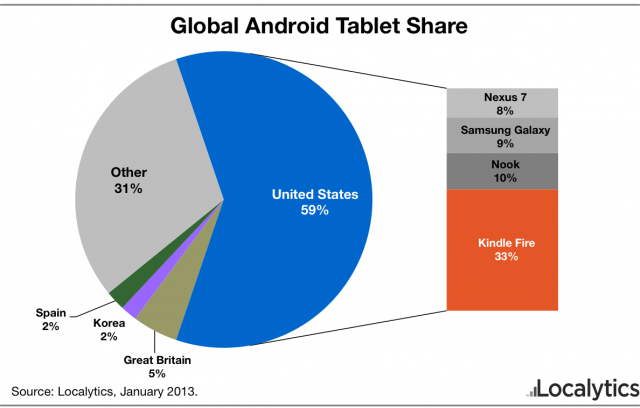
These data depends on the analyst and it only started to look this way this month after the hollydays. Overall, Samsung has 20~25% of market share in the global tablet market last year:

Despite that, N7 shipments are probably around 6 million now and that is a expressive number. As any Nexus device, it has a limited distribution and availability, it's much easier to get a Kindle. And don't give much credit to Kindle Fire, it will become way less important soon as we see new Android 7' tablets with that price (Acer announced one for US$ 99). Kindle Fire started the wave of US$ 200 tablets, but Nexus set the bar for US$ 200 tablets with powerfull hardware and a full Android experience. That is something that will be followed by the other manufacturers and will bring a lot of trouble for Kindle Fire.
And its not just price that is driving Android tablet sales, it's the healthy app ecosystem. Windows on US$ 200 tablet is not happening right now and will start with Win RT, that has less apps than Android since it can't run normal Windows apps. If the rumours about a full Office suit on Android and iOs are correct, Win RT will lose its only advantage and will be in a bad position. The full W8, that has more apps than Android or iOs, won't happen with x86 in cheap tablets and will be avaiable only in more expensive tablets and ultrabooks (of course, in tradicional laptops and PCs, but that is a different market).


