








A very interesting read, the article doesn't copy and paste so I will post some good bits.
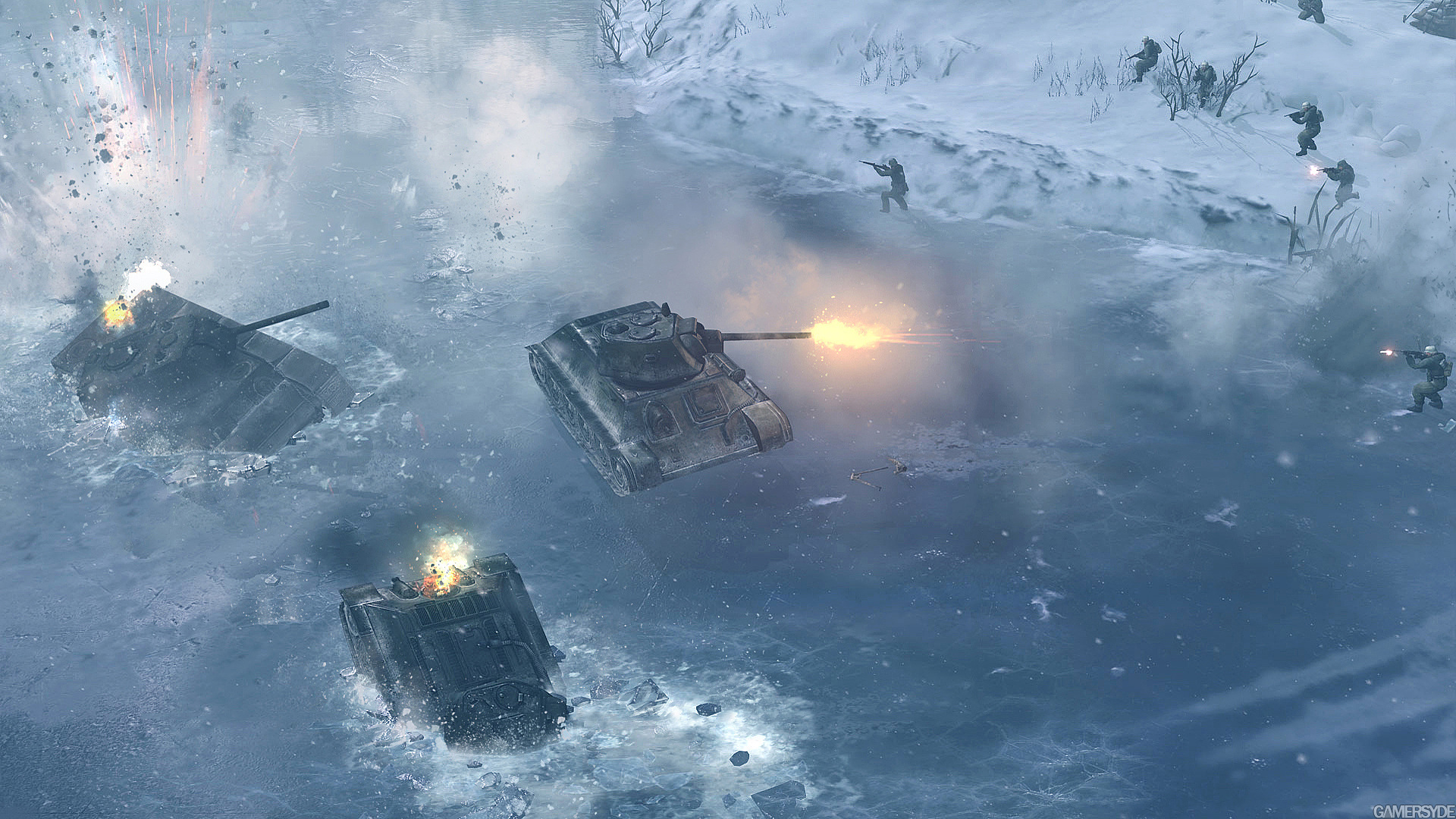
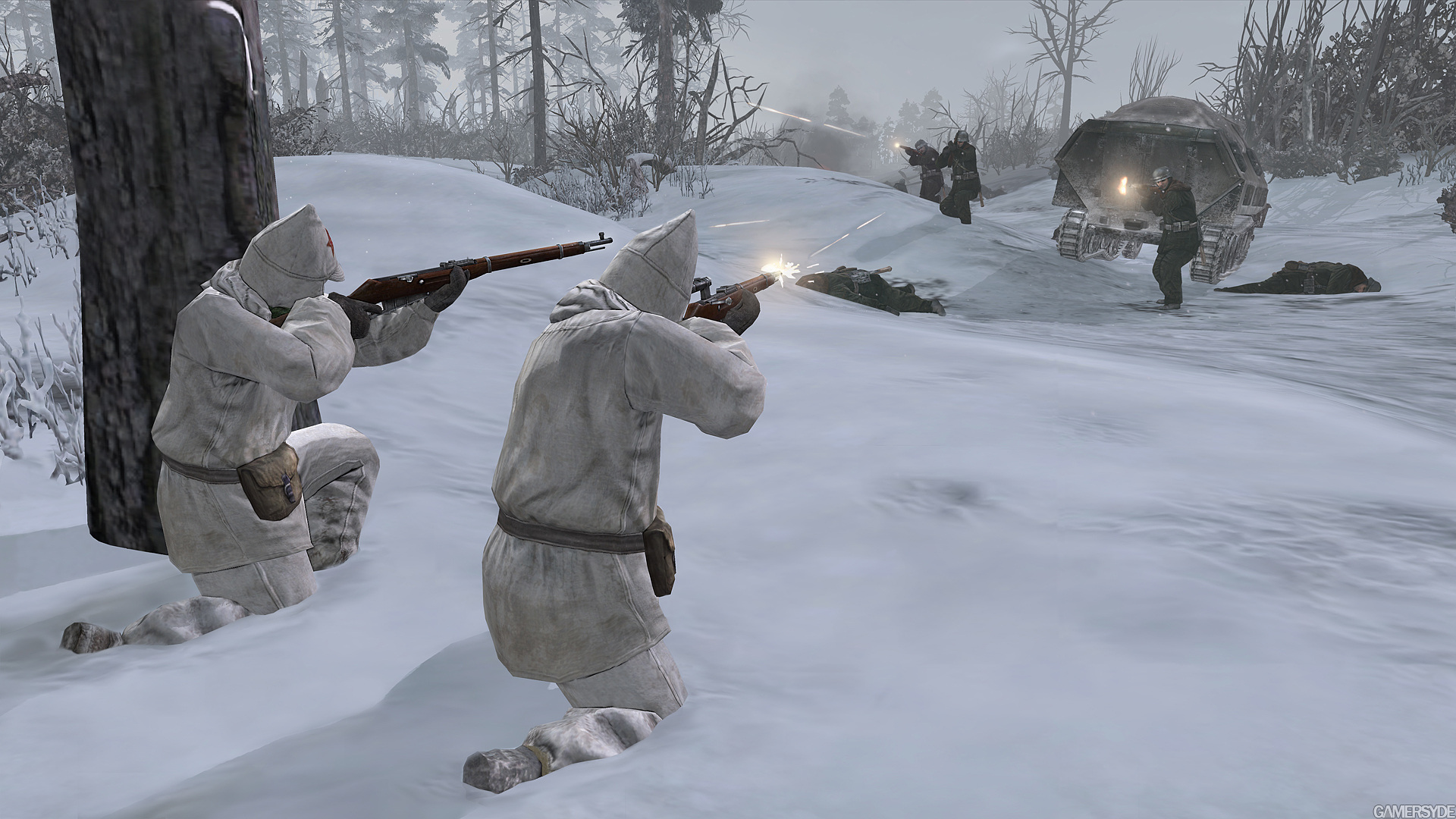
"While the rebuilt Essence Engine 3’s “cold tech” is a big part of the equation, there are more fundamental foundational changes in place. Pathfinding, the way units determine how they go from one point to another, has been changed completely. Formerly, every map had specific paths for each unit type scripted into the level. Now, each unit is governed by a basic AI that also extends to computer opponents. There are only objectives and strategies, which units use to navigate the world of Company of Heroes 2."
"We want our infantry units to always be viable, to try to make sure all the units in the game have strategies and viabilities as the game progresses," Duffy says. "So there's things like capturing and holding buildings, and you still need infantry for that. But what cold does is that it encourages different unit roles."
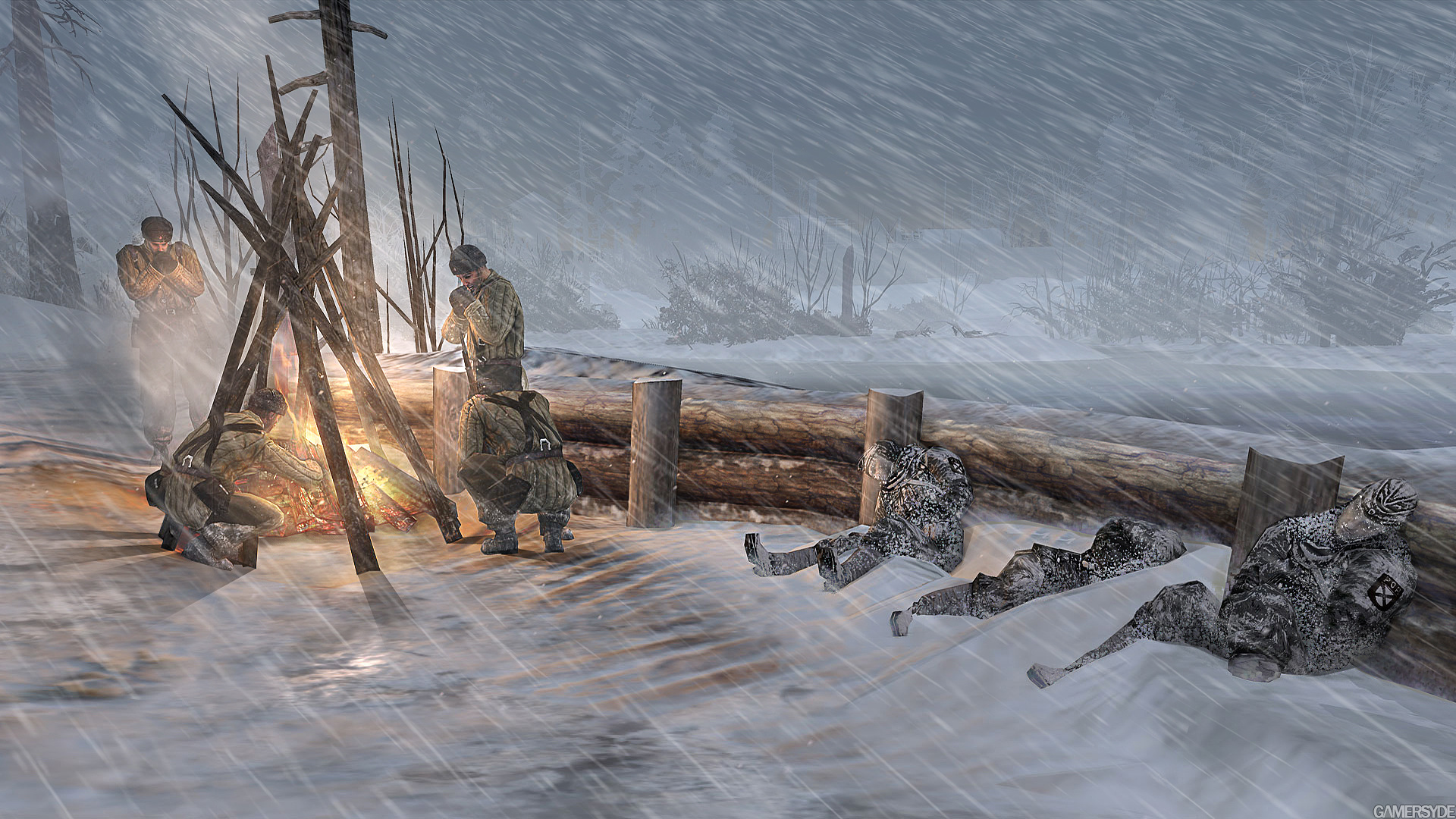
"Meanwhile, other aspects of the Company of Heroes design philosophy remain. Fires aren't reinforcement points for squads, and mechanized infantry, like half-tracks, will still be necessary to keep soldiers on foot alive and reinforced.
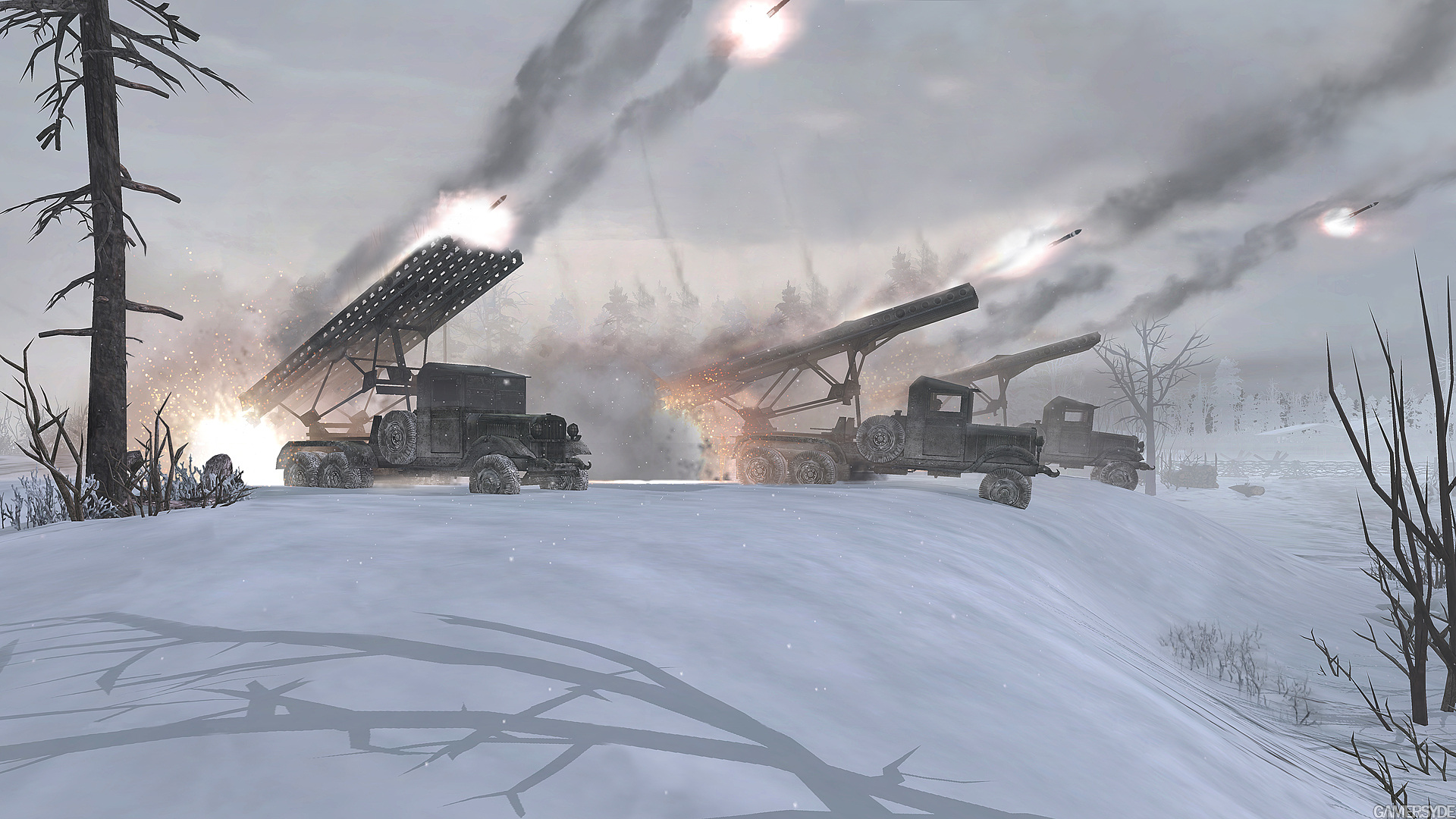
The new game also represents a chance to better capture the terrifying presence of armor and ordinance on the battlefield. "We're trying to capture the sort of fear and fearsome nature of these weapons. They were psychological killers as well." McDermott demonstrates a returning unit from Company of Heroes, the BM-13 Katyusha. The Katyusha, Duffy explains, was capable of laying down several football fields worth of destruction, a "politically reliable weapon.""
"Polygon: Are you hoping to mitigate the rapid slide to one side or the other with regards to multiplayer balance, or is that just part of COH as such a strategically dependent game?
Duffy: I think there are always surprises. When we go through the gameplay experience, and we've had many months of play experience, we find some sort of metagame strategies and the game evolves in slightly different ways as you go through development.
I think every RTS game has those challenges. There's always a metagame strategy that emerges. Whether it's a Relic game or a Blizzard game, they're complex, the strategies are very intertwined, and things will go ways you don't expect. There's a lot of emergent strategy in these games, and things like the ice in COH2, it should prove to be interesting.""
"It's hard to know exactly why any given game fails to meet sales expectations, but some educated guesses include what were, at the time, very steep system requirements for Company of Heroes. Prior to the release of Crysis, COH was one of the most resource-intensive PC games around, a strategy title with graphics competitive with contemporary action titles and shooters, and one of the most aggressive implementations of physics in an RTS up to that point."
"Duffy acknowledges the complicated technical situation the original game presented. "We sold a lot of graphics cards," he adds.
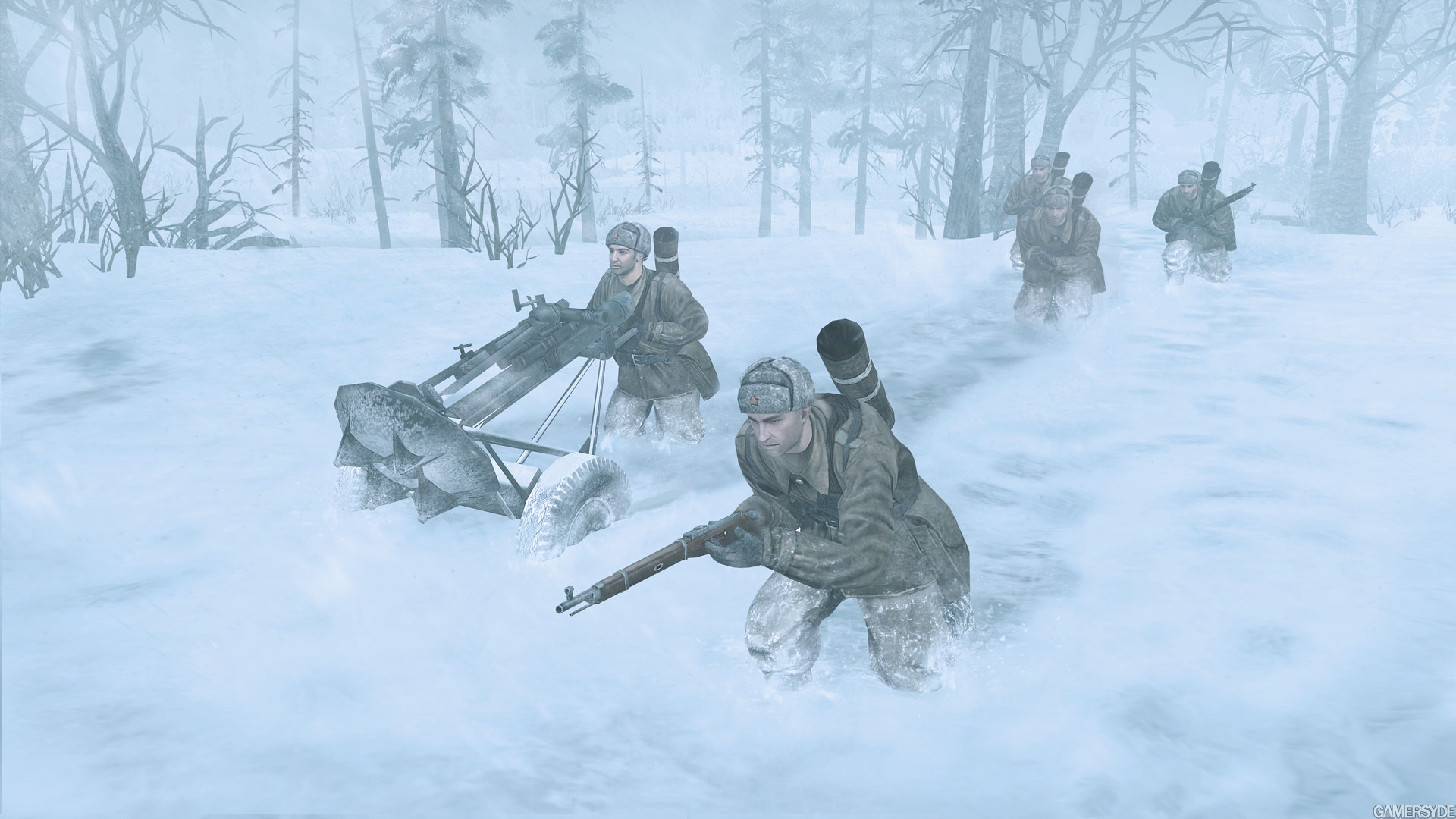
Relic has taken the component parts of their engine and streamlined and rebuilt with the capabilities of modern PC hardware in mind. "We've rebuilt our renderer and have really focused on optimization to hopefully mitigate the performance risks and get the game on a wider variety of machines," Duffy said. "But we've built these new features into the system," he admits. "We can't take terrain deformation out, because for us, that creates cover. If you take that out of the min spec, there's a disadvantage or the game isn't going to work properly. And tank tracks and the like are part of that as well."
However, Company of Heroes 2 isn't a complete compromise. The new engine is currently specific to DirectX 10 and 11, and DirectX 9 support isn't assured. The studio is currently working to see how comparable they can make the experience for older cards, given the absolute necessity of some features to a level playing field online."
"We don't have our min-spec set, but we're very confident we want to get this on as many systems as possible. But at the same time, we can't sacrifice too much out of the experience. We love the way the game looks and feels."
"Having played enough Company of Heroes to dread the update process, I ask Duffy if the move to a fully Steamworks-integrated title will streamline the patch process for Company of Heroes 2 by comparison. "Yeah, there shouldn't be five or six patches sequentially anymore; there should just be one patch," he says. He brings up the Opposing Fronts collection as an example of how convoluted the patching process became with Company of Heroes. "When we released 'Opposing Fronts,' everybody had to download it, which was about a gigabyte for everybody playing the game. That was kinda nuts. We wanted to try to fix that.""
"The elephant in the room for any big-budget PC title in 2012 and beyond is the hardest question to bring up, but I wonder aloud if there's a sense that the window is closing to release the kind of game that Company of Heroes 2 represents: the retail PC exclusive. I ask if there's a perception at the studio that there won't be many more chances to release a game like this, that took this much money, that required this much investment.
"I don't think so," Watts replies. "When you actually look at the numbers, there are crazy numbers out there for what people are writing off as dead. And the strategy genre has expanded, not contracted. There's an influx of new people."
"Things are changing," Duffy admits. "There will be an emergence of new business models, new delivery methods, new finance models, new development processes. Things are going to be interesting for all us in the next several years as we figure out how to adapt and what we bet on. I think creating quality games will continue to be a viable business. When you make a good game, people will come to play it.""
Be sure to read the full article
http://www.theverge.com/gaming/2012/7/24/3180751/company-of-heroes-2-preview

 @TheVoxelman on twitter


