







 Currently Online






| Dodece said: We think of the Earth as being special for any number of reasons, but this is perhaps in the grand scheme of things the most incredible of them all. Earth like planets might not be rare, but what has to be exceedingly rare is for such a planet to also have a moon. That not only passes between the planet and the star, but is of almost the exact size to blot out the star. The chances of such a confluence have to be ridiculously small. In fact this hasn't even always been the case. The moon is receding over time so billions of years ago it was bigger, and in a billion years it will not totally cover the sun. We really should appreciate how truly lucky we are to have such a magnificent astronomical site in our own back yard. Thanks for posting I have to figure out the best vantage point. I probably won't be seeing it from my back yard, because the sun sets behind the tree line, but maybe down the roads a way. I would have hated to miss this. |
It's not a full eclipse this time, the moon is too far away this time. The distance varies between 363,300 km and 405,500 km.
This time the moon is near it's apogee so we have an annular eclipse.
The moon orbit is messy.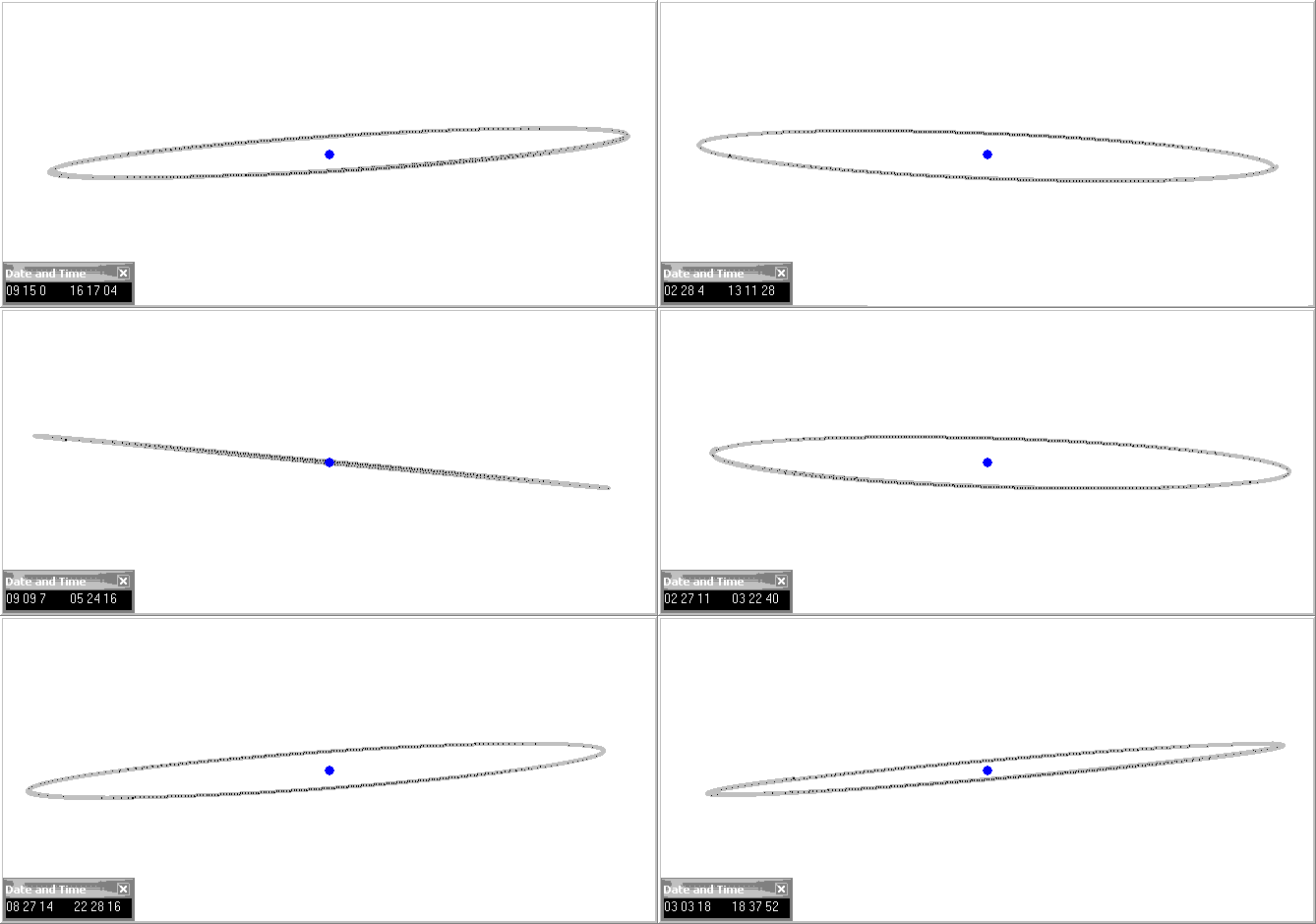
I don't know how rare the sun, earth, moon combination is but the number 4 comes up a lot.
The sun is 400 times larger then the moon and 400 times further away, while the moon is 1/4 the diameter of earth.
And yes we're losing the moon at 3.8 cm a year, in exchange we get longer days at the rate of 2ms per 100 years.
We don't have to wait billions of years, in 1.1 million years the closest the moon will get is the furthest is gets today.
I guess we live in a special time since we get both types of eclipses, 1 million years ago there were only total eclipses.


