











| Alphachris said: First of all I want to appreciate your discussion style. Further I have to say that english is only a foreign language to me, so I hope that I could deliver what I actually would like to say and there is nothing lost in translation. @ Cartoon violence. I can see how bugs bunny, road runner or tom and jerry are funny. But why? I think it is because they have accidents that normally would kill someone, but they only scream, have a headache, and return to being unhurt with no further traces of the accident. The action seen is not corresponding to the expectation because it is against any logic. And there is no lasting effect or consequence of the injuries. In GTA you shoot people, they try to run away, scream and die. Nothing unexpected happens. I can see that being chased by police for murder is an absurd situation if you would never do it in real life, but that novelty wears of fast... Mao did make it sound like this is the main reason for playing, not just fooling around for a short time and then return playing. And playing games like GTA4 mainly for those purposes is something that I find wrong...just my own moral opinion. @ FF XIII. OK, we we are coming to a deadend. I don't mind reading some background information in menus. In Kingdom Hearts you can also read some further details in the chronicles... But I must say that in Oblivion you find Books with the backstory of the game. Did you find it a bad thing to have to read it there in the menu screen too? @ FF VII. Maybe I couldn't make it clear. Sacred had 500 sidequests, but the main story suffered heavily because there was not put enough work in it and in the end it felt pretty weak. In the end, it made almost no difference if you made 20, 50 or all 500 sidequests. Some of them did give you really strong items, but most of them were just there to lengthen the gametime, giving no real benefits or interesting story. You could have spent the time killing random enemies and could gain comparable rewards regarding xp, money and equipment. In a way they felt totally senseless for me. The Sidequests in FF7 however were mainly accessable at the end of the game and brought major benefits. You felt an enormous impact on the game after you did them (not storywise though). The Knights of the rounds summon and the level 4 limits were among the most powerful items, so those sidequests felt meaningful after doing them. Most of them had a clear impact on the game and you could not substitute the items by any means. @ Depth. Well, let me explain this with an example. I will use FF X and Oblivion, since both are RPGS. Its difficult to compare different genres and we have GTA, RDR, Infamous, AC as sandbox games, that are more Action games. In FF X you have the main Story that builds around the fight against Sin. The Main quest has a deep influence on most inhabitants you encounter. They have lost friends or family through attacks, are afraid that he is attacking again, they hate on the Al bhed because they think they are the reasons for Sin being there... So you get the feeling that your quest is really important. The whole story up to that part is centered to prepare the magic moment in the Al Bhed HQ. This Moment is so intense, because there was a linear set of events like A-B-C-D==>E. How can you give more freedom into that. If you alter the Sequence like A-E-C-D-B you will lose intensity because you left out C,D and B. Seeing it that way,given that you get most out of a certain cutscene/storyszene CS if you have seen several events A-Z before and you do not want to put that certain cutscene at the end of the game. How can you ensure that people get all these events A-Z before they see cutscene CS when you give them total freedom? Hmm, some games try to give several questgiver, with each one having a linear sequence of quests. You can choose between the 4 questgiver, but it would still be mostly linear. The problem with this solution is the pacing of the game. If it is totally linear, you can raise the difficulty level according to the progress and you can assure, that you have a certain ability needed in Event E that you got in Event B before. You can adjust the difficulty level and gameplay because you know what people can do. If you give total freedom of doing the events A-Z in any order you cannot adjust the gameplay. You have to regard that the player could choose any of the Events as first event and has a low level, no key abilities etc. How do you choose how strong the monsters should be in a certain area when there is no set order, when you should be there? If you do not adjust, you wander in a new area and are killed by the first blow. Hmm, Oblivion made it so that the monsters level with you, but that was a bad system in my opinion because it somehow eliminated the sense of leveling up. Ok, so if there is a sequence of events, that is needed to get a sort of "magic moment" freedom is most likely to hurt the intensity of that magic moment in my opinion. You need a special level system to ensure that every single event/area is beatable as first event and you may not use key items or key abilities in certain areas/eventes because there is no way to ensure that a player got the necessary item/ability in the first run without the need of major backtracking. So gameplay variety may suffer from freedom, too. Ok, like I said I felt pretty connected to FF X, because the people cared about your main quest. I felt, that it has an impact on the gameworld. In Oblivion I can't really connect to the main quest, because i got almost no feedback. The character was silent and never showed any emotions (like you mentioned that was intentional, so you could feel for yourself). The Ego-perspective is pretty bad for storytelling, because you can not see your characters face. Seeing the facial expression of your character in emotional situations add to the intensity (ok, I could put a mirror besides the TV...). The story was mostly told through dialogues, where you see a closeup of you dialogue partner. But the dialogues are not spoken very emotional (German translation at least), the animations of the characters during the dialogues were bad, they were only standing there. The scene where Seymour was killed and his servant saw his dead body, running out of the room and calling for the guards felt more intense than the dialogue with the guardian after the king was killed.... Ok, you got your main quest, you set out on your journey to save the world, but when I talked with the townsfolk I did not get the feeling that the main quest has a big impact on them. In Fact, after like 30 hours in the game I did not get the feeling that my quest was of any importance to the world. I mean, you are on the way to save the world, but the normal people want you to do some simple sidequests. Do they not fear the threat? Ok, and while the world is on the brink of destruction I settle out to become the head of a guild. Where is the sense? You are head of the thieves guild and the world ends the next day... those factors were all small parts of why I think that the freedom destroyed the intensity of the world for me. |
To be honest, I didn't notice any bad English so obviously your English is very good!
@ cartoon violence. You're right, their are no effects, but neither are their any real-world effects on the pedestrians you kill in GTA. They aren't enough like humans for most to associate it (even if they're meant to be) and therefore it comes off as dark humour. If they were more human-like, it starts to become more disturbing.
Part of the reason GTA games become popular is that more casual gamers can pick it up for 30 mins to an hour, have some mindless fun, and then put it down and not touch it for another few days to weeks. I know a few people that never even bothered with the story mode and just used it as a way to kill 30 mins of their time.
@ FFXIII. It depends on how it's done and I don't like having to go to what is effectively an encylopedia of information in a menu for back story. In Oblivion the books are done with minimal menus (pick it up and read) and retain more immersion and the quest log is rarely more than a recap of what you've just learnt anyway. And a lot of back story into the world is revealed through conversations, eavesdropping and exploration so their are more options.
@ FFVII. I think I understand where you're comming from as I have played through the game about 5 times :P. Quantity of side-quests can have an effect, although I think if done well, side-quests can be interesting and rewarding in open world games. In Oblivion and Fallout 3 for instance, a lot of side-quests have a visible effect on the world and reward you with unique items. It's really dependent on the developer. In too many cases side-quests are just reptitive nonesense.
@ Depth. This is quite a nice comparison for me as I've recently started another playthrough of FFX.
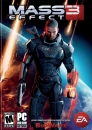
I know what your trying to say, but I'm not sure we mean the same thing by depth. If you mean depth of characters, then with this comparison I'd agree. Characters in Oblivion come off as wooden compared to FFX. The poor animation and voice acting doesn't help. Again however, I think the blame has to go more with the developers than the freedom of the world. Had they improved the character animations and voice acting, then the characters would feel more real and you'd be able to relate more with them. Also, I think your issue with not being able to see the main characters emotions is more to do with the first-person nature than freedom. In Mass Effect for instance, which is 3rd-person and offers great freedom, you can see the emotions of each character, and the characterisation and emotions are conveyed much better than most games.
If you mean depth of world and storyline, I think the world of Oblivion and the overarching story of the Elder Scrolls is one of the most fleshed out in video games today. The turmoil between different races and cultures (the issues of slavery being legal in certain provinces and the inherent racism of Argonians vs Khajit), the politics and in fighting of different guilds and rich history of the Daedra and extinct races like the Ayleids. I don't think there is any less depth in the world or story of the Elder Scrolls series than the Final Fantasy series.
With Oblivion, I think your issue about people not responding to the events is somewhat false, it's just a lot more subtle than in FFX. In FFX you visibly see it through cut-scenes and story segments. In Oblivion you hear people talking about the Oblivion crisis, the fall of Kvatch and they proclaim you the "hero of Kvatch". NPCs care, but the Oblivion crisis has only really started, so people are still going about their daily business. They probably should have had more link between the guild quests and the crisis, but I think it made a lot of sense that the commoners of Cyrodill still felt somewhat protected by the guards and their leaders. Very few would have travelled and seen the fall of Kvatch even if they heard it second-hand and very few are told all the details of the world. Maybe I can relate to this attitude more because I live in London, where we're constantly being told of terrorist attacks, but everyone still goes about their daily business, even the day after the 7/7 bombings.
I think the intensity and pacing is more what you have an issue with as it's very difficult to get right in an open world game. If people stuck to the main quest in Oblivion I think it'd be easier to retain intensity, but it's incredibly easy to get side-tracked and some main quests do actually need you to level up a little before completion. On the levelling issue, I think this is very much down to personal preference. I know a lot of people complained about the way Oblivion did it, but not just because they want tiered enemies and areas but because they want to face high level creatures early on and be forced to flee as they find that makes the world more immersive.
And with FFX, there are ways to distract you from your main quest, they're just fewer of them. Blitz-ball would be the most obvious one (which I loved). The same complaints can be levelled at the Blitz-ball mini-game as with side-quests in Oblivion. Sin is destroying towns, Yuna is on a pilgramige to kill Sin, Tidus is Yuna's guardian yet every so often he finds time to play Blitzball in a league and in tournaments. Maybe you didn't play as much Blitzball as I did, but I thought it was great!
Finally, I'll again point you to Planescape Torment, an old PC title but the character's inner turmoil has a huge impact and shows a level of depth not seen in nearly all computer games.


