






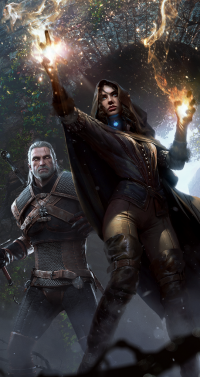


full article at http://www.gamasutra.com/view/feature/6121/from_ancient_greece_to_halo_art_.php but here is a snippet.
[Former Sony Computer Entertainment artist Chris Solarski takes us on a tour of art from classical to modern, and in the process shows how film and game art are underpinned by foundational concepts.]
The notion that artistic ability is a divine gift has proliferated throughout history -- it's an idea often propagated by artists themselves. However, Michelangelo, the Renaissance genius did, in fact, experience the odd lousy day of drawing just like the rest of us. He burned many of his sketches to conceal the intense work and discipline that was vital to the creation of his masterpieces.
"If people only knew how hard I work to gain my mastery, it wouldn't seem so wonderful at all."
This point is not intended to dismiss Michelangelo's abilities, but rather highlights that a successful artwork doesn't generally just happen. Art that has a lasting appeal is predominantly the combined outcome of three elements: training, discipline, and natural ability.
Artists today have over 2000 years worth of artistic principles to draw from, including principles on form and composition to developments in color theory and light.
What these principles constitute is our visual vocabulary. Artists can play with the viewer's eye like never before to not only create believable other-worlds, but to also manipulate how viewers will receive these worlds in terms of emotional significance.
Despite the empowerment these principles give us to communicate visually, the theoretical aspect of art has been somewhat sidelined in the last century. With the arrival of modern art it is often no longer a case of artists concealing their hard work and knowledge of artistic principles, as with Michelangelo's sketches, but ignoring these principles altogether.
Whilst overemphasis on theory can indeed inhibit creativity, in the field of video game development we are especially interested in taking advantage of traditional artistic principles to enhance the player experience. This is because our task is to design a player experience, meaning a deliberate attempt to influence an emotional change in somebody. It is not simplyany emotional change.
Surprisingly modern art, a period that has actively sought to sever itself from tradition, has contributed many new devices to our visual vocabulary that naturally build on what came before. At the same time, this very same movement has had a negative impact on the education system. What does this mean for the video game development industry and video game artists?
To investigate these questions we must journey back to the beginning of Western art before evaluating the impact that tradition can have on contemporary design. By doing so we also examine whether arts evolution is a continuous thread of development or a series of isolated artistic movements.
Our journey starts in ancient Greece and focuses on a principle often missing from applied art courses; something that influenced subsequent generations of artists such as Michelangelo:applied geometric forms. No divine blessing required, although that always helps.

 @TheVoxelman on twitter


