

Wii are disappointed with Nintendo
Written by Domenico Pellegrino ,Contributor
Wednesday, 28 October 2009
http://www.excal.on.ca/cms2/index.php?option=com_content&task=view&id=7555
I slept overnight at Best Buy in frigid November weather to get the Nintendo Wii – and I hate it.
I remember excitedly waiting with my blanket on the sidewalk with legions of fellow fanboys trying to secure the highly coveted Wii. The naive optimism of gamers, those who have played and loved videogames since childhood like myself, waned when they realized the software lineup was unimpressive.
The flagship title, Wii Sports, was a skeleton of a game.
Wii Sports contained five mini-games, from tennis to boxing, with miniscule motion control. Gamers forgave the Wii at the launch for being immune to standard issues of consoles in their infancy. What gamers like me haven’t forgiven is the lack of significant improvements since then.
Back in 2006 when Nintendo announced its latest game console, the Wii, the industry was buzzing. Nintendo promised a revolutionary and immersive motion-sensitive game controller, affectionately dubbed the Wiimote by fans. The potential applications were limited only to the imagination of gamers and Nintendo’s efficient public relations.
Nintendo urged people to envision wielding the Wiimote like a gun to obliterate alien hordes in a new Metroid Prime, or using a Wii steering wheel in a Mario Kart Wii race car. They publicized an assortment of other concepts that exhilarated the gaming industry. In actuality, the motion technology was not and still is not fully realized in any of the Nintendo
Wii’s games to date. The Wiimote appeared capable of precisely mimicking a players’ movements.
At the E3 gaming event in 2008, Nintendo made it clear that the casual gaming market is the company’s new direction
Games that utilize the controller, however, exposed the console’s inability to perform. The hyped action game Red Steel, for example, contained instances of motion combat consisting of shaking the controller manically at enemies on screen until they died.
The Wii is also plagued by third-party shovel-ware, games that are produced very quickly with next to no quality, like Wacky World of Sports, that have tacked motion control onto the game without adding any value what so ever. Nintendo responded to the Wiimote’s mediocrity by recently releasing the Wii MotionPlus, a controller add-on meant to improve the gesture limitations.
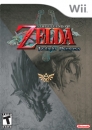
Wii games with superb critical reception use motion control sparingly, if it all. Legend of Zelda: Twilight Princess and Super Mario Galaxy are examples of well-received games that return to the familiar two-handed motionless control scheme of every other non-Wii game. The lack of stellar titles wholly integrating gesture manipulation is troubling, considering the pre-launch hype implying a gaming revolution. Instead, hardcore fans are alienated by the hordes of games geared toward casual players and barely appeased by a smattering of acclaimed releases.
Worst of all, the console feels like a novelty. Recent Nintendo-developed titles, like Wii Music and Wii Fit, earned only modest critical reviews, even from a casual gaming perspective.
Playing Frisbee with a virtual dog or practicing yoga on the Wii Fit’s pricey mat are a far cry from what was promised. This is reflected in the 2009 Nielson survey which suggests the Wii, although the highest-bought console on the market, has the fewest active users. It appears that the novelty wears off fast. At the E3 gaming event in 2008, Nintendo made it clear that the casual gaming market is the company’s new direction. Sales of the Wii place Nintendo as the most commercially successful console developer of this gaming generation.
Nintendo’s shift in market focus procured the company a sizable hardware lead, with about 55 million consoles sold worldwide. This is likely due to the fact that a cheap and relatively simple gaming console appeals to the non-gaming public.
Sony and Microsoft are responding to the Wii’s enormous success. Sony announced a motion controller and Microsoft unveiled an ambitious full-body gesture recognition device named Project Natal.
Although game content is speculative at this point, Sony and Microsoft are certainly following the casual gaming model laid by Nintendo. We can only hope that they stay faithful to their core gamers and provide good content using new control schemes.
Gaming is being reorganized and the industry is looking to the Nintendo-dominated casual market for profit. Hardcore gamers should be crossing their fingers in the hopes that the new trend doesn’t abandon them in the process.