By using this site, you agree to our Privacy Policy and our Terms of Use. Close

Forums - PC - Linux Anti-capitalist???

Apparently there is some resistance within governmental agencies to the adoption of open source programs and open protocols due to a belief that the nature of open source is essentially anti-capitalist in nature. Now I'm about as conservative and capitalist loving as any one here but that is ridiculous charge. I'm sure such CORPORATIONS such as IBM, Red Hat, Novell would strongly disagree.


Source - http://www.computerworld.com/action/article.do?command=viewArticleBasic&articleId=9128700&intsrc=news_ts_head">http://www.computerworld.com/action/article.do?command=viewArticleBasic&articleId=9128700&intsrc=news_ts_head


Kickin' Those Games Old School.       -       201 Beaten Games And Counting

Around the Network

*RED* Hat, you say?


Mr.Y said:

*RED* Hat, you say?

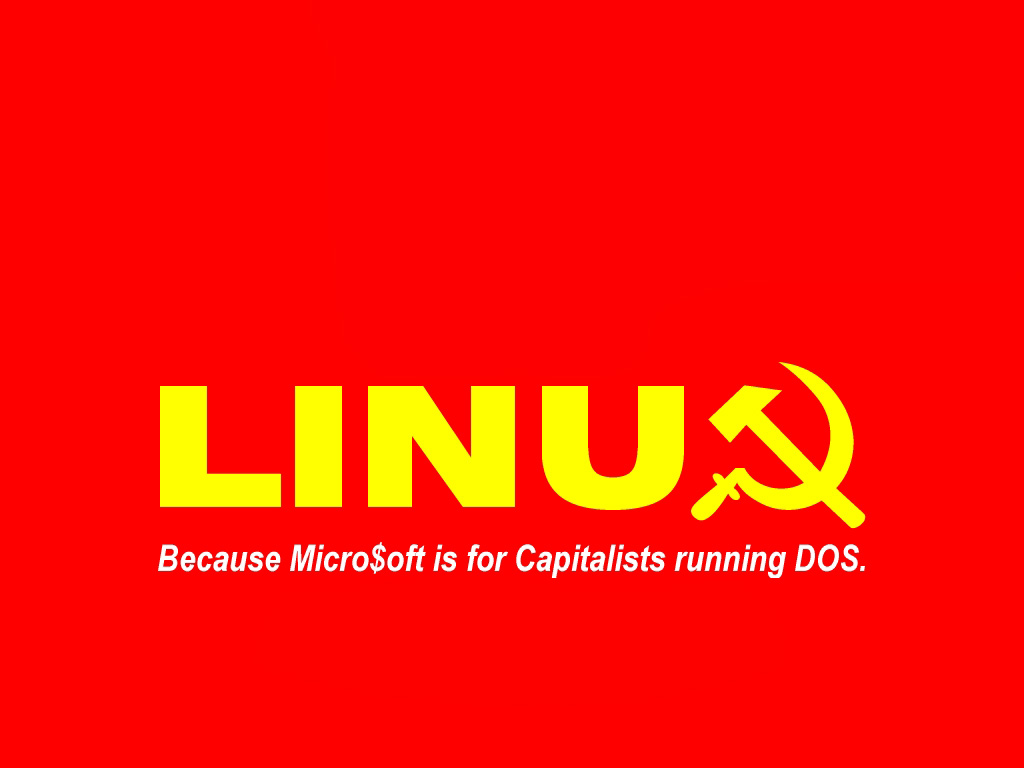
LOL good one. Reminds me of a pic i once saw

I don't agree with it, but your comment made me remember it.

But seriously an open source solution would be the best tool for governement agency security, they could know what every byte does, which is important in the prevention of installing spyware, which could prove dangerous to national defence and other military secrets.

edit: this is even funnier and proves your point further


Kickin' Those Games Old School.       -       201 Beaten Games And Counting

It would be taking conservatism pretty far to object to the fact that there is no creator who is continually getting paid for each copy of Linux (which in turn is what makes Linux cheaper for governments to use). 

As you point out, there are still corporations selling copies of Linux.  I wonder whether that matters.  Can't folks get  ubuntu and certain other versions for free?  Don't conservatives want to decrease the cost of government?  Or wait, is it really that they always want to make sure money is being funneled into the hands of capitalists, even if the government has to facilitate the funneling?

Anyway, the executive agencies are going to be cleansed of some of the more ideological and negligent types from the last few years...

Wait.... Red Ring of Death?


Loud_Hot_White_Box said:

It would be taking conservatism pretty far to object to the fact that there is no creator who is continually getting paid for each copy of Linux (which in turn is what makes Linux cheaper for governments to use). 

As you point out, there are still corporations selling copies of Linux.  I wonder whether that matters.  Can't folks get  ubuntu and certain other versions for free?  Don't conservatives want to decrease the cost of government?  Or wait, is it really that they always want to make sure money is being funneled into the hands of capitalists, even if the government has to facilitate the funneling?

Anyway, the executive agencies are going to be cleansed of some of the more ideological and negligent types from the last few years...

Wait.... Red Ring of Death?

In the open source model that Red Hat and Novell use, you get the software for free and they provide support documentation and live phone support at a price - Around $350 a year for RHEL for servers and $80/year for desktops.


Kickin' Those Games Old School.       -       201 Beaten Games And Counting

Around the Network
Nickelbackro said:
Loud_Hot_White_Box said:

It would be taking conservatism pretty far to object to the fact that there is no creator who is continually getting paid for each copy of Linux (which in turn is what makes Linux cheaper for governments to use). 

As you point out, there are still corporations selling copies of Linux.  I wonder whether that matters.  Can't folks get  ubuntu and certain other versions for free?  Don't conservatives want to decrease the cost of government?  Or wait, is it really that they always want to make sure money is being funneled into the hands of capitalists, even if the government has to facilitate the funneling?

Anyway, the executive agencies are going to be cleansed of some of the more ideological and negligent types from the last few years...

Wait.... Red Ring of Death?

In the open source model that Red Hat and Novell use, you get the software for free and they provide support documentation and live phone support at a price - Around $350 a year for RHEL for servers and $80/year for desktops.


Actually RHEL and SuSE are sold (aka not free).  However both have free companion distros (Fedora and OpenSuSE).


On the contrary, I think Linux is the product of a free market, and Linux's lack of success is due to the market not being free enough (see also: my personal vendetta against Microsoft). The FOSS movement shifts focus to selling services around the software, which gives incentive for the companies to make the software free, interoperable and high-quality.

If a major Western government decided to adopt open-source throughout, it would save them a massive amount of money. The interface and programs are mature enough now that switching would be about as hard as XP -> Vista (look how different Office 2007 is to 2003 and tell me retraining costs are low by sticking with MS).

Doing this would force major software companies to drop prices and improve their products in response. This is called "competition". I don't think Adobe, Microsoft, etc. have been subjected to that for some time.


Words Of Wisdom said:
Nickelbackro said:
...

In the open source model that Red Hat and Novell use, you get the software for free and they provide support documentation and live phone support at a price - Around $350 a year for RHEL for servers and $80/year for desktops.


Actually RHEL and SuSE are sold (aka not free).  However both have free companion distros (Fedora and OpenSuSE).

Well, not really. They are free, as in you can get the exact same source code as RHEL/SLED and compile it yourself without their branding to have a functionally identical thing. CentOS is RHEL in this respect. Fedora/Opensuse aren't clones of RHEL/SLED; they tend to be developmentally ahead but more unstable (in fact they function as testing grounds for future commercial releases).


Soleron said:
Words Of Wisdom said:
Nickelbackro said:
...

In the open source model that Red Hat and Novell use, you get the software for free and they provide support documentation and live phone support at a price - Around $350 a year for RHEL for servers and $80/year for desktops.


Actually RHEL and SuSE are sold (aka not free).  However both have free companion distros (Fedora and OpenSuSE).

Well, not really. They are free, as in you can get the exact same source code as RHEL/SLED and compile it yourself without their branding to have a functionally identical thing. CentOS is RHEL in this respect. Fedora/Opensuse aren't clones of RHEL/SLED; they tend to be developmentally ahead but more unstable (in fact they function as testing grounds for future commercial releases).

They are not free in the respect that if you get CentOS instead of RHEL, you are getting CentOS.  Nearly identical (compiled slightly differently) distros are still different distros.

I never said they were clones so find another strawman to knock down.  I know the history of them quite well and have personally used all but the original Fedora (Core) distro.  Fedora is actually my favorite series of Linux too and it's not unstable.  That's a stupid myth that should have died long ago.


Nah, OSS is not "Anti-Capitalist" simply because a government official said so. If anything I view the government under Obama as trying to save face and be as "Capitalistic" as possible. So saying things that aren't exactly true isn't beyond them at this point, imho. It could also be that they are simply trying to "stimulate the economy" by spending more money than they need. *shrug*