






By using this site, you agree to our Privacy Policy and our Terms of Use. Close

Forums - Politics - Israel-Hamas war, Gaza genocide

Main points for December 7th

  • Israeli attacks on two southern Lebanese villages killed six people and wounded five, the Lebanese Health Ministry says, in the latest potential challenge to a fragile ceasefire.
  • Renewed Israeli attacks on Kamal Adwan Hospital cut power to the critical northern Gaza medical facility and wounded four people, including three children.
  • Israeli attacks killed at least 40 people across Gaza on Saturday, including a bombardment of several homes in the central Nuseirat refugee camp that killed at least 26 people and an attack on a house sheltering displaced people in as-Saftawi, north of Gaza City, that killed four women.
  • Hamas has released a video claiming to show a living captive in Gaza, in which a man who introduces himself as Matan Zangauker, 24, can be seen pleading with Israeli leaders to make a deal that would bring captives held by Hamas back to Israel.
  • Israeli forces have sealed off roads going in and out of Hebron in the occupied West Bank after two Israeli soldiers were injured in a car ramming.
  • A month after suspending its mediation bid, Qatar has said it sees “momentum” in efforts to reach a deal to end Israel’s war on the Gaza Strip.

More than 4,000 people had amputations in Gaza amid Israeli war: Official

Mohammad Abu Salmiya, director of al-Shifa Hospital, said during a conference held to mark the International Day of Persons with Disabilities at Nasser Medical Complex in southern Gaza, that “the majority of those who have lost limbs are children”.

“More than 4,000 people have had their upper or lower limbs amputated since the beginning of the genocide,” he said. He added that more than 2,000 people with spinal and brain injuries are now bedridden and in urgent need of rehabilitation.

Thousands more have suffered hearing and vision impairments due to the relentless bombardments, he added.


Around the Network

Syrian coverage has currently taken over, no updates on Gaza at all this morning.

Great for Syria, yet the suffering in Gaza and the West Bank continues.

Meanwhile Netanyahu is seizing more territory in the Golan Heights and is bombing Syria to make sure the new regime can't take over any of the weapons of the old regime.


Fire breaks out in Damascus after a suspected air attack

Images show a building on fire in Damascus after a suspected air attack. It’s believed that the Israelis may have struck what is believed to be a munitions depot close to the airport.

The Israeli media reported earlier on Sunday that the Israeli air force has bombed weapons depots in southern Syria and Damascus to prevent opposition groups from seizing them.


Netanyahu says ordered Israeli army to ‘seize’ buffer zone in occupied Golan Heights

The Israeli prime minister says he has ordered the military to “seize” a UN-patrolled buffer zone between the Israeli-occupied and Syrian-controlled Golan Heights.

Benjamin Netanyahu said a 1974 disengagement agreement with Syria “has collapsed”, so he “directed the [military] yesterday to seize the buffer zone and the commanding positions nearby”.

“We will not allow any hostile force to establish itself on our border,” he said.


Little news coming out of Gaza atm, all eyes remain on Syria

Israeli attacks on central Gaza kill at least 16

Israeli air attacks in the Gaza Strip have killed at least 16 Palestinians in separate attacks in the central part of the enclave. Five members of one family, including children, were killed in an attack on a camp for displaced people in Deir el-Balah in the early hours of Sunday as they slept.

“We woke up to a loud explosion in the middle of the night,” said Mahmoud Fayad, an eyewitness. “We ran to the loud screams and found many civilians killed; and entire family, man, wife and their children.”

Dozens of others were injured in the attack, according to Al Jazeera’s Hani Mahmoud.

“Many people in the vicinity of the tent site were reported with various injuries,” said Mahmoud, reporting from Deir el-Balah. “The overnight attack highlights the vulnerability of displaced civilians inside these tents.”

Then, later on Sunday, at least 11 people were killed in an Israeli air attack on a residential house in al-Bureij camp.


The Kamal Adwan Hospital in Beit Lahiya in the northern Gaza Strip on October 31

Meanwhile, Israel’s siege of Kamal Adwan Hospital in Beit Lahiya in northern Gaza is continuing, with Palestinian health officials reporting on Sunday that Israeli forces had shelled the hospital, damaging electricity and oxygen pumps and disrupting urgent surgeries.

Hussam Abu Safia, the director of the hospital, which is one of only three barely operational in the north of the enclave, said the facility was hit by around 100 tank shells and bombs, wounding several of the medical staff and patients.

“The situation is extremely dangerous. We have patients in the intensive care unit and others awaiting surgeries. Access to the operating rooms is only possible after restoring electricity and oxygen supply,” Abu Safia said in a statement.

The hospital is treating 112 wounded people, including six in the intensive care unit, he said.

There was no immediate comment from the Israeli military about Abu Safia’s account.

“Israeli forces are about 500 metres [1,650 feet] away from the gate of the hospital and set up a sniper position that keeps targeting people and any moving objects inside the hospital,” Al Jazeera’s Mahmoud reported, adding that there was a heavy presence of drones and quadcopters in the skies above the facility.


Israel strikes flour distribution line, kills 50 across Gaza

Palestinian death toll in besieged Gaza Strip rises to 44,758 amid relentless Israeli attacks, health authorities say.


Palestinians outside Al-Aqsa Hospital in central Gaza carry the covered bodies of the Hirzallah family members, killed in an Israeli air raid on their home

Dozens of Palestinians – including women and children – have been killed in Israeli attacks in Gaza, health authorities say, as a power outage threatens the lives of more than 100 patients at a hospital in the besieged territory’s north.

Gaza’s Health Ministry said on Monday that 50 people were killed the previous day and 84 others were injured as Israeli forces committed three “massacres” in the territory.


An Israeli drone attack in the Jabalia refugee camp in northern Gaza on Monday morning killed three people, sources told Al Jazeera.

“[The victims] were trying to leave their home in search of food in the vicinity of their neighbourhood when they were targeted by a drone,” said Al Jazeera’s Hani Mahmoud, reporting from central Deir el-Balah in Gaza. “They were killed right away. Their bodies are still in the street and nobody has the ability to get to the bombed site and remove the bodies from the street.”

Jabalia has been under Israeli siege for 65 days, with thousands of Palestinians being denied access to food and water supplies, leaving many starving.

Overnight, an Israeli attack in the southern city of Rafah also killed 10 people while they had lined up to buy flour. Mahmoud said because of the limited delivery of humanitarian aid going through the southern border, scenes of hunger similar to northern Gaza were also happening in the south.

In central Gaza, where our correspondent is reporting from outside Al-Aqsa Hospital, bodies were also piling up at the medical facility’s morgue following the latest Israeli bombing of a residential building in the Bureij refugee camp.

At least nine members of one family, most of them women and children, were killed in the attack, Mahmoud said. “The agony keeps on unfolding here at Al-Aqsa Hospital, where survivors and relatives showed up early this morning to collect the bodies from the morgue of the hospital,” he said. “At some point, the morgue of the hospital was packed with the bodies and there was not enough room for more bodies.”


‘Extremely dangerous’

Meanwhile, in northern Gaza’s Kamal Adwan Hospital, the head of the facility, Hussam Abu Safia, said the lives of more than 100 patients were in danger after electricity, oxygen and water supplies were cut. Abu Safia said recent Israeli shelling and bombing had severely damaged the hospital and cut the water and electricity supply to parts of it.

“The situation is extremely dangerous. We have patients in the intensive care unit and others awaiting surgeries. Access to the operating rooms is only possible after restoring electricity and oxygen supply,” he said.


Hamas ‘more isolated than ever’ after al-Assad’s fall: Netanyahu

Netanyahu tells reporters that Israel is using “all the tools it has” to ensure its security after the change in leadership in Syria and says the fall of al-Assad is the “direct result of the heavy blows [Israel] landed on Hamas, on Hezbollah and on Iran”.

The Israeli prime minister also said Hamas is “more isolated than ever” after the fall of al-Assad.

“It expected help from Hezbollah – we took that away. It expected help from Iran – we took that as well,” Netanyahu said. “It expected help from the Assad regime – OK, that won’t happen anymore.”

Netanyahu added that Hamas’s growing isolation would potentially “open doors” for a captive release deal although he added that it is “too early” to say whether a deal will succeed.

Netanyahu reiterated that he will not stop the war now.

Growing isolation? The Palestinian cause is only getting more support around the world, while Israel is getting more and more isolated on the world stage.


Around the Network

Main headlines today involving Syria

  • At least three civilians were killed during protests in northern Syria, as people there took to the streets to demand the expulsion of the Kurdish-led Syrian Democratic Forces.
  • Experts on international humanitarian law are warning that mass graves and burial sites in Syria must be preserved to enable future accountability efforts.
  • US hostage affairs envoy Roger Carstens is in Beirut as part of “intensive efforts” by the US government to find American journalist Austin Tice and return him from more than a decade in captivity in Syria, US Department of State spokesperson Matthew Miller told reporters.
  • Reuters news agency, citing two unnamed Syrian security sources, says Israeli planes bombed at least three major Syrian army air bases that housed dozens of helicopters and jets.
  • Israel’s ambassador to the United Nations told the UN Security Council that deployments of Israeli troops into Syrian-controlled areas of the Golan Heights were “limited and temporary measures”.
  • President Recep Tayyip Erdogan has said Turkiye is opening its Yayladagi border gate with Syria to manage the safe and voluntary return of the millions of Syrian refugees it hosts.
  • The opposition fighters who overthrew al-Assad have announced a general amnesty for all military personnel conscripted into service under the former ruler.


Russia, Iran are as involved in crimes in Syria as US is in Israel’s crimes in Gaza, says Marwan Bishara

Marwan Bishara, Al Jazeera’s senior political analyst, discussed the potential recategorisation of HTS by the United States and United Kingdom, reflecting their long-term engagement in Syria.

Bishara explained Israel’s use of mercenaries in southern Syria and the recent expansion in the Golan Heights. He highlighted NATO’s accusation of Russia’s and Iran’s complicity in Assad’s crimes while criticising the hypocrisy of Western nations involved in similar atrocities.

Bishara emphasised that the US, the UK, Russia, Iran, and Israel have all been complicit in crimes in Syria and Palestine.


‘One of the big potential losers here is going to be the Kurds’

At least three civilians were killed during protests in northern Syria, as people there took to the streets to demand the expulsion of the Kurdish-led Syrian Democratic Forces.

Colin Clarke, a director of research at The Soufan Center, a global security consultancy, told Al Jazeera the developments were “inevitable”.

“When we start trying to divide up who the winner and who the losers are from the overthrow of the al-Assad regime, one of the big potential losers here is going to be the Kurds and one of the big potential winners is going to be Turkiye. As we know, the Kurds and the Turks have historic animosity, and Erdogan is likely to use the current impasse to push for more leverage to go after the Kurds.”

The Kurds have long been backed by the United States, leading to a situation in which “you have two NATO allies backing different proxy groups in what’s going to be a very complex situation going forward”, Clarke added.

“A lot of analysts want to focus on the joy that Syrians are experiencing with freedom for the first time in five decades, and that’s absolutely heartwarming, but the hard part now begins, which is putting together a cohesive entity to govern the country.”


Israeli strikes in Syria ‘further challenging the transition’

It’s not just a one-time strike that Israel is conducting now, it’s a systemic one, and now they are saying that they are aiming to destroy Syria’s defence bases.

Today, they have hit three major airports. And it’s not only the military air bases that they have struck, they are also striking strategic facilities, they have hit the military headquarters, they have hit the intelligence headquarters, they are hitting the ammunition depots, and they are hitting some of the other places that they say were chemical weapons production houses.

The Israelis say that they have destroyed dozens of helicopters and aircraft. And the reason they are doing that is that they are concerned that these strategic facilities, this ammunition and military equipment could fall into the hands of the opposition.

But this policy is actually further challenging the transition period here.

For more than five decades, the Assad regime has ruled over Syria and now there is a new administration here, and the opposition is not experienced when it comes to state affairs, they are already facing numerous challenges, security challenges, and on top of that now, the Israeli attacks are coming again and again, destroying almost all facilities and constantly hitting the capital.


Israeli military attacked more than 250 targets in Syria: Report

An Israeli security source tells local media that the country’s military has carried out “one of the largest attack operations in the history of its air force” in Syria following al-Assad’s removal.

The unnamed source told the state-funded Israeli Army Radio that “more than 250 military targets were attacked in Syria”.

The source added that targets included “bases of the Assad army, dozens of fighter jets, dozens of surface-to-air missile systems, production sites and warehouses […] and surface-to-surface missiles”.

UN peacekeepers say Israel violated 1974 agreement in Syria

UN peacekeepers in Syria have told Israeli forces that their seizure of land in Syria constitutes a violation of an agreement established in 1974.

Back then, Syria and Israel signed the Agreement on Disengagement, which ended the Yom Kippur War. A UN peacekeeping force was also established, UNDOF, tasked with maintaining the ceasefire between the two countries.

After the ousting of Bashar al-Assad, Israel considered the deal null and therefore occupied Syrian land near the already-occupied Golan Heights.

“The peacekeepers at UNDOF informed the Israeli counterparts that these actions do constitute a violation of the 1974 disengagement agreement that there should be no military forces or activities in the area of separation, and Israel and Syria must continue to uphold the terms of that 1974 agreement and preserve stability in the Golan,” UN secretary-general’s spokesperson Stephane Dujarric has said.


Syrian diplomats told to continue with their jobs

Syria’s ambassador to the UN says the country’s current leaders have told Syrian embassies and missions to continue doing their jobs during the transitional period. Koussay Aldahhak made the comments in New York as the UN Security Council held emergency closed consultations on the opposition overthrow of al-Assad.

On instructions from the current leaders, Aldahhak said he sent letters to the UNSC and Secretary-General Antonio Guterres condemning Israel’s attacks on Syria, and demanding that Israel not be allowed to benefit from the transition that the Syrians are doing now”.

“Syria now is witnessing a new era of change, a new historical phase of its history and Syrians are looking forward for establishing a state of freedom, equality, rule of law, democracy,” the envoy added. “We will join efforts to rebuild our country, to rebuild what was destroyed, and to rebuild the future, a better future of Syria for all Syrians.”


Syrians search Sednaya prison for missing loved ones

Families from across Syria have been flocking to the infamous prison, north of Damascus, hoping to find long-lost family members imprisoned under al-Assad’s decades-long rule.

Thousands of Syrians were detained there for political crimes like opposing the government.

US charges two Syrian intelligence officials with war crimes

The US Justice Department says it has charged two former high-ranking officials in Syria with engaging in a conspiracy to commit cruel and inhuman treatment of detainees, including American citizens, during the course of the country’s war.

The department, in a statement on Monday, named the two officials as former Syrian Air Force intelligence officers, Jamil Hassan, 72, and Abdul Salam Mahmoud, 65.

It alleged that, between 2012 to 2019, the pair conspired to “intimidate, threaten, punish, and kill people” who had been detained at the Mezzeh Prison near Damascus on suspicion of aiding or supporting opponents of al-Assad’s regime.

“These Assad regime intelligence officials whipped, kicked, electrocuted, and burned their victims; hung them by their wrists for prolonged periods of time; threatened them with rape and death; and falsely told them that their family members had been killed,” US Attorney General Merrick Garland said in the statement.

Warrants for the pair’s arrest have been issued, the Justice Department said.

Toppling al-Assad ‘won’t solve Syria’s humanitarian crisis’

Mathieu Rouquette, the country director for Mercy Corps in Syria, described al-Assad’s toppling as an important moment for Syrians but said it won’t be enough to solve the country’s humanitarian crisis.
“This watershed moment will not in itself solve over a decade of worsening humanitarian and economic crisis. Years of conflict as well as natural disasters have devastated Syria’s economy, halted production of supplies and services, and destroyed livelihoods,” Rouquette said in a statement.

He noted that the millions of Syrian refugees returning home could find that their houses and communities are uninhabitable, and themselves in urgent need of assistance.

Mercy Corps said the risk of civil unrest remains high and called for the “protection of civilians and the infrastructure they depend on, and unimpeded humanitarian access to people in need”.


US is not reviewing HTS terrorist designation, but may do so in future, State Department says

The United States is not currently reviewing the terrorist designation of the leading Syrian rebel group Hayat Tahrir al-Sham (HTS), but could still change it in the future, according to a State Department spokesperson.

“We are always reviewing our sanctions posture with entities based on their actions, so when entities take different actions, of course, there could be a change in in our sanctions posture,” State Department spokesperson Matthew Miller said at a briefing.

Miller noted that such designations, like all US sanctions, “are designed to be an incentive to different courses of actions.”


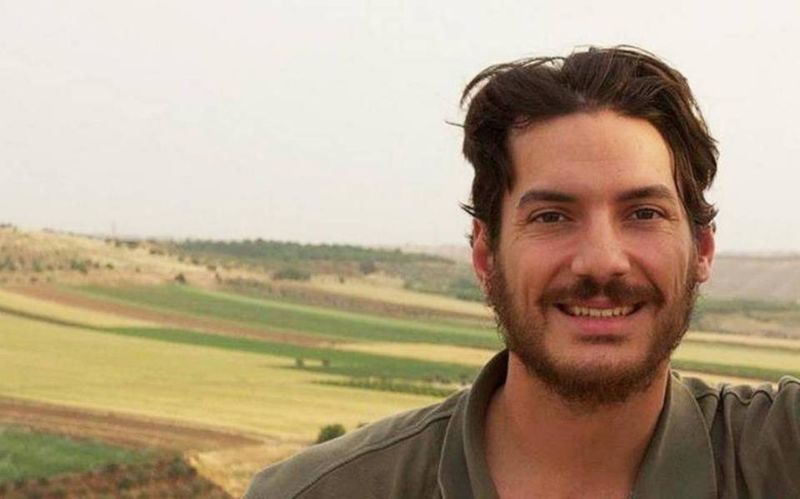
US hostage envoy is in Beirut as part of efforts to find freelance journalist held in Syria since 2012


Freelance journalist Austin Tice went missing in Syria in 2014 and has not been heard from since.

The top US hostage envoy Roger Carstens is in Beirut as part of the “intensive efforts” to find freelance journalist Austin Tice, State Department spokesperson Matthew Miller said on Monday.


The Special Presidential Envoy for Hostage Affairs’ travels to the Lebanese capital comes as US officials have intensified efforts to find the detained journalist following the collapse of the Assad government.

“We encourage anyone who has information about Austin’s whereabouts to contact the FBI immediately,” Miller said at a briefing, noting that there is a reward.

CNN reported this weekend that US officials have reached out to Syrian opposition forces about Tice, hoping to learn more about his whereabouts. He was detained at a checkpoint in Damascus in August 2012. The government of Syrian leader Bashar al-Assad did not publicly acknowledged detaining Tice.


US has "taken steps to secure our embassy" building in Syria, State Department says

The United States has “taken steps to secure our embassy” facility in Syria following the collapse of the Assad government, State Department spokesperson Matthew Miller said Monday. The US suspended operations at its embassy in Damascus in February 2012 and did not have diplomatic relations with the Assad government. Czech Republic had served as the US protecting power in Syria, but Miller noted that it had left the embassy in the Syrian capital.

“We have taken steps to secure our embassy, and we believe that our embassy, which, of course, we’re not staffing at the time, but that our embassy is still secure,” Miller said at a briefing.

Miller said there were no US personnel there, but the US is “at times able to engage with local parties to maintain the security of our embassy, make sure that is not breached, and we have taken those steps.”
