By using this site, you agree to our Privacy Policy and our Terms of Use. Close

Forums - Gaming - You people want MOAR Power in 8th Gen consoles, but........

Turkish said:
Player2 said:
Turkish said:
Mazty said:
Turkish said:


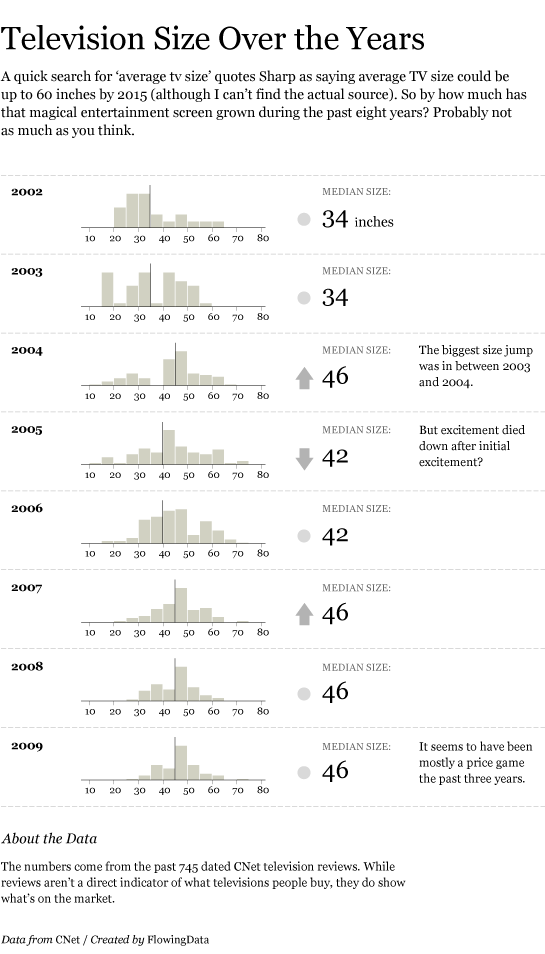
1080p was about getting the price to come down? What are you talking about? You don't make sense. The first 50" 1080p plasma cost around $15,000 back in 2006. Over time they got cheaper, the average tv size has been getting bigger and will continue to get bigger as they gradually become affordable. I hear today many people say they wished they bought a bigger tv afterwards getting a 42-46" set. You're again ill informed about the sizes 4K come in, Sony will release a 55" 4K tv in spring. Here's the average screen sizes from 2002-2009. TVs got bigger and they will continue to get bigger.


In due time 4K will be affordable, once they're affordable so will there be an increase in content. If there was no substance to the quest for greater resolution, then no one would've cared about Retina displays or 1080p on smartphones. 4K is another part of the pixel density war.


For fucks sake let me repeat myself:

Ultimately, the issue with 4k is not the price, it's the size, and that won't

change over time.

Many people won't, and can't, fit a 60+" TV in their living room.


Understand? You don't seem to understand living room size. In Japan and Europe, rooms are much smaller than in the USA. Your chart shows that it has plateaued at 46", which backs my point up. 


You fail to comprehend what I'm saying. There is a relation between the price and size of a tv screen. You are ill informed if you think people can't fit a 60" tv in their living room. Do you have a source to backup your claim? Any study that proves you right? How do you know rooms in Europe are much smaller? Thats just your assumption with no truth. (I live in Europe and I have enough room to fit in a +80" tv.) My chart is also from 2009. You're accepting your assumption as true without proof which again makes no sense.

Fact is that average tv sizes increase. http://www.displaysearchblog.com/2012/10/average-size-of-lcd-tv-panels-increases-by-2-inches-in-12-months/

There are several factors leading to increases in the average LCD TV panel size:

  • The emergence of new sizes has led many customers to choose larger sizes, such as moving from 26W to 29W, from 37W to 39W, from 46/47 to 50 inch, and from 55 to 60 inch.
  • As consumers replace older LCD TVs, they tend to choose a larger size. Many consumers in North America originally had a 32 inch LCD TV in their bedroom and a 40-50 inch set in their living room, and are upgrading to a 39 or 40 inch in their bedroom and a 50 inch or larger set for the living room.
  • LCD TV brands are promoting larger sizes in order to preserve profit margins.

With the year-end, many promotions will be launched, such as the rumored 60 inch LCD TV for $999 on Black Friday. With such attractive prices on large size LCD TVs, we can expect other consumers to migrate to larger sizes, further driving increases in average screen size.

Once 60" TVs become affordable at 999 you bet your bottom $ they'll be what people buy when they're in the market for a new tv with the budget.

Ok, I'll finish this.

"Based on panel makers’ shipments reported in the Monthly TFT LCD Shipment Database, the average TV panel diagonal has increased from 34.8” in August, 2011 to 36.8” in August, 2012. With a typical range of 18-20M panel shipment per month, an increase of 2 inches in screen size is significant, and has helped to increase area demand."

"Sharp has the highest average screen size of TV panels shipped, and it grew significantly in the past year, from 39.1 to 48.3 inches. Most other panel makers saw an increase of approximately 2 inches in screen size over the past year. AUO increased from 34.4 to 36 inches, BOE from 29.9 to 32.7 inches, Chimei Innolux from 30.9 to 33.6 inches, LG Display from 36.2 to 38.9 inches, and Samsung from 37 to 39.4 inches."

The current trend is an increase in 2 inches per year.

The average in the industry (not Sharp's) was 36.8" in August 2012. To reach an average of 60" we'll need over 11 years. We'll be playing with the PS5 then.

The source is the same article you used to cherrypick all that.

I'll be good and ignore the trick hidden in the 2002-2009 graph.


Eh I never talked about an average of 60".

The paragraph below "Television size over the years" points to that.


Around the Network
Player2 said:
Turkish said:
Player2 said:
Turkish said:
Mazty said:
Turkish said:


1080p was about getting the price to come down? What are you talking about? You don't make sense. The first 50" 1080p plasma cost around $15,000 back in 2006. Over time they got cheaper, the average tv size has been getting bigger and will continue to get bigger as they gradually become affordable. I hear today many people say they wished they bought a bigger tv afterwards getting a 42-46" set. You're again ill informed about the sizes 4K come in, Sony will release a 55" 4K tv in spring. Here's the average screen sizes from 2002-2009. TVs got bigger and they will continue to get bigger.


In due time 4K will be affordable, once they're affordable so will there be an increase in content. If there was no substance to the quest for greater resolution, then no one would've cared about Retina displays or 1080p on smartphones. 4K is another part of the pixel density war.


For fucks sake let me repeat myself:

Ultimately, the issue with 4k is not the price, it's the size, and that won't

change over time.

Many people won't, and can't, fit a 60+" TV in their living room.


Understand? You don't seem to understand living room size. In Japan and Europe, rooms are much smaller than in the USA. Your chart shows that it has plateaued at 46", which backs my point up. 


You fail to comprehend what I'm saying. There is a relation between the price and size of a tv screen. You are ill informed if you think people can't fit a 60" tv in their living room. Do you have a source to backup your claim? Any study that proves you right? How do you know rooms in Europe are much smaller? Thats just your assumption with no truth. (I live in Europe and I have enough room to fit in a +80" tv.) My chart is also from 2009. You're accepting your assumption as true without proof which again makes no sense.

Fact is that average tv sizes increase. http://www.displaysearchblog.com/2012/10/average-size-of-lcd-tv-panels-increases-by-2-inches-in-12-months/

There are several factors leading to increases in the average LCD TV panel size:

  • The emergence of new sizes has led many customers to choose larger sizes, such as moving from 26W to 29W, from 37W to 39W, from 46/47 to 50 inch, and from 55 to 60 inch.
  • As consumers replace older LCD TVs, they tend to choose a larger size. Many consumers in North America originally had a 32 inch LCD TV in their bedroom and a 40-50 inch set in their living room, and are upgrading to a 39 or 40 inch in their bedroom and a 50 inch or larger set for the living room.
  • LCD TV brands are promoting larger sizes in order to preserve profit margins.

With the year-end, many promotions will be launched, such as the rumored 60 inch LCD TV for $999 on Black Friday. With such attractive prices on large size LCD TVs, we can expect other consumers to migrate to larger sizes, further driving increases in average screen size.

Once 60" TVs become affordable at 999 you bet your bottom $ they'll be what people buy when they're in the market for a new tv with the budget.

Ok, I'll finish this.

"Based on panel makers’ shipments reported in the Monthly TFT LCD Shipment Database, the average TV panel diagonal has increased from 34.8” in August, 2011 to 36.8” in August, 2012. With a typical range of 18-20M panel shipment per month, an increase of 2 inches in screen size is significant, and has helped to increase area demand."

"Sharp has the highest average screen size of TV panels shipped, and it grew significantly in the past year, from 39.1 to 48.3 inches. Most other panel makers saw an increase of approximately 2 inches in screen size over the past year. AUO increased from 34.4 to 36 inches, BOE from 29.9 to 32.7 inches, Chimei Innolux from 30.9 to 33.6 inches, LG Display from 36.2 to 38.9 inches, and Samsung from 37 to 39.4 inches."

The current trend is an increase in 2 inches per year.

The average in the industry (not Sharp's) was 36.8" in August 2012. To reach an average of 60" we'll need over 11 years. We'll be playing with the PS5 then.

The source is the same article you used to cherrypick all that.

I'll be good and ignore the trick hidden in the 2002-2009 graph.


Eh I never talked about an average of 60".

The paragraph below "Television size over the years" points to that.

Thay may be, I never talked about an average of 60", the point I was making was that average screen sizes are increasing, are you challenging this fact?


Shooters will take advantage of the more power because of their immense popularity. Anything else - probably not.


"Naturally the common people don't want war: Neither in Russia, nor in England, nor for that matter in Germany. That is understood. But, after all, IT IS THE LEADERS of the country who determine the policy and it is always a simple matter to drag the people along, whether it is a democracy, or a fascist dictatorship, or a parliament, or a communist dictatorship. Voice or no voice, the people can always be brought to the bidding of the leaders. That is easy. All you have to do is TELL THEM THEY ARE BEING ATTACKED, and denounce the peacemakers for lack of patriotism and exposing the country to danger. IT WORKS THE SAME IN ANY COUNTRY."  --Hermann Goering, leading Nazi party member, at the Nuremberg War Crime Trials 


Conservatives:  Pushing for a small enough government to be a guest in your living room, or even better - your uterus.


IamAwsome said:
ToraTiger said:
I don't think Nintendo knows how to make hardware, that's why it's selling for a lost. And also I think it's the GamePad eating costs. It has a camera, motion controls, wireless and a touch screen

It's not that expensive. The camera is cheap, the motion is just like the PS3's sixaxis, all controllers these days are wireless, and tthe touch screen is resistive. 


I don't know, even  Iwate said that they were effectively make a handheld and a console. 


3DS I.D : 3282-2755-4646

I make bad threads.  

SSB really went downhill after Melee....

Manlet Crew

ToraTiger said:
IamAwsome said:
ToraTiger said:
I don't think Nintendo knows how to make hardware, that's why it's selling for a lost. And also I think it's the GamePad eating costs. It has a camera, motion controls, wireless and a touch screen

It's not that expensive. The camera is cheap, the motion is just like the PS3's sixaxis, all controllers these days are wireless, and tthe touch screen is resistive. 


I don't know, even  Iwate said that they were effectively make a handheld and a console. 

There's no official price but everything points out to the Gamepad costing between $85-$100 to manufacture. Compering that to a 360 controller which cost $20-$40 to manufacture you have a very expensive controller in your hands.


Nintendo and PC gamer

Around the Network
Turkish said:
Player2 said:
Turkish said:
Player2 said:
Turkish said:
Mazty said:
Turkish said:


1080p was about getting the price to come down? What are you talking about? You don't make sense. The first 50" 1080p plasma cost around $15,000 back in 2006. Over time they got cheaper, the average tv size has been getting bigger and will continue to get bigger as they gradually become affordable. I hear today many people say they wished they bought a bigger tv afterwards getting a 42-46" set. You're again ill informed about the sizes 4K come in, Sony will release a 55" 4K tv in spring. Here's the average screen sizes from 2002-2009. TVs got bigger and they will continue to get bigger.


In due time 4K will be affordable, once they're affordable so will there be an increase in content. If there was no substance to the quest for greater resolution, then no one would've cared about Retina displays or 1080p on smartphones. 4K is another part of the pixel density war.


For fucks sake let me repeat myself:

Ultimately, the issue with 4k is not the price, it's the size, and that won't

change over time.

Many people won't, and can't, fit a 60+" TV in their living room.


Understand? You don't seem to understand living room size. In Japan and Europe, rooms are much smaller than in the USA. Your chart shows that it has plateaued at 46", which backs my point up. 


You fail to comprehend what I'm saying. There is a relation between the price and size of a tv screen. You are ill informed if you think people can't fit a 60" tv in their living room. Do you have a source to backup your claim? Any study that proves you right? How do you know rooms in Europe are much smaller? Thats just your assumption with no truth. (I live in Europe and I have enough room to fit in a +80" tv.) My chart is also from 2009. You're accepting your assumption as true without proof which again makes no sense.

Fact is that average tv sizes increase. http://www.displaysearchblog.com/2012/10/average-size-of-lcd-tv-panels-increases-by-2-inches-in-12-months/

There are several factors leading to increases in the average LCD TV panel size:

  • The emergence of new sizes has led many customers to choose larger sizes, such as moving from 26W to 29W, from 37W to 39W, from 46/47 to 50 inch, and from 55 to 60 inch.
  • As consumers replace older LCD TVs, they tend to choose a larger size. Many consumers in North America originally had a 32 inch LCD TV in their bedroom and a 40-50 inch set in their living room, and are upgrading to a 39 or 40 inch in their bedroom and a 50 inch or larger set for the living room.
  • LCD TV brands are promoting larger sizes in order to preserve profit margins.

With the year-end, many promotions will be launched, such as the rumored 60 inch LCD TV for $999 on Black Friday. With such attractive prices on large size LCD TVs, we can expect other consumers to migrate to larger sizes, further driving increases in average screen size.

Once 60" TVs become affordable at 999 you bet your bottom $ they'll be what people buy when they're in the market for a new tv with the budget.

Ok, I'll finish this.

"Based on panel makers’ shipments reported in the Monthly TFT LCD Shipment Database, the average TV panel diagonal has increased from 34.8” in August, 2011 to 36.8” in August, 2012. With a typical range of 18-20M panel shipment per month, an increase of 2 inches in screen size is significant, and has helped to increase area demand."

"Sharp has the highest average screen size of TV panels shipped, and it grew significantly in the past year, from 39.1 to 48.3 inches. Most other panel makers saw an increase of approximately 2 inches in screen size over the past year. AUO increased from 34.4 to 36 inches, BOE from 29.9 to 32.7 inches, Chimei Innolux from 30.9 to 33.6 inches, LG Display from 36.2 to 38.9 inches, and Samsung from 37 to 39.4 inches."

The current trend is an increase in 2 inches per year.

The average in the industry (not Sharp's) was 36.8" in August 2012. To reach an average of 60" we'll need over 11 years. We'll be playing with the PS5 then.

The source is the same article you used to cherrypick all that.

I'll be good and ignore the trick hidden in the 2002-2009 graph.


Eh I never talked about an average of 60".

The paragraph below "Television size over the years" points to that.

Thay may be, I never talked about an average of 60", the point I was making was that average screen sizes are increasing, are you challenging this fact?

If you don't agree with something don't post it, or make it clear.

Tv diagonal length is increasing but it won't increase at the pace it did in 2002-2006.


Player2 said:
Turkish said:
Player2 said:
Turkish said:
Player2 said:
Turkish said:
Mazty said:
Turkish said:


1080p was about getting the price to come down? What are you talking about? You don't make sense. The first 50" 1080p plasma cost around $15,000 back in 2006. Over time they got cheaper, the average tv size has been getting bigger and will continue to get bigger as they gradually become affordable. I hear today many people say they wished they bought a bigger tv afterwards getting a 42-46" set. You're again ill informed about the sizes 4K come in, Sony will release a 55" 4K tv in spring. Here's the average screen sizes from 2002-2009. TVs got bigger and they will continue to get bigger.


In due time 4K will be affordable, once they're affordable so will there be an increase in content. If there was no substance to the quest for greater resolution, then no one would've cared about Retina displays or 1080p on smartphones. 4K is another part of the pixel density war.


For fucks sake let me repeat myself:

Ultimately, the issue with 4k is not the price, it's the size, and that won't

change over time.

Many people won't, and can't, fit a 60+" TV in their living room.


Understand? You don't seem to understand living room size. In Japan and Europe, rooms are much smaller than in the USA. Your chart shows that it has plateaued at 46", which backs my point up. 


You fail to comprehend what I'm saying. There is a relation between the price and size of a tv screen. You are ill informed if you think people can't fit a 60" tv in their living room. Do you have a source to backup your claim? Any study that proves you right? How do you know rooms in Europe are much smaller? Thats just your assumption with no truth. (I live in Europe and I have enough room to fit in a +80" tv.) My chart is also from 2009. You're accepting your assumption as true without proof which again makes no sense.

Fact is that average tv sizes increase. http://www.displaysearchblog.com/2012/10/average-size-of-lcd-tv-panels-increases-by-2-inches-in-12-months/

There are several factors leading to increases in the average LCD TV panel size:

  • The emergence of new sizes has led many customers to choose larger sizes, such as moving from 26W to 29W, from 37W to 39W, from 46/47 to 50 inch, and from 55 to 60 inch.
  • As consumers replace older LCD TVs, they tend to choose a larger size. Many consumers in North America originally had a 32 inch LCD TV in their bedroom and a 40-50 inch set in their living room, and are upgrading to a 39 or 40 inch in their bedroom and a 50 inch or larger set for the living room.
  • LCD TV brands are promoting larger sizes in order to preserve profit margins.

With the year-end, many promotions will be launched, such as the rumored 60 inch LCD TV for $999 on Black Friday. With such attractive prices on large size LCD TVs, we can expect other consumers to migrate to larger sizes, further driving increases in average screen size.

Once 60" TVs become affordable at 999 you bet your bottom $ they'll be what people buy when they're in the market for a new tv with the budget.

Ok, I'll finish this.

"Based on panel makers’ shipments reported in the Monthly TFT LCD Shipment Database, the average TV panel diagonal has increased from 34.8” in August, 2011 to 36.8” in August, 2012. With a typical range of 18-20M panel shipment per month, an increase of 2 inches in screen size is significant, and has helped to increase area demand."

"Sharp has the highest average screen size of TV panels shipped, and it grew significantly in the past year, from 39.1 to 48.3 inches. Most other panel makers saw an increase of approximately 2 inches in screen size over the past year. AUO increased from 34.4 to 36 inches, BOE from 29.9 to 32.7 inches, Chimei Innolux from 30.9 to 33.6 inches, LG Display from 36.2 to 38.9 inches, and Samsung from 37 to 39.4 inches."

The current trend is an increase in 2 inches per year.

The average in the industry (not Sharp's) was 36.8" in August 2012. To reach an average of 60" we'll need over 11 years. We'll be playing with the PS5 then.

The source is the same article you used to cherrypick all that.

I'll be good and ignore the trick hidden in the 2002-2009 graph.


Eh I never talked about an average of 60".

The paragraph below "Television size over the years" points to that.

Thay may be, I never talked about an average of 60", the point I was making was that average screen sizes are increasing, are you challenging this fact?


If you don't agree with something don't post it, or make it clear.

Tv diagonal length is increasing but it won't increase at the pace it did in 2002-2006.


You're vague. Do you mean the Sharp prediction for 2015? If thats the only thing you got from my comments, then you missed the point rather spectacularly.



Because there will be much more development of third party games for the HHD Twins and much more hype as well. Places and Media Events like Spike's Video Game Awards will cover these new systems in such glowing terms and so extensively that they'll have to sell.


The rise in developement costs isn't something inherent to improved hardware. It's more due to the fact that you have to make a better product to take more marketshare - something best highlighted in the NES days. Nintendo made the best games, which clearly had the highest 'budgets' and they dominated the software sales charts. Companies had to spend more to compete. Same thing in the PS1 days - the games which dominated sales were those with the highest budget. Throw in the fact that marketing budgets have exploded and you get the 9 figure game budgets we see today.

Costs go up because companies are greedy - they want to sell more then everyone else. When Activision spent $200m marketing Modern Warfare 2 - they sent out a message saying to other publishers 'you can either spend as much as us, or not bother competiting with us' - most games were delayed until the new year. This is why costs go up, because companies have to compete - yes new hardware means they're spending more on art assets and whatnot, but it's not the new consoles that really the reason. It's the fact that if your game isn't in the 'top tier' it wont sell.

Will the industry survive? Yeah definitely - in all honesty I think for the guys at the top it'll thrive. We've already seen it quenching innovation in big budget games though and the 'middle tier' of game developement is dying, but as a whole I think it'll be fine. There are worrying trends associated with the rising costs but at the same time the idea that companies werent trying to make the best game possible would be more worrying - even if some of the guys who arn't good enough go bankrupt.



Turkish said:
Mazty said:
Turkish said:
Mazty said:

For fucks sake let me repeat myself:

Ultimately, the issue with 4k is not the price, it's the size, and that won't

change over time.

Many people won't, and can't, fit a 60+" TV in their living room.


Understand? You don't seem to understand living room size. In Japan and Europe, rooms are much smaller than in the USA. Your chart shows that it has plateaued at 46", which backs my point up. 


You fail to comprehend what I'm saying. There is a relation between the price and size of a tv screen. You are ill informed if you think people can't fit a 60" tv in their living room. Do you have a source to backup your claim? Any study that proves you right? How do you know rooms in Europe are much smaller? Thats just your assumption with no truth. (I live in Europe and I have enough room to fit in a +80" tv.) My chart is also from 2009. You're accepting your assumption as true without proof which again makes no sense.

Fact is that average tv sizes increase. http://www.displaysearchblog.com/2012/10/average-size-of-lcd-tv-panels-increases-by-2-inches-in-12-months/

There are several factors leading to increases in the average LCD TV panel size:

  • The emergence of new sizes has led many customers to choose larger sizes, such as moving from 26W to 29W, from 37W to 39W, from 46/47 to 50 inch, and from 55 to 60 inch.
  • As consumers replace older LCD TVs, they tend to choose a larger size. Many consumers in North America originally had a 32 inch LCD TV in their bedroom and a 40-50 inch set in their living room, and are upgrading to a 39 or 40 inch in their bedroom and a 50 inch or larger set for the living room.
  • LCD TV brands are promoting larger sizes in order to preserve profit margins.

With the year-end, many promotions will be launched, such as the rumored 60 inch LCD TV for $999 on Black Friday. With such attractive prices on large size LCD TVs, we can expect other consumers to migrate to larger sizes, further driving increases in average screen size.

Once 60" TVs become affordable at 999 you bet your bottom $ they'll be what people buy when they're in the market for a new tv with the budget.

You're not fucking listening.

The size of rooms does not increase with a drop in the price of TV's. TV's in excess of 55" need an increased viewing distance that averages at 3+ meters. For a lot of people, that distance is unrealistic. Do some research into the size of living areas outside of the US. 


I think you're acting immature with your constant use of fuck. Neither fuck nor putting your text in bold is bringing more truth to your claim. As I've already showed you the average tv screen sizes increasing, there is really nothing to discuss anymore, you keep coming back to me without any source or proof. I asked you to provide a source backing up your ridicilous claim that European rooms are smaller than American ones, but you haven't, neither did you for your other assumption that people won't/can't fit a 60" tv in their living room.

And I think you're being obtuse ignoring the fact that viewing distance increases with the size of TV's, yet rooms do not. 

The average TV size has plateued at 46". That is what you have proven. 

http://www.bbc.co.uk/news/uk-14916580

Go do some damn research on what I've been saying. If you think it's rediculous that European houses are smaller than US housing then you are living in the clouds. How about you look at an estate agent site for the UK or that too much hard work? You are completely ignorant on housing sizes - I'm not, yet you're saying I'm wrong. Go figure.