



link : http://www.industrygamers.com/news/nintendo-wii-u-5-things-working-for-it-so-far/
"E3 saw an absolute barrage of announcements related to Nintendo's Wii U system. Now that the dust has settled and new groundbreaking announcements about the Wii U aren't likely until Tokyo Game Show '11 at the earliest, and maybe not until the Game Developers Conference next year, we can take stock of what we know about the system so far. Here are the top five things we think are positive indications for the system as we know it today.
5. Everything from the Wii works on Wii U
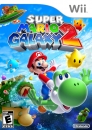
This might come as a given to some people, and to others it's nothing less than would be expected. Wii U is not compatible with the GameCube at all, but that's not surprising given that it would necessitate including GCN controller ports in the console and the demand to play a system from two generations ago probably isn't high enough to warrant the inclusion (sorry, GCN fans). But compatibility with the Wii is important for a couple of reasons. For one, a lot of the customers that Nintendo is looking to appeal to already have a Wii, and it's best that they should be able to pull out the old Wii Sports when they feel like bowling or slide in Super Mario Galaxy 2 if they didn't get a chance when it first came out.
"It's not hard to get excited over what Nintendo will have in store with the Wii U."
The other, perhaps more important point is all the Wii peripherals are also compatible with the Wii U. This means that software designed for the Wii U can use those same peripherals and all those people that already have a set of Wii Remote or Classic controllers for themselves and anyone who would care to play a Wii U with them can do so without spending another red cent. Unless they need to revolutionize things from the ground up, they can just use the Wii Balance board for whatever fitness game they want on the system. Some people spent as much on various controllers for the Wii as they did on the system itself and all of this eases the pain of transition from one console generation to a next.
4. Some Strong Initial Third-Party Support
The pre-E3 press conference for Nintendo was a love fest for the system. A reel rolled that included developers like Irrational Games’ Ken Levine, EA Sports’ Peter Moore, Vicarious Visions’ Karthik Bala, 5th Cell’s Jeremiah Slaczka, and Junction Point’s Warren Spector lavishing the system with praise. More recently, studios Crytek and Valve have announced their interest and Activision CEO Bobby Kotick, id's John Carmack, Epic's Cliff Bleszinski, and EA CEO John Riccitiello have all spoken warmly of the system.
More importantly, there are already some games announced for the system, like THQ'sDarksiders 2 and Metro: Last Light, Codemasters' DiRT, Sega's Aliens: Colonial Marines,WB Games' Batman: Arkham City, Traveller's Tales' Lego: City Stories, Namco Bandai'sTekken, and Tecmo Koei's Ninja Gaiden 3: Razor’s Edge. Ubisoft alone has promised five titles including Assassin’s Creed, Ghost Recon Online, and the Rabbids and EA has said they'll bring Battlefield, Harry Potter and their sports lineup to the system. It's not a guarantee of success for core titles on the Wii U, but it's certainly a positive start.
3. HD capabilities
Certain adjectives have been thrown around over the years to describe game graphics, like “jaw-dropping” and “breathtaking” and I've generally considered those descriptions a bit overstated. That's not to say I haven't been impressed with the way games have looked when they've been at their technological peak in the past, but it just hasn't been to the gob-smacking degree that others have put it. That's honestly changed this generation, with epic boss battles in God of War III, vast environments in Assassin's Creed, noticeable facial expressions in L.A. Noire, the applause-worthy production values of Uncharted 2... I could go on and on, but between the increase in resolution, the possibilities with realistic physics, plenty of new shaders and lighting techniques, and the processing power to push environments out onto the horizon, it's not hard to get excited over what Nintendo will have in store with the Wii U.

While some were beating the “graphics don't matter” (or the similar “these graphics are good enough”) drum these past five years for the Wii, I'd imagine many changed their tune once they saw that brief Legend of Zelda tech demo at E3 and many more will be convinced as soon as they see more real games up and running taking full advantage of the Wii U's hardware.
2. Unique Controller with a Proven Method
When the control method for the Wii was first announced, I was one of the few skeptics. The motion controls that the Wii hangs its hat on are unnecessary for most core titles and are a hindrance at worst, I argued. Why wave your hand when you can just push a button or manipulate an analog stick, since the latter is far more efficient. The design of the Wii Remote and Nunchuk with a single analog practically necessitated the use of the built in motion controls for most games if there wasn't Classic Controller support. This issue, however, is completely set aside for the Wii U. The touchscreen controller features dual analog sliders and roughly as many buttons as any other contemporary controller.
The centerpiece of the controller, however, is the built-in screen. I'm convinced this is an addition that will work well for both core and casual titles. I'll use the DS as an example; while many consider the use of the second screen to be revolutionary, in reality it was just complementary. If you look at most games on the DS, the second screen is typically used to display your status or a map; very few DS games make radical and revolutionary use of the second touchscreen, but it also doesn't hurt any of those games. Most games can get away with some tertiary use of the touch screen on the DS and that's perfectly fine – it's there to be used as a vital part of the game if need be, but if not then it can be used in some innocuous fashion. The Wii U controller can similarly benefit from the built in accelerometer, gyroscope, camera, microphone and touchscreen – they can be used to enhance the experience for core products or they can be more-or-less ignored if it doesn't fit the design of the game, and nothing is really lost. It's the best of both worlds.
1. Nintendo's Evergreen IP
"Perhaps Nintendo's greatest strength over the decades has been its own consistency. As a developer, they've maintained a high level of quality for all of their major franchises, particularly Super Mario and The Legend of Zelda. While there was doubtlessly a glut of 'shovelware' foisted onto the Wii by third-parties, Nintendo's quality was always impeccable with the quality of titles like Super Mario Galaxy and The Legend of Zelda: Twilight Princess. On the other hand, they've also developed fresh titles that have appealed to the masses in a whole new way, like the Wii Sports and Wii Fit titles. They have the recipe of success, and that's also one of the more consistent complaints about Nintendo products – once they've established a franchise's formula of success, they're reluctant to stray from it. From a business perspective, that's irrelevant – people come to Nintendo platforms for a certain sort of experience that Nintendo has been able to deliver over the years, and who's to argue with millions upon millions of sales, really?
_ _
Stay tuned for part two, outlining five things going against Nintendo and Wii U..."
good points