By using this site, you agree to our Privacy Policy and our Terms of Use. Close

Forums - Gaming - Roger Ebert says video games can never be art

Kasz216 said:
Khuutra said:

You would be somewhat surprised: the academia's response is slow, but their definition is ultimately reactionary rather than authoritative: it will take time, but if the people take games seriously for long enough as pieces of art, then the academia will be forced to do the same, and Super Mario Bros. will be treated with the same awe and respect as something like Metropolis.

Is it really an eventuallity though?

I mean, I don't think even TV has gained widespread acknowledgement as art.  It has yet to throw off the shackles of being "the idiot box" although some cable shows and TV documentries are finally working to change this perception.

I think Ebert is probably very right when he says we won't be living here if it is ever accepted as such.

I'd have to ask Rubang, but isn't TV .... well I suppose you could make an argument that it's not derivative of cinema, but that's how I've always thought of it.

Give me a while, that one has me scratching my head.

But yeah, I think it's an eventuality. Certain TV series are studied, though it's generally given a status beneath cinema as a rule. Maybe not for something like The Twilight Zone.

But yes! Eventuality. Give it time. Mario will prevail.


Around the Network
Khuutra said:

Yeah I know I was wrong when I said that

I admitted it earlier

Were you? There are several art works that require audience participation or people hired to do some action, yet you wouldn't refer to them as the artists. Is the audience in a performance of 4.33 (that was brought up earlier) artists, or are they just played, like another instrument?


He seems to define art as something you can't control, only experience.

I see art as that as well as paintings, sculptures, etc. And some of the game worlds and character designs are well deserving of being called art.


ctalkeb said:
Khuutra said:

Yeah I know I was wrong when I said that

I admitted it earlier

Were you? There are several art works that require audience participation or people hired to do some action, yet you wouldn't refer to them as the artists. Is the audience in a performance of 4.33 (that was brought up earlier) artists, or are they just played, like another instrument?

I think that the distinction does't really matter, because the act of participating is itself a piece of art, the experience of being included is a piece of art, and the experience you get from observing the performance also establishes it as art.


Khuutra said:
Kasz216 said:
Khuutra said:

You would be somewhat surprised: the academia's response is slow, but their definition is ultimately reactionary rather than authoritative: it will take time, but if the people take games seriously for long enough as pieces of art, then the academia will be forced to do the same, and Super Mario Bros. will be treated with the same awe and respect as something like Metropolis.

Is it really an eventuallity though?

I mean, I don't think even TV has gained widespread acknowledgement as art.  It has yet to throw off the shackles of being "the idiot box" although some cable shows and TV documentries are finally working to change this perception.

I think Ebert is probably very right when he says we won't be living here if it is ever accepted as such.

I'd have to ask Rubang, but isn't TV .... well I suppose you could make an argument that it's not derivative of cinema, but that's how I've always thought of it.

Give me a while, that one has me scratching my head.

But yeah, I think it's an eventuality. Certain TV series are studied, though it's generally given a status beneath cinema as a rule. Maybe not for something like The Twilight Zone.

But yes! Eventuality. Give it time. Mario will prevail.

I suppose it's stupid to be against mario.

I kinda think, unfairly though it may be, Videogames also get the TV stigma and more so, just because videogames are played on a TV.  It sounds stupid, but I think the act of sitting infront of a TV is just in general decryed by some parts.  That art like that needs to be ventured out of the house to expiernce.


Around the Network
Khuutra said:
Kasz216 said:
Khuutra said:

You would be somewhat surprised: the academia's response is slow, but their definition is ultimately reactionary rather than authoritative: it will take time, but if the people take games seriously for long enough as pieces of art, then the academia will be forced to do the same, and Super Mario Bros. will be treated with the same awe and respect as something like Metropolis.

Is it really an eventuallity though?

I mean, I don't think even TV has gained widespread acknowledgement as art.  It has yet to throw off the shackles of being "the idiot box" although some cable shows and TV documentries are finally working to change this perception.

I think Ebert is probably very right when he says we won't be living here if it is ever accepted as such.

I'd have to ask Rubang, but isn't TV .... well I suppose you could make an argument that it's not derivative of cinema, but that's how I've always thought of it.

Give me a while, that one has me scratching my head.

But yeah, I think it's an eventuality. Certain TV series are studied, though it's generally given a status beneath cinema as a rule. Maybe not for something like The Twilight Zone.

But yes! Eventuality. Give it time. Mario will prevail.

TV is to cinema as sonnets are to haikus. They're both moving pictures, sure, but the contraints of their particular formats lend each a distinct character.

TV is really idiosyncratic when you compare it to cinema. The fact that there are so many episodes allows larger, more intricate stories to be told, but there's a pressure to keep individual episodes self-contained so you don't alienate people who miss chunks of the experience. A TV show doesn't actually need to end, but could be yanked off the networks at any time. Messy medium.


"The worst part about these reviews is they are [subjective]--and their scores often depend on how drunk you got the media at a Street Fighter event."  — Mona Hamilton, Capcom Senior VP of Marketing
*Image indefinitely borrowed from BrainBoxLtd without his consent.

Khuutra said:
Helios said:

Khuutra: "Nobody, I should think, claims that the act of playing games is an art."

Playing games? No, that is an occupation. But the act of playing a game? I don't know about that. You mentioned performance arts. Is, then, the act of playing (a game) not a kind of performance art? Whatever vision is exercised through the design of a game, the artistic essence of an interactive medium ultimately lies with the hic-et-nunc nature of the player experience. Or do you think I am wrong in my assertion that game design is an art form concerned with the expression of ideas through player experience?

There is also art created by using games, but I think we can all agree that is something different altogether.

Reasonable: So, what is your criteria for art?

Me, I consider any sort of expression of human creativity to be art. And yes, that includes Michael Bay. My own (admittedly poor) opinion of his filmmaking is simply a matter of personal perspective.

You make a solid point: I realized, partway through the conversation, that I was wrong on the previous point, but did not say so.

You and I are in agreement, actually. Art lies in the experience, and the ability to induce a specific experience, or allowing people to experience the same thing in multiple ways.

I believe that what Reasonable - and Ebert, now that I think about it and which infuriates me - is saying is that "art" is a question of quality rather than definition, of interpretation of both meaning and import, usually handled by the academia. He can correct me if I am off on that point, though.

I'll jump in here if that's okay?

In terms of Art it's so hard to put down something short, but my own, personal view from both academic studies plus just my own, spare time interest in Art, is that:

Art is the deliberate process of using a medium (could be your own body a'la performance art, could be cinema, clay, paint, computer generated, etc) to create a thematic work that invokes emotion, thought or speculation in the observer (or participant if the form of the medium is interactive) regarding the human experience or the Universe we inhabit or aspects of its (and our) nature.

I think I've been overly wordy previously but put simply I've very comfortable the videogame medium can be used to create Art, I just think that a) very few developers are actually trying to create art in the medium and that b) those that do are at the very embryonic phase of the medium's development.


I do see an element of quality, too.  In a sense everyone is capable of anything, be it painting or running or whatever, but of course some of us are terrible at those - to me there is obviously a cut off (that is probably as hard to define as art itself) where someone or the art they create is so poor as to not be worth particularly considering (possibly Mr Bay?).


To use a potentially odd source, consider Ratatouille (which I hope you've seen as it's rather fantastic).  We are given the presupposition that "anyone can cook" and we are then shown a variety of people with various skills and abilities as to cooking.  Within the film there is a clear examination (in my view) of what these differing levels mean and the film mediates this to a reflection or artistic work (as well as, which I won't dive into, the relationship between artistic creation and artistic criticism of the creation).

The conclusion I felt was accurate and summed things up nicely if we look at the core three characters (let's skip Skinner, etc).

Remy simply has natural skills and abilities that enable him to create individual and original works beyond the concept and capability of most other cooks.  He is a Kubrick of cooking.  A Shakespeare of cooking.  He is an Artist and he creates works of Art with food.  Those who eat his food are moved emotionally, and he even gets a bitter critic to recant his ways.

Collete is a craftsman (sorry, craftswoman).  She has been taught, she has studied.  She is a good cook and can recreate or replicate very, very well.  you would love to eat what she cooks.  but she isn't an artist.  she has skill but simply learnt, repetitive skills coupled with a decent native talent but she lacks the creative spark that would make her a true artist on the level of Remy.

Linguini can cook, but you wouldn't want to eat what he cooks.  He lacks both the creative spark or even the talent to be a craftsman.  He is how most of us are at certain things - lacking in anything but basic ability.


Now you could apply this to anything, and that includes Artists and Art.  Quality does matter, and while hard to define exactly where the line in the sand is, there is nonetheless clear differences between artistic masters - be it cooking, film, etc. - craftsmen (and women) and Michael Bay (okay, enough of Mr Bay actually).  The reality I believe from observation is that the majority of us are Linguini's at something or other, there are a smaller number of Collete's (of varying skill levels) and that, perhaps inevitably, there really are only a few at the peak of any human endevour with the skills and talent of a Remy.


However, I don't agree with Ebert that the quality can only be understood or appraised by an educated view.  I think most of us have pretty good abiltiy, if we take a moment to consider, to tell the good stuff from the bad stuff.  Differences of view (one man's Art is another's Trash, etc) will produce differences of exact opinion, but I don't think the ability to evaluate is limited just to academics (I certainly hope this isn't the case).  I will concede though, that if you want to really understand a medium you yourself are going to have to put in some effort and learn some basics about the medium to fully understand it.


I'm personally talking about the quality of the artist and what they produce, not some designated academic quality, and as the basis for attempting to sort out the true creative, origianl artists from the craftspeople who reproduce with skill but no creative ability and the Linguinis.


I am of the opinion that most of what some would argue is art in games is craftmanship, wonderfully done, and relying on artistic skill, but craftmanship nonetheless.

A key missing element for me is the desire (and talent) to use the medium with the goal of producing a work of Art vs a work of entertainment for commercial purposes using gameplay mechanics (this isn't to say Art can't be entertaining or commercial, just that for me there has to be a desire to also create Art even if you intend it to be both entertaining and commercial).

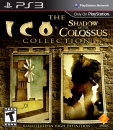
But as I stated there are games that have convinced me the medium can deliver.  Ico, Shadow of the Colossus and Silent Hill 2 for example, all have clear thematic elements beyond being just a game - they have intent in their design and construction to evoke thought, emotions and contemplate aspects of human behaviour and they use the medium of videogames to mediate their themes for the person playing them.

I've no doubt that, looking at current trends, we are going to see more people stepping us to this challenge.

One final point though, I wonder if, as Ebert notes, we'll consider the result a videogame as we currently define them, or something else entirely?




Try to be reasonable... its easier than you think...

Khuutra said:
Helios said:
Khuutra said:

You make a solid point: I realized, partway through the conversation, that I was wrong on the previous point, but did not say so.

You and I are in agreement, actually. Art lies in the experience, and the ability to induce a specific experience, or allowing people to experience the same thing in multiple ways.

I believe that what Reasonable - and Ebert, now that I think about it and which infuriates me - is saying is that "art" is a question of quality rather than definition, of interpretation of both meaning and import, usually handled by the academia. He can correct me if I am off on that point, though.

Ah, it is good to know that we are in agreement.

And yes, you are right in that the academia's definition of art is the only culturally authorative one. Our definitions only have meaning to ourselves, and I only expressed my own rather liberal views on art in order to juxtapose them with Resonable's (and Ebert's).

You would be somewhat surprised: the academia's response is slow, but their definition is ultimately reactionary rather than authoritative: it will take time, but if the people take games seriously for long enough as pieces of art, then the academia will be forced to do the same, and Super Mario Bros. will be treated with the same awe and respect as something like Metropolis.

Yes, this process works both ways, though. Once something is accepted within academic circles, we as "laymen" can always refer to their body of thought when debating the artistic merit of a work of art. In that sense it has an authority. For example, Aristotele is still relevant amongst today's dedicated dramaturges as well as scholars.

Granted, this authority is limited to what is currently considered art, rather than what will potentially be considered art, but on that matter I believe we are in agreement.


“One obvious difference between art and games is that you can win a game. It has rules, points, objectives, and an outcome,” Ebert said. “Santiago might cite a [sic] immersive game without points or rules, but I would say then it ceases to be a game and becomes a representation of a story, a novel, a play, dance, a film. Those are things you cannot win; you can only experience them.”

Ebert nailed it with this quote. Games are not art.. they are GAMES. Do you call Yahtzee art? Do you call Monopoly art? I suppose you can put art INTO games, but the games themselves are NOT art.

The game industry is trying too hard to be like Hollywood, and Ebert can see through this.


Also, I feel like... before we could consider videogames art we need to DRASTICALLY change the dynamic as far as remakes are concerned.

I mean, compare the reaction to the changes George Lucas made in Star Wars....

To the reaction to even a HINT that FF7 may be remade, or the remakes of the other Final Fantasy games.

In general we are supportive of the industry remaking and in ways ruining the original artistic quality and intent of the game made itself.

I've got no problems with remakes... although I find it hard to count remakes as "art".  Another reason the "art in reviews" thing doesn't work yet in my mind.

Outside of "presentation" anyway.