By using this site, you agree to our Privacy Policy and our Terms of Use. Close

Forums - General - Barack Obama's radical review on nuclear weapons reverses Bush policies

Sqrl said:
And if I'm an enemy of the US I'm thinking - Boy those chemical and biological attacks seem like a good area to look into now that I won't get nuked for it.

I don't have any problem with him deciding to not use nukes in response to such attacks...well I disagree with it, but I see where he is coming from. What I cannot understand is the absolute stupidity in publicly saying you won't.

Like it or not nuclear weapons make for a fantastic deterrent, and while their detonation may be distasteful it has long been the case that their primary use lies in the threat of detonation and not actual detonation. Even if you would never use them in a given scenario the threat of using them in that scenario provides an immensely valuable deterrent, and you don't have to be overtly threatening for it to work either.

This policy is overwhelmingly naive...which in all honesty pretty much characterizes the man and the ideology driving the decision. So not that surprising really.


Agreed.


Around the Network
Kasz216 said:
Sqrl said:
And if I'm an enemy of the US I'm thinking - Boy those chemical and biological attacks seem like a good area to look into now that I won't get nuked for it.

I don't have any problem with him deciding to not use nukes in response to such attacks...well I disagree with it, but I see where he is coming from. What I cannot understand is the absolute stupidity in publicly saying you won't.

Like it or not nuclear weapons make for a fantastic deterrent, and while their detonation may be distasteful it has long been the case that their primary use lies in the threat of detonation and not actual detonation. Even if you would never use them in a given scenario the threat of using them in that scenario provides an immensely valuable deterrent, and you don't have to be overtly threatening for it to work either.

This policy is overwhelmingly naive...which in all honesty pretty much characterizes the man and the ideology driving the decision. So not that surprising really.

Who is actually in a place to hit the US with chemical or biological weapons though?  Doing so would likely end your life whether it was with a nuclear weapon or not.


Ok so our foriegn policy, especially in regards to military policy, now must only consider factors we can foresee at the moment?

Come on Kasz, you and I both know that is naive.

Even so, what if Russia gets its dander up again making another run like it did at Georgia?  Only this time it gets bad enough that UN and/or US troops are sent in.  You think Russia wouldn't even consider using bio or chem weapons now that they've brokered this deal with us?  Certainly some deterrents exist still, but nothing like the threat of a nuke.


To Each Man, Responsibility
Sqrl said:
And if I'm an enemy of the US I'm thinking - Boy those chemical and biological attacks seem like a good area to look into now that I won't get nuked for it.

I don't have any problem with him deciding to not use nukes in response to such attacks...well I disagree with it, but I see where he is coming from. What I cannot understand is the absolute stupidity in publicly saying you won't.

Like it or not nuclear weapons make for a fantastic deterrent, and while their detonation may be distasteful it has long been the case that their primary use lies in the threat of detonation and not actual detonation. Even if you would never use them in a given scenario the threat of using them in that scenario provides an immensely valuable deterrent, and you don't have to be overtly threatening for it to work either.

This policy is overwhelmingly naive...which in all honesty pretty much characterizes the man and the ideology driving the decision. So not that surprising really.

The thinking is that the policy will gain more in soft power than it sacrifices in hard power. As Kasz notes, a chemical/biological is very unlikely and there are plenty of deterrents in place that aren't nuclear. This policy provides a bargaining chip that the US can play whenever it wants to persuade somebody from developing nuclear weapons. You can protect yourself from American nukes by either having a nuclear deterrent or by not having and not seeking one. If you're in the process of building nukes, you are at the highest risk because America's nukes threaten you but you have no deterrent.

Of course, whether the tradeoff will actually be worthwhile is entirely speculative at this point. I'm sure Iran is more interested in deterring an Israeli strike than an American one.

In international relations, symbolic gestures are just as important as substantive actions. Hard to believe, but Iran actually offered support to the United States when it invaded Afghanistan so many years ago. It's hard to imagine the Iran of today offering the same support, even though it suits their interest to keep Afghanistan and the Taliban down. The three little words "axis of evil" instantly transformed Iran from a grudging ally into a determined enemy just as surely as sending fighters to test Iranian airspace would have.


"The worst part about these reviews is they are [subjective]--and their scores often depend on how drunk you got the media at a Street Fighter event."  — Mona Hamilton, Capcom Senior VP of Marketing
*Image indefinitely borrowed from BrainBoxLtd without his consent.

I don't understand why you would back away from swift, massive, retaliation if an enemy uses a WMD on you.

'Hey, here is a get out of jail free card if you want to kill Americans!'

I just don't see it being a wise decision. Reduce the total number of nukes? Sure. Tell enemies we won't use it against them? No.

Despite the worry of nuclear weapons, its prevented us from having another world war for the past 70 years. Say what you will, but they've certainly saved more lives than they've killed.


Back from the dead, I'm afraid.

It's a clever policy. There is no real loss (any attack by a state on America would be met by a hammer blow of military force anyway, everybody knows it) and you gain plenty of soft power.

He's reversing Bush's policy of making the world fear the USA by trying to get the world to like the USA just a little bit more.


Around the Network
Rath said:
It's a clever policy. There is no real loss (any attack by a state on America would be met by a hammer blow of military force anyway, everybody knows it) and you gain plenty of soft power.

He's reversing Bush's policy of making the world fear the USA by trying to get the world to like the USA just a little bit more.

The question was never if the US could appropriately respond.  The entire point is not to be attacked in the first place.

The very crux of the matter that those who are fine with this seem to be missing in their excitement over the gains in soft power is that effective deterrents are few and far between while bargaining chips for soft power are easy to come by in comparison.

Soft power is only effective against those who will listen or be cooperative, and those aren't the sorts of groups and nations that are at all considering attacking the US, and consequently they aren't at all worried that we would ever nuke them.

The policy is the antithesis of clever, it is pure shortsighted bafoonery that trades away longterm high-value for short-term low-value.

How long do you think the credit of this move will last?  Even if we're generous a decade would be the absolute longest we could trade on this.  Meanwhile the threat of a nuclear retaliation is persistent and only causes worry for those who would consider attacking us in the first place. 


To Each Man, Responsibility
Sqrl said:
Rath said:
It's a clever policy. There is no real loss (any attack by a state on America would be met by a hammer blow of military force anyway, everybody knows it) and you gain plenty of soft power.

He's reversing Bush's policy of making the world fear the USA by trying to get the world to like the USA just a little bit more.

The question was never if the US could appropriately respond.  The entire point is not to be attacked in the first place.

The very crux of the matter that those who are fine with this seem to be missing in their excitement over the gains in soft power is that effective deterrents are few and far between while bargaining chips for soft power are easy to come by in comparison.

Soft power is only effective against those who will listen or be cooperative, and those aren't the sorts of groups and nations that are at all considering attacking the US, and consequently they aren't at all worried that we would ever nuke them.

The policy is the antithesis of clever, it is pure shortsighted bafoonery that trades away longterm high-value for short-term low-value.

How long do you think the credit of this move will last?  Even if we're generous a decade would be the absolute longest we could trade on this.  Meanwhile the threat of a nuclear retaliation is persistent and only causes worry for those who would consider attacking us in the first place. 

Nuclear deterrent is only meant to deter a nuclear threat. That is what this policy officially reserves it for. Other forms of deterrent have always been the main reason why people don't attack the USA, not the threat of nuclear action. The main reason for a nuclear deterrent has always been to avoid the possibility that all of a military will be wiped out by a nuclear strike before any retalliation can occur, no other form of attack has such large short term consequences and as such a nuclear deterrent isn't the most effective - the most effective is a purely military deterrent.

Also a gain in soft power isn't as temporary as you think, the currency of goodwill can run for a very very long time.


Rath said:
Sqrl said:

The question was never if the US could appropriately respond.  The entire point is not to be attacked in the first place.

The very crux of the matter that those who are fine with this seem to be missing in their excitement over the gains in soft power is that effective deterrents are few and far between while bargaining chips for soft power are easy to come by in comparison.

Soft power is only effective against those who will listen or be cooperative, and those aren't the sorts of groups and nations that are at all considering attacking the US, and consequently they aren't at all worried that we would ever nuke them.

The policy is the antithesis of clever, it is pure shortsighted bafoonery that trades away longterm high-value for short-term low-value.

How long do you think the credit of this move will last?  Even if we're generous a decade would be the absolute longest we could trade on this.  Meanwhile the threat of a nuclear retaliation is persistent and only causes worry for those who would consider attacking us in the first place. 

Nuclear deterrent is only meant to deter a nuclear threat. That is what this policy officially reserves it for. Other forms of deterrent have always been the main reason why people don't attack the USA, not the threat of nuclear action. The main reason for a nuclear deterrent has always been to avoid the possibility that all of a military will be wiped out by a nuclear strike before any retalliation can occur, no other form of attack has such large short term consequences and as such a nuclear deterrent isn't the most effective - the most effective is a purely military deterrent.

Also a gain in soft power isn't as temporary as you think, the currency of goodwill can run for a very very long time.

As I understand it this new policy is saying we won't retaliate to Bio and Chem attacks with nuclear attacks.  If I missunderstood and it's only small-arms and troops attacks we are saying we won't retaliate with nuclear strikes then OK, I have a whole lot less objections to that.

As for why people don't attack the US, I don't recall many nations openly attacking the US since WWII.  Which as I recall ended in a way that has some relevance to this discussion.  The deterrent provided by that demonstration alone has been immense and is quite literally the only real reason the US and the USSR didn't go to open hostilities.  If it can do that for non-WMD attacks, I don't know that I follow any sort of logic that asserts it would be less effective for WMD attacks. Now certainly nuclear deterrence is not the only deterrence, but I think it is a real loser of an argument to suggest that it's not the absolute best deterrent -- it's track record is quite impeccable.  Like it or not one thing we can broadly rely on from people is to be self-interested, and MAD plays to that exceedingly well. 

Just to make sure we are on the same page, we do agree that Bio and Chem attacks have the same capacity for a horrific scope and style of death that a nuclear attack does right? I mean they are all WMDs obviously.

This is why I think trading away what is easily the best deterrent against such large-scale destructive attacks in order to gain diplomatic back-pats to be used to bargain with (honestly it doesn't matter how long they last -- but I do think you overestimate their bargaining power significantly) is insane. 

At the very best we can say it is poor risk management.  Trading Nuclear deterrence for soft power our worst case scenario is a Bio attack that would have been stopped, that isn't stopped, and thousands die initially plus the possibility of additional unintended millions secondarily. If we use it as a deterrent our worst case is that we...what? ...have to find another way to bargain for what we want?  I'm sorry but that seems like a very poor use of diplomatic and security resources and an even worse trade.

On your last sentence I honestly do not understand why anyone thinks this garners longlasting goodwill.  The only goodwill it gets us is political goodwill from foriegn nations that are entirely to the left of the US and whom already expect such behavior like its the only way things could possibly be done.  Doing things their way usually garners a "Well it's about time those stupid americans do things our way." responce followed by a quick return to the "What have you done for us lately." attitude.

If you have any doubts about that look at the jaw-dropping gaul of the world in it's attitude towards the US in the face of the truly immense amount of foreign aid and security we provide on a daily basis.   I don't expect the world to go along with everything, or even most things, we want obviously, and there is plenty of bad stuff we have done to deserve some scorn, but it is beyond the border of delusional to think that we get even 1/10th the credit we deserve for all the amazing charity work we do helping the poor and sick.

So you'll pardon me if I'm just a tad bit skeptical about the meme of "the currency of goodwill can run for a very very long time.".  I mean christ, you need only look at how much Europeans generally dislike American tourists and compare that to the fact that they don't all speak german to see how little distance you get out of good-will.  Again I don't expect them to love us, but when I know multiple people who've gone to Europe and been spat on for wearing a T-shirt with an american flag or had some horrible cliche of a frenchmen shout profanities at them in french while citing only that they're american for a justification ....well you'll have to forgive me if I don't exactly buy into the whole longlasting "good will" thing like you seem to.  Or are you really suggesting a policy change would garner more longlasting goodwill than literally saving their country from invasion?

I'm sorry, but the more I think about it the worse the idea seems to me.

PS - Sorry for the rant Rath =P


To Each Man, Responsibility

Apparently the Eared One has not heard of assymetrical state-sponsored proxies. I suggest he do some reading on Basiju, Quds, Hezbollah cells (which are active and a very clear and present danger), Aum Shinrikyo, and the like. Just because a nation has nuclear weapons does not mean that the specific nation has to use them in a conventional manner.

This act cuts the legs out from under us and unless the Senate approves it then it is non-binding and void. (Refer to the League of Nations history for a similar scenario) Non-state actors sponsored by a state are the real threat going forward. I worry about certain AORs here too. USSOUTHCOM (Venezuela), USCENTCOM (Iran), and USPACOM (China) are states which have not necessarily signed onto the NPT yet or do not possess significant amounts of deployable nuclear weapons systems to do so but that will change.

And btw, even if the US did go to DEFCON 1 and initiative an attack the response would be non-existent because of MAD. It helps that we have USAF ICBM targeting capacity as well as EMP capability but most is still classified.

This is a giant cstrfk all over.


PS: This will weaken US deterence and amplify bio/chem production.  Please don't give me any "no it won't of the CWC treaty" lines in response to the latter-a lot of stuff is grey...


You're taking the history of the world wars from a very Hollywood point of view where the Americans swept in and saved the incompetent Europeans. In reality America was very late to both world wars and was there for her own interests, in WWI it was merchant shipping and in WWII it was pearl harbour. While America was undoubtably a large player in the war, I don't think Europe owes you a great deal of gratitude for your conduct.

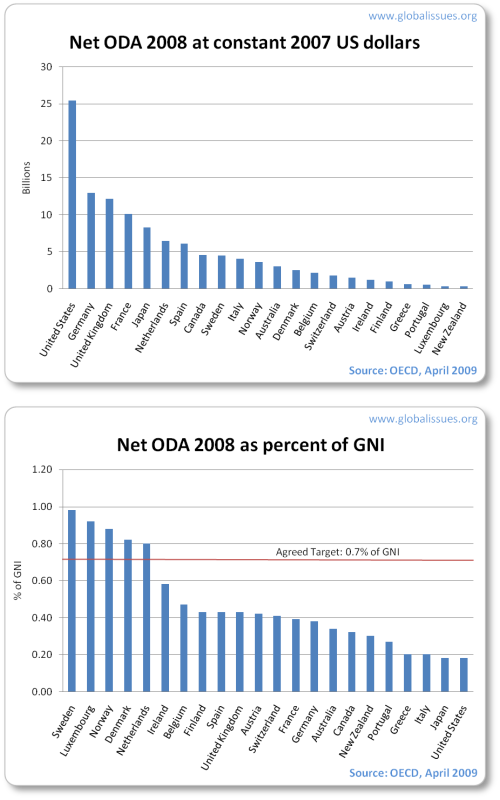
Also your aid to the world isn't fantastic actually, it's big numerically but if you look at percentages...

You're actually last in the OECD.


I can say that most Kiwis (and I think Aussies too actually) look quite fondly upon Britain despite the fact that we are now very thoroughly independent from them. Goodwill does last.


As for the Cold War, the only thing that the nuclear deterrent stopped was nuclear war. The cold war wasn't necessarily going to go to open warfare anyway, both countries had more to lose than to gain. I also disagree that chemical and biological weapons are in the same category as nuclear weapons, for two reasons. One being that none of the danger you are talking about have actually been created and the other being that no country has major stockpiles of them (so there is no mutually assured destruction).