





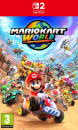
I waited a few days to comment to be as clear as possible on the matter, but ultimately, the death of physical media will be a watershed moment for me between the past and the future.
For me, gaming has always been tied to a physical copy, wherever possible, for collection (and I'm thinking of 8-, 16-, and 32-bit games), for resale (and I'm thinking of some of my PS2 and Wii games), or for used purchases (and I'm thinking of a good portion of my PS3 and PS4 games). Then I think back to how many games I've traded with friends over the years, lent and received, and all the ones I've received as gifts during the holidays or given myself. Games tied to special moments, and special moments tied to special games.
For me, it's always been very important; in fact, all the games that are important to me and that define a platform have always been physical.
So it's not something I can overlook over time: from now on, I will only support those systems that allow physical copies, like Nintendo at this point, for as long as it lasts.
That said, I fear that young people and future generations raised on digital games on smartphones will surely come to terms with it; in fact, they won't even care.
But what's the point? In my opinion, the retail sector—that is, the presence of physical PlayStation, Nintendo, or Microsoft branded items in every corner of the planet, distributed extensively from small shops to large retail chains—was precisely what made a console perceived as such, a special world in itself, very different from both the smartphone universe (iOS, Android) and the personal computer world, which, as we know, has been all-digital for decades (but at least you have a copy of the installation files there, if you want!).
Without the widespread network of physical items that has distinguished PlayStation and Xbox until now, what could possibly differentiate one game box from another? The sticker on it? The operating system... Xbox with Windows? PlayStation and Steam with Linux?
But above all, what will stop a thousand other companies, which until now have failed to establish themselves, often due to their inability to establish themselves in the now consolidated physical distribution network, from releasing their own game box... I'm thinking of Apple, Amazon, Google, but also Huawei, Lenovo and so on. How long will it take NVIDIA to eat them all for breakfast?
I don't see a bright future for us gamers, and never mind, in the end (and thankfully) we (and I'm talking about those who care about ownership) will still have tens of thousands of 'retro' games to play and replay from here to eternity.




Existing User Log In
New User Registration

Register for a free account to gain full access to the VGChartz Network and join our thriving community.


