









| Hiku said:
1. And based on what happened in other countries, I think it would solve more than just 1% of mass shooting problems even in the short term. 2. But could you explain how you think gun related deaths within organized crime could get that much worse if the weapons that were normally legal are now restricted to the black market? 5. And I've been advocating for many of those things as well. Always to deaf ears from US Republicans, but just because I want them to have health care doesn't mean I don't think USA should also take steps to limit the access to guns with background checks, etc, and outright ban the ones designed to kill many people in as little amount of time and effort as possible. 6. Okay. But I don't see the relevance. You can implement strict regulations for gun purchase in any country, regardless of whether they experienced mass ownership or not. I didn't suggest that this would be a magical 1 day solution. Just that it would be a positive and much needed change, imo.
|
1. My point was that mass-shootings only make up about 1% of all gun deaths. Even if mass shootings were solved entirely (there was never a mass-shooting again) 99% of all gun deaths are from other sources.
2. During alcohol prohibition and drug prohibition organized crime rose because these cartels and gangs could make profits by selling these items in the black market. When organized crime rises, disputes are resolved through violence between these cartels and gangs. If there is a large supply of semi-automatic weapons, and there is no legal sale of semi-automatic weapons, then organized criminals see a new mechanism to make profits. And since these organized criminals are also weapon-smugglers or even producers, like with drug prohibition and alcohol prohibition, they'll resolve their disputes through -- maybe even more so -- through gun-warfare. About 50% of all homicides in the U.S are gang-related, induced by drug prohibition. We've been slowly, but surely, decriminalizing drugs in the U.S, state by state, which will hopefully eliminate this organized crime, but if gangs can just switch to weapon sales then it becomes a significant problem. This wasn't an issue with fully-automatic weapons because there were only 600,000 of them when they were banned, and never was a high demand for them. But semi-automatic weapons are the highest demanded and produce weapon-type and there are probably something like 300 million of them in the U.S. If the goal is to eliminate gun homicides (regardless of where they originate) this is a problem. This is also why the best gun control probably isn't to ban guns, but to license their sales, which is why I do support some sort of licensing system.
3. Many organized criminals are children fending for themselves, as young as pre-teen age.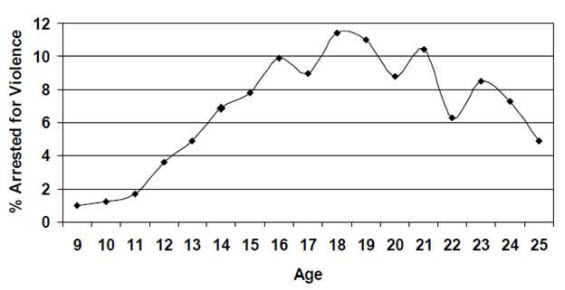
Many of them have children and are desperately trying to take care of them but have no other mechanism to make enough money either because they have a criminal record and therefore can't get a decent job, are in a multi-generational cycle of poverty where they didn't get a decent education or didn't have a stable home-life, and/or some other reason. Many victims of organized crime are people who have nothing to do with the organized criminals but are caught in between the warfare. Many victims of organized crime are victims who police wrongly profile as organized criminals and kill. Given that you're not American and I don't know your background I am not going to suggest that this is the case with you, but often people who say things like this do so because the disproportionate share of people who die from organized crime related shootings are not-white whereas middle-class white people only worry about mass-shootings, suicides and accidents when it comes to gun lethality.
4. Most gun deaths related to organized crime are from semi-automatic handguns, not AR15's.
5. So far I haven't talked about the political element, but I will now. You can likely form a coalition that gets us a more egalitarian material reality in the U.S -- including universal healthcare but many other things. That coalition is much harder to build the stricter the gun control you advocate. It's an unfortunate truth, but for many people they'd rather vote for gun-ownership than bettering their material well-being.
6. The relevance is that a country like Japan never had to enforce their strict laws on people who already owned the weapons, because very few people did own weapons. So it is logistically much easier. This is not the case in the U.S. And whenever one talks about enforcing a ban or firearm possession charges one needs to consider the race and class elements of enforcement and the fact that American policing isn't the same thing as policing in other countries. Gun control therefore will have to look quite different in the U.S than what it looks like in Japan unless you want to exacerbate class and race inequalities.
7. All of these issues intersect.
Last edited by sc94597 - on 26 May 2022


