


Ganoncrotch said:
In raw cpu numbers sure, but look at your bench here and think to yourself is there any PS3 game which ends up looking 3x nicer than the more graphical games on the X360 such as Halo 4? Then think to yourself why was that the case. Sheer raw cpu power is one thing the PS3 did have going for it, but there was a great deal of other factors in play in that machine which had to be wrestled with, the 256mb of system memory is now just laughable when you think of that amount of CPU power feeding into what would now be considered a joke of memory. |
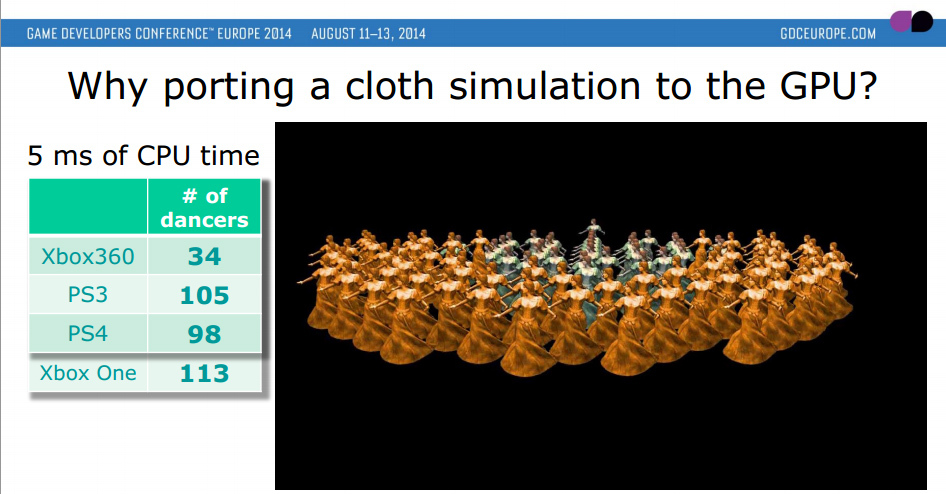
Comparing the ps3 to 360 is a difficult task in many ways because they both excel in different areas however yes you can see some advantages in ps3 over 360. Firstly the ps3 had a wider range of 1080p games partly due to more dedicated video memory and partly due to using the cell processors to assist in graphic data processing to provide gpu performance capable of 1080p. Next you have wide support for 3D which wasn't possible on 360 again thanks to the cell processors making the creation of 2 images in parallel much easier. Lastly many games like the Resistance series make heavy use of the cell for clever graphic effects including wind physics effects, rain, lighting etc which you don't see on 360.
PS3 is split into 2 pools of memory, main system memory of 256MB and video memory of 256MB so same overall memory as 360 except for no 10MB of high speed memory that the 360 has. If you want to load memory completely with data it takes about a 1/44 of a second on 360, about a 1/75 of a second on ps3 but about 1/6 of a second on Switch. I'm just making the point that Switch has far lower memory bandwidth than ps3 and 360 and yet has much larger main memory so effectively the advantage of more memory is much reduced. Memory bandwidth is a fixed limit you cannot move any more data than the maximum bandwidth limit of the memory which is effectively much less than on ps3 or 360.
I don't think this is any surprise despite the ease of developing on Switch so far we are seeing a very low performance level overall often with simple games with fairly basic cell shaded graphics struggling with frame rates or missing anti-aliasing or low resolution etc. As more games are released we will get a more accurate picture but at the moment like wii u its performing below initial expectations.
The performance of the Switch docked is never going to match the wide range of ambitious games we have seen on ps3 and 360 not just for performance/technical reasons but also commercial reasons. It may well be able to show a graphic effect here or there which they weren't capable of because of their older graphics hardware just as the wii u did. That is my expectation based on the evidence of the hardware and the Switch games so far.