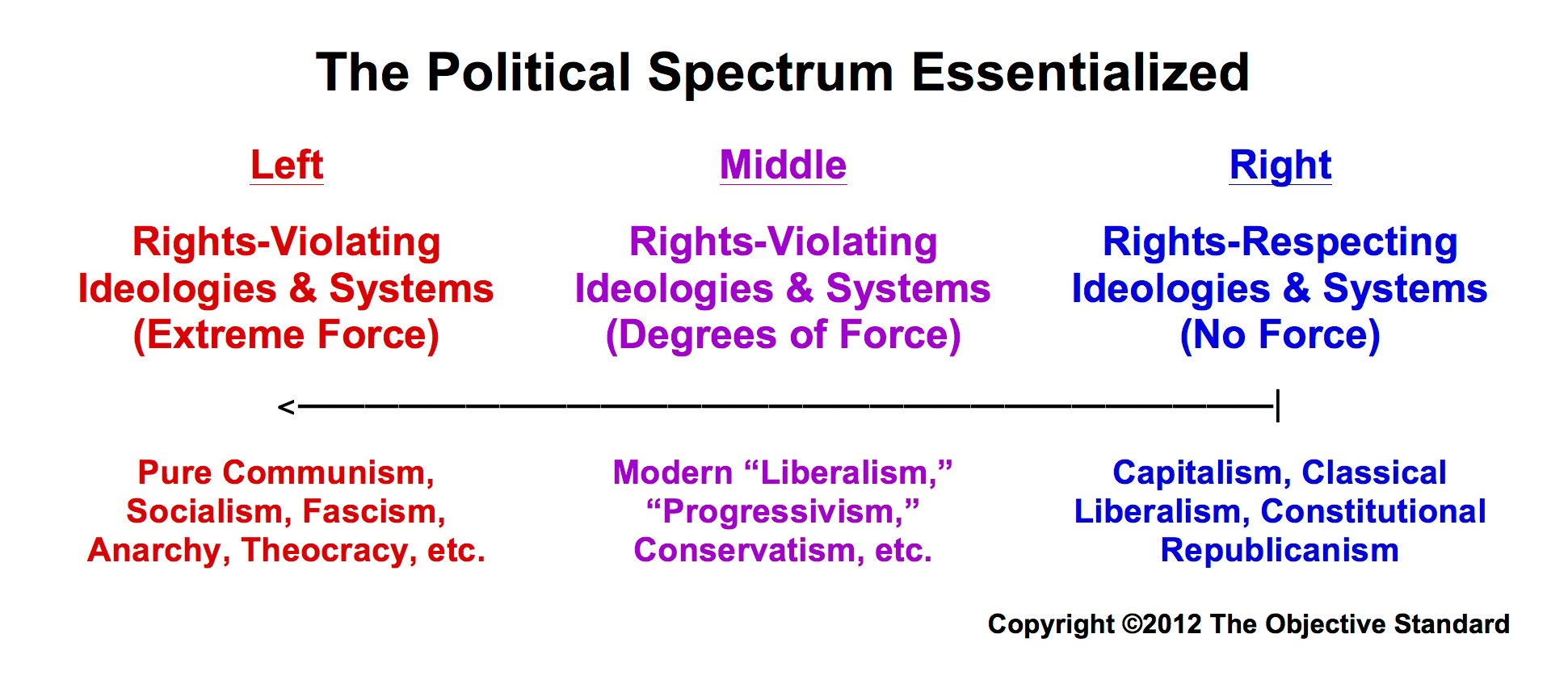






Aielyn said:
You distribute wealth through agreement between people. The only functional communist groups are the ones that are opt-in. See Kibbutzim in Israel as an example. In *real* communism, the community works together for the betterment of the community, and those who would refuse to be part of the community are expelled - meaning, if they aren't contributing, they don't get the benefits. What makes me think that those policies are coming from a right-wing perspective? How about every single definition of left vs right wing ever devised? "Generally, the left wing is characterized by an emphasis on "ideas such as freedom, equality, fraternity, rights, progress, reform, and internationalism," while the right wing is characterized by an emphasis on "notions such as authority, hierarchy, order, duty, tradition, reaction and nationalism."" As you can see, the *Ieft* wing is the one associated with freedoms and rights, generally, while the right favours nationalism and tradition. Of course, it's more complex than that - many on the right are about "individual freedoms", while those on the left are more about "collective freedoms". The distinction works like this: the right cares more about "Freedom of speech" in the sense of "I should be able to say as I please", while the left cares more about "freedom of speech" in the sense of "ideas shouldn't be banned". The left wants freedom of religion in the sense of being able to follow whichever religion you please, while the right wants freedom of religion in the sense of being able to practice your religion as you see fit. Notice the subtle difference - one is about belonging, the other is about individuality. The left wants there to be no classes, a broad concept. The right wants people to be able to move between (and into higher) classes, a concept focused more on the individual. The right wants people to be able to act to ensure the prosperity of their own offspring, the left wants to make sure that all offspring are cared for and considered. But even that doesn't quite capture the distinction clearly enough, because it's not an exact distinction - caused primarily by the fact that multiple factors are being combined into a single categorisation, when most people have aspects on both sides. I'm not the only one that views anarchism and communism as being on the "same side". Indeed, not only are they on the same side, they're only a small distance apart, to the point that Anarchist Communism is a thing, and most anarchists call themselves anarcho-communists (because as I pointed out above, communism only works on an opt-in basis, so these people believe communism is the best system, but it has to lie within anarchism - a point I disagree with, but let's not get bogged down in my personal views). Literally the only difference between pure anarchism and pure communism is the belief that there is value in established leadership (in communism, the leadership is simply the people making the broader decisions that can't be made by individuals). Here's another pic showing the traditional placements of the various ideas:
Of course, this pic is demonising left and right (while its "middle" is actually rather right-wing), and isn't quite accurate with "Nazism", which doesn't fit well on the spectrum. If you look at other representations, including those favouring or opposing either side, such as this one which is clearly pro-right-wing, they consistently put anarchism with communism on the left. The only time that Anarchism is put on the opposite side of Communism is when it's actually marked, explicitly, as "freedom" vs "tyranny" or equivalent, and invariably has communism and fascism as equivalent, despite the two being literally opposed to each other. The reason this happens is that Americans, especially, have a massively skewed concept of what "communism" is, because rather than learning about the *concepts*, they look at "communist parties" in various countries, like Russia and China. Unsurprisingly, these countries aren't actually running anything remotely resembling communist government. But uneducated Americans invariably are conned into believing "communism is fascism" by comparison. As for my view on "how does communism develop into anarchy", that's quite a kettle of fish, in part because I believe both systems are inherently unstable and naturally develop into dictatorship due to said instability, unless something like democracy is placed over it to ensure stability. But in an ideal world, the more accurate description would that anarchy develops into communism, as people naturally organise together. It's referred to as "collectivism". Many anarchists believe that ownership of the means of production should be in the hands of those who do the work... but when you have a hundred people, each pulling in a different direction, things don't get done. So some method of organisation happens - people talk, convince each other of their ideas on how to proceed, and things become smoother. Over time, certain people are seen to have good ideas and are listened to by others. These people take on a kind of leadership role amongst the workers, and when others have a disagreement, they go to the "wisest ones" to have their disagreement settled. Do you know what system has formed? That's right - what I've just described is communism. The wisest are naturally raised to a leadership position and guide the community's actions in order to produce a more favourable outcome for the entire group. Of course, human nature gets in the way of this, because invariably it's the most arrogant, the most stubborn, that ends up in power, rather than the wisest. And these people become dictators. Hence what I said about instability. I said nothing about "larger government". Not sure where you got that from. The left wing believe that the government's role is to regulate non-human things (like the economy, etc) and to get out of the way of human things (such as morality). The right wing believe that the government's role is to regulate humans (such as morality) and to get out of the way on other issues (like the economy). The term for those who believe in smaller government is "libertarian", and libertarians aren't really left or right wing. They're the literal opposite of "authoritarian", and authoritarianism happens on both sides of the system. Hence the "political compass" images I provided, that separate the left/right spectrum from authoritarian/libertarian concepts. And you can have libertarian left and libertarian right. And my comment about your definition being based on those you agree with being "right" is justified in the rest of the paragraph. You literally treat polar opposites as being on the same "side" of politics. On every single point, the far right authoritarian religious people disagree with the far left communists. On attitudes towards morality, economics, freedom, and identity, they're the opposite of each other. They literally only agree on one thing - that the world is being screwed up by the centrists (who in turn believe that those two extremes, or at least one of them, is the cause of all of the problems). Communists don't believe in government control - they believe in government *ownership*. Do you know what the difference between the two concepts is? Simple: communists believe government is "by the people, for the people". They believe "government" should own the means of production, and that the people should own the government. Communist ideals vary by subgroup, of course - the social democrats believe in democracy on the large scale and communism on the small scale, whereas anarcho-communists believe that communes should be purely opt-in unions of like-minded people working together, and so "government" can be anything from "the overarching organisation that runs everything" (like federal governments) to "the people who settle disagreements" (like a group leadership or a small council). As I said before, look at Kibbutzim in Israel. They operate on communist principles. They also happen to be one of the places with the fastest internet in the world (as one example of a factoid I'm aware of regarding them). |
" In *real* communism"
is absolutely impossible... because of the inherent individuality of humans... the only way to implement it is with a 2 class system
"while those on the left are more about "collective freedoms""
an oxymoron if i've ever heard one
"The left wants there to be no classes, a broad concept."
yes i agree which is the opposite of anarchy where every individual is free to ascend as high as he wants to
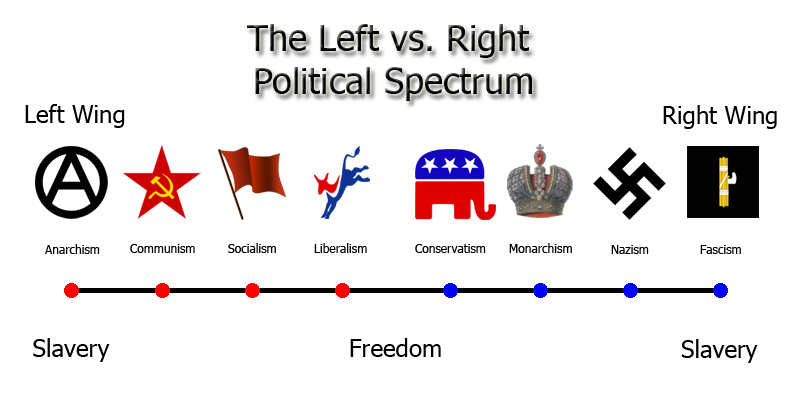
in your picture you equate anarchism with slavery... can you explain how a system where there is no authority can result in slavery?
" But in an ideal world, the more accurate description would that anarchy develops into communism, as people naturally organise together. It's referred to as "collectivism""
collectivism is the opposite of anarchy so i'm having difficulty following this
"Many anarchists believe that ownership of the means of production should be in the hands of those who do the work... but when you have a hundred people, each pulling in a different direction, things don't get done. So some method of organisation happens - people talk, convince each other of their ideas on how to proceed, and things become smoother."
here you are trying to assign features of social organisation to anarchy and that's completely wrong - anarchy is about individuality its not at all about social organisation
" You literally treat polar opposites as being on the same "side" of politics. "
the irony of this coming from someone who equates anarchy with communism is not lost on me lol
"On every single point, the far right authoritarian religious people disagree with the far left communists"
ah yes the communists who i suppose aren't authoritatrian at all lol.. can you explain to me how a communist system can be implemented practically without an authority?