













| DonFerrari said: The lack of genetic capability was Eneas Carneiro talking about LULA not Dilma. Eneas is dead for quite some years now, And from all the text you sent it would make more sense for women to be natural leaders, strange enough they aren't and in workplace they tend to fight a lot among them, make small groups, sabotage one another and despise women that are their bosses. |
Ah, my apologies. Still weird to blame it on genetics, anyway nm.
I haven't noticed the stereo typical cat fighting myself, yet in sofware development women were (are) very much in the minority. They had 1 big advantage, never have to wait for the bathroom. Upside down world.
Yet what makes the women in that article unnatural leaders. How can they be effective in cool-power leadership if women only sabotage and despise their bosses? You do have a point, yet it's not that big of a deal:
http://www.theatlantic.com/business/archive/2014/01/why-dont-more-women-want-to-work-with-other-women/283216/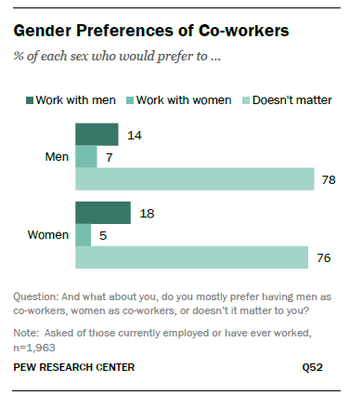
Social scientists who have been poking at this can of worms for decades have found that women sometimes exclude other women from opportunities in order to gain a competitive edge. Women tend to mainly only bully other women in the workplace, while men are equal-opportunity harassers.
Much of this can be chalked up to decades of workplace and societal gender discrimination. Women tend to face the so-called "backlash effect," the theory that women can only advance at work if they act more like men, but they then face social penalties for behaving in unfeminine ways.
But perhaps the statistic to focus on isn't the quarter of workers who care about the gender of their colleagues. It's the 77 percent of workers who say they don't care. More of that, and we won't have to worry about boy's clubs or glass ceilings.


