









| fps_d0minat0r said:
e.g.
or the swarm in mass effect. or the insects in the jungle level in killzone 3. They dont get much attention because simply, they can never be interesting as humanoid creatures. Anyway, theres a scientific basis to assume that a creature will gain or adapt (through evolution) certain limbs and organs in the same period of time it gains intelligence. You could also argue an alien race millions of years older than ours could wipe us all out within a few minutes, but again, that wouldnt make a great plot for a game. |
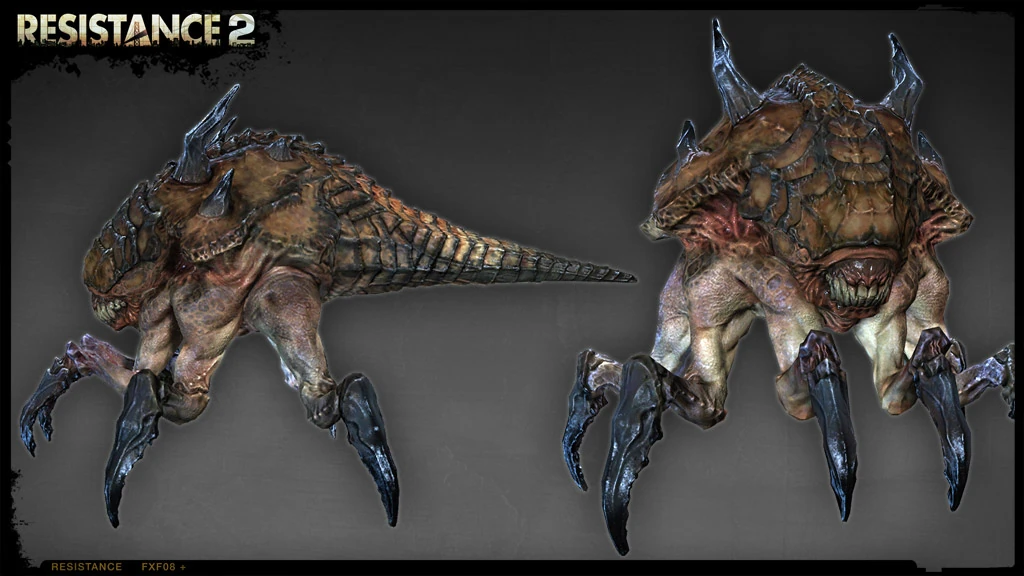
The classic grab like / scuttler creature is overplayed, the reason they dont get much attention is because theyre used as "bullet sponges" a design element to distract you or depleat your ammunition and give the sense that a primary target is harder to kill than it really is, just because a creature is small should not mean its of no interest or simply cannon fodder, you only need to look at spark from the halo series, or the spheres in portal.
The scentific basis is an assumption based on the parameters and boundaries of our environment, limb count has no direct connection to intelligence, unless you're saying dolphins have arms and legs.
But circling back to what i said earlier, we are just the current result of evolution, largely based on the environment in which we live - look at skin color for example, its simply a result of thousands of years of generations living under the same conditions, the colder the environment the lighter the skin.
if oxygen supplies were to decrease moving forward, who is to say that in a few hundred thousand years our bodies would not adapt to this slow depletion?
If the environment changes as do we, the intellectual level is not defined by our form, it is defined by how adapting to our environment and how natural selection brought us to this point - rewind the clock a few million years and make changes to our atmosphere, fast forward to 2014 and i can gurantee you, humans would not look like we currently do.
An alien world has about as much chance of being a similar environment to our own as you have of throwing a dart 100 meters and hitting the exact same point twice, so it stands to reason that the chances of it's intelligent species resembling a human, or a humanoid of any form, would be slim.


