









| Akvod said:
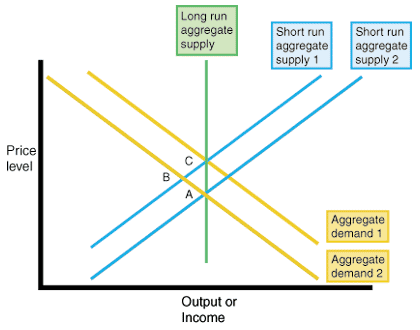
You don't understand the fundamental difference and philosophy behind Keyensian and Classical Economics... Keyensian believes that in the short run, inflationary policies can create real changes in production, and that the economy can sometimes produce less than what it optimally can. Classical economist believe that we are always producing at the optimum/potential level, and that any inflationary policy only leads to inflation, and no change changes in output.
While it's debateable if Keyens really believe that we can simply inflate the economy forever, and increase output forever like some neo-Classicalist like to state, this is one way to characterize neo-Classical and neo-Keynesian
Neo-Classicals emphasize the expectations people have towards the economy. If there's inflation, people are going to demand higher wages. Then production has to reduce. Neo-Classicalists believe this happens immedietly, resulting in the classical model. On a side note, Friedman will state that governments are inefficient at carrying out discrentionary policies, inflating an economy even though the recession ended, etc. Neo-Keynesian accept that over time, the AS curve will shift in reaction to an AD shift. That is, if you inflate the economy, eventually production will return to normal levels. You cannot use government spending to inflate the economy beyond its normal capabilities. However, it still believes that in the short run, you can definetly make real changes to the economy through fiscal and monetary policies. |
Thanks for clarifying things. The economic theories are so confusing and are extremely complicated to fully understand.


