Akvod said:
richardhutnik said:
If economic activity were studied without the exclusion of money, they won't understand how economics work. At the core of economics is the exchange of goods and services for other ones. There has to be a genuine need or want at the bottom, or it doesn't work.
The problem that has been going on is the government has been running debt year after year after year, and has been taxed. It produced a housing bubble. There is no other place to get money from unless you keep taking from tomorrow, and they have been. Eventually the thing can collapse.
Study the numbers regarding employment post 2000. The job growth hadn't kept up with population growth at all. More tax cuts and spending and no jobs. A reason why is employers don't hire for the sake of hiring. They avoid hiring like the plague unless they have no choice. And with increased specialization, there was harder for them to find employees. What they did was make people salaries and increase their hours. You see this is how America had increased GNP. It was because Americans had to work harder and longer hours. With this, corporations felt it a trendy thing to lay people off, even when showing record profits.
If businesses are going to lay people off when they make record profits, how the heck does more money solve this? Do you have an answer?
Increasing government spending happens to temporarily cause increased economy activity, but there is no guarantee that it is sustainable. And that is the problem.
|
Keyensianism does NOT, for fuck's sakes, advocate inflating the economy all the time. I mean, c'mon, you even read the title. What Krugman is advocating is COUNTER-CYCLICAL policy. Krugman is advocating that he wants the governmetn to pull the opposite way in all situations. When the economy is doing fine on its own, that is, when people are spending a normal fraction of their money, and businesses are investing, the government begins taxing and raising the interest rate, to prevent over spending and over producing. The things you've described to hate.
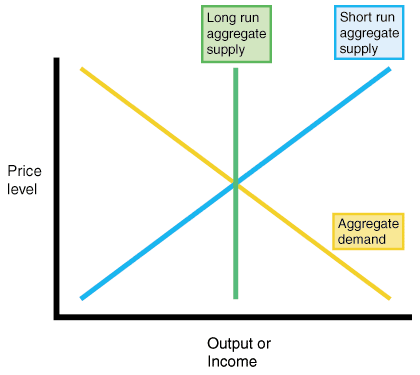
But the government should also spend and lower interest rates, when there is an aggregate demand shock. That is, the decrease in consumer confidence, the "animal spirit".
It is rational, individually, to begin saving when times seem bad. But that's the paradox of thrift, it only makes things worse. In order to combat this self harming, the government picks up the slack and demands goods in place of the consumers, who are making the same ammount of money, but simply not spending it. Why? Because if consumers don't buy, then producers don't invest, even further depressing the economy. With lack of demand, there is a reduction in inflation rates, and eventually there will be deflation. Which will create a liquidity trap. This waiting out crap is waiting to have more oil on the edge of the hole.
If the government simply picks up the slack, then the consumers will regain confidence in the economy again, and begin spending more. Then the government picks up less and less slack, GRADUALLY, and then once things are better again, it lets go. Then it begins to tax more, cut spending more, increasing rates, and worry about paying off the debt it made.
Baisically do you believe in the following things:

http://en.wikipedia.org/wiki/Consumer_confidence
http://en.wikipedia.org/wiki/Sticky_wages
Then I think you'll naturally come out to become a Keynesian on your own.
|