













SciFiBoy said:
well, communism itself is just the extreme of socialist thought, but yes, most leaders we have had who identify as communist have also been authoritarian. (which I believe is Facism? correct me if im wrong on that though) |
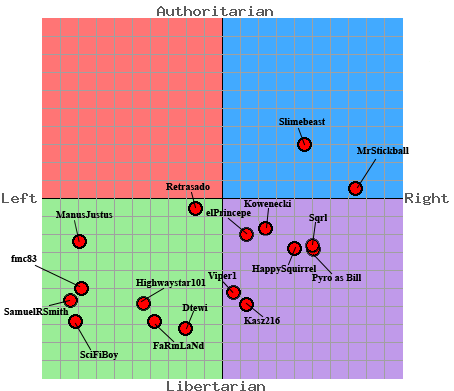
Authoritarianism can find itself in a lot of movements.
Fascism, by traditional definition would be leaders that do want to nationalize many areas of economic output, but not in the name of workers rights, or for the social benefit of everyone like communists do.
Hitler is a fantastic example of that. He was anti-communist, despite desiring the same amount of control over his country that Stalin did. The same can be said of Pinochet (who was a capitalist and fascist), along with many others. Facism would be defined on the grid as being center economically (nationalization, but not so much for the benefits of the workers), and extreme authoritarian.
@Rath - I understand that. I put 'planned economy' in there on the left extreme. When I stated that, I define as being more controlled than a free economy. Depending on your views of liberty will greatly effect how that planning comes about:
- Someone with a higher 'authoritarian' score would probably be more likely to support a command economy where the government controls a large portion of how goods are distributed and created. Examples would be command economies of the USSR and pre-Deng Xiaopeng China.
- Someone with a higher 'libertarian' score would probably more likely support stringent corporate regulations to ensure that the people control a large portion of how goods are distributed and created, for the saftey and welfare of all.
Again, but seek to control economics, but for totally different reasons and methods.
Back from the dead, I'm afraid.


