

Metallicube said:
Like I said, there could be art IN games, but the games themselves are not art. It is never the primary focus of games. Games are related more closely to math and physics than art, in that they are based around rules and specific mechanics. The "art" in games is just the exterior. Monopoly may have an artistic message as you say, but it is not the central focus of the game. People play monopoly to have fun and use their mind to make decisions themselves, not to be moved emotionally or get political messages. Art and games serve different purposes. Art is meant to "do all the work" for the person experiencing it so to speak. It is meant to move people emotionally, to send a message, comment on society, or wow people visually. Games are meant to entertain people through interaction, and to make the user be maker of the outcome. They give the user an array of options and let the user logically and strategically select from these options what they think is the best outcome to "win" the game. You cannot "win" art. In a sense, games are really the anti art. Games give an array of options and lets the user provide their own course and experience, art provides it for them. |
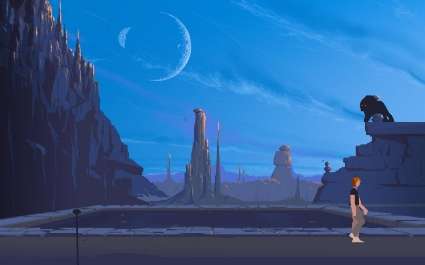
I disagree that art is meant to do all the work. There are various art installations that require either participation from the observer or movement through a 3-dimensional space. You can make an amazing hologram, or put 20 stereos on a hallway, and put it in a museum with a sign that says "walk through this and experience my art" and that happens all the time. If you made a virtual physical art installation that you walk through on your computer (so it could be full of mirrors and 20 stereos and giant dragons or whatever), then that would be art.