









Be patient. I DO have a life (which involves having a wife =p), and these things take a while to research and write, especially since I'm tossing in little goodies into each submission now. And I am most definitely under no obligation to provide these, anyways.
DAY FIVE
14: Masayuki Uemura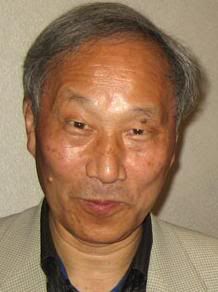
Uemura finishes today at number fourteen with a total of thirty-two points in six votes. Decades ago, Uemura was a toy maker. As he continued making toys more and more complex, he decided he wanted to know more so he could better understand how to make them particularly complex. He went to college in the 1960s, and upon graduating, Sharp Corp. hired him immediately. He worked for Sharp for a few years, until one day Sharp sent him to attempt selling solar cells to Nintendo in 1971. He spoke to Gunpei Yokoi, who was particularly interested in using these solar cells in Nintendo's toys and games. Eventually, Yokoi called him back and hired him directly into Nintendo, stealing him from Sharp. Uemura later used these solar cells to create Nintendo's light-guns. Early on, these guns were mainly the Beam Gun games, games where you'd have a light-emitting gun that would shoot light at a target, which had said solar cells installed on it. Uemura would later become the head of Nintendo R&D2, the team primarily responsible for developing Nintendo peripherals, as well as some games. In the late '70s, Uemura suggested to Nintendo president Hiroshi Yamauchi that they team up with an electronics company to create videogame chips - thus moving Nintendo into videogame development. Later, it was Uemura's solar cell designs that led to creation of the famous NES Zapper, then later the SNES Super Scope. Uemura later oversaw the creation of a variety of games at R&D2, most notably the Super Mario Advance series and the port of The Legend of Zelda: A Link to the Past to Gameboy Advance. Uemura finally retired from Nintendo after thirty-three years of work with them in 2004, and he now relaxes at his home in Kyoto, enjoying the spoils of his decades of hard, fantastic work. If you'll notice, again, there's an orange border on the image...
13: Satoshi Tajiri
Tajiri-san finishes today at thirty-six points in a total of nine votes. Tajiri is, as you can probably tell, responsible for the creation of Pokémon, the series probably responsible for many of you RPG lovers for even knowing what an "experience point" is. Most "Pokéfreaks" are today familiar with the story of why Tajiri created Pokémon, but I'll tell you anyways. When Tajiri was a child, he would go into the forests near his village to chase and collect insects and other small creatures. He was fascinated with collecting more and more unique varieties. However, in the late 1970s - when Tajiri was about twelve or thirteen years old, the forests and fields were torn down and paved over to build a variety of shopping centers. Tajiri saw this and felt sorry for the children later to come, feeling they would never be able to experience the joys of collecting bugs as he once did. Decades later, he finally found a way to share this experience with the children of today's generations - videogames! Tajiri had been working in videogames for some time now, having developed a couple games for Nintendo consoles already. However, in 1991, when he saw a GameBoy with link cables, he instantly thought of insects crawling along the cables, and immediately began work on Pokémon. He received funding from Creatures, Inc, the company best known for creating the Mother (Earthbound) series (under its original name, Ape). Creatures, Nintendo, and Tajiri's newly-formed game company Game Freak each took an equal share in ownership of the new game franchise, and it became a tremendous smash hit. Though Nintendo was in no way in danger of going out of business, many believe Pokémon is today responsible for Nintendo remaining in the gaming business, as it was such a huge hit. Today, the Pokémon franchise is the second most-valuable franchise in gaming history, second only to another Nintendo franchise, the legendary Mario. It has sold almost 200 million units, and continues to sell well today.
12: Yu Suzuki
Mr. Suzuki finished with 42 points, given to him by four voters. Once called the "Miyamoto of SEGA", Suzuki obviously did for SEGA what Miyamoto did for Nintendo. Suzuki created the majority of SEGA's greatest arcade (and non-arcade) hits, most notably the Out Run, Virtua Fighter, Virtua Cop, and Shenmue franchises. His production history spans over thirty titles, most of which are available in arcades today. One of the earliest designers to seek out 3D gaming, his work has influenced most of what we play today. He originally tried 3D concepts as early as 1985 with Space Harrier. Though not actually 3D, it gave an absolutely fantastic "3D feel" that was unsurpassed in any other games at the time. He continued toying with 3D gaming throughout the years, with titles such as the massive hit Out Run, Space Harrier 3D, Hang-On, Enduro Racer, and many, many others. He finally entered true 3D gaming in 1992 with Virtua Racing, the first 3D racing game ever and what was considered the "most realistic" racing game of its time. Continuing with the "Virtua" theme, he later released the first 3D fighting game ever, Virtua Fighter, creating one of the most popular fighting series' to date. Particularly popular for arcades, Virtua Fighter 1 can still be found in arcades today, let alone its various sequels. Although the graphics quickly became obsolete, the game still revolutionized the fighting genre forever, effectively being the spiritual ancestor to a variety of other popular fighting franchises, most notably Tekken, Soul Calibur, and Dead or Alive. It is unknown what Mr. Suzuki is working on today, but it's believed he is currently at work on a new Shenmue MMO, as well as the next iteration in the Virtua Fighter franchise.
11: Will Wright
Will Wright comes in at eleventh today with 47 points, from eleven total voters. Wright released his first game in 1984, called Raid on Bungeling Bay, and it was a mild success. Wright continued developing for the game, not for the game's success, but simply because he absolutely enjoyed it. He realized part of what he enjoyed was designing the various maps and factory/warehouse layouts, and decided other people may enjoy designing similar concepts. A couple years later, he and Jeff Braun formed Maxis in 1986 so Wright could bring this concept to fruition. A few years later, they released their massive breakthrough hit, Sim City. Sim City came to be known as one of the most important PC game releases of all time, giving Maxis the funds and the encouragement to continue development. Wright moved on to design a variety of other games based on the "simulation" concept, including SimEarth and SimAnt, as well as a number of sequels to SimCity. SimCity 3000 began involving the city's citizens more, effectively leading Wright to try out a game in which players actually control the lives of individuals, instead of the city as a whole. This resulted in the release of The Sims, Wright's masterpiece series, becoming the bestselling PC videogame of all time and one of the bestselling videogame franchises of all time (currently fourth behind Mario, Pokémon, and Tetris). Wright and Maxis recently released Sims 3 and Spore, Wright's two biggest projects ever. He is currently working to expand the Spore franchise, extending beyond the "Sim" brand bubble.
 SW-5120-1900-6153


