









Not to mention we have been close to using them ourselves on multiple occasions after Japan. If anybody is the loose cannon, it might be the U.S. And many of the people who most ardently criticized Obama for saying the nuclear option was not on the table with Iran are the same ones who are vehemently against other countries having nuclear weapons:
http://www.gwu.edu/~nsarchiv/NSAEBB/NSAEBB195/index.htm
Nixon White House Considered Nuclear Options Against North Vietnam, Declassified Documents Reveal
Nuclear Weapons, the Vietnam War, and the "Nuclear Taboo"
Washington, DC - July 31, 2006 - During the past year, indications that the Bush White House was seriously considering a "nuclear option" against Iranian nuclear sites understandably alarmed many in the press and public as well as the U.S. high command. Some treated such alleged planning as saber-rattling bluff, while others saw it as an example of a related madman strategy. These scenarios are not without historical precedent. From time to time during the Cold War and after, American officials tried to find ways of making nuclear weapons usable, not only for deterrence against Soviet attack but as "tactical" weapons in local conflicts or as a key element in a coercive strategy of threat-making by means of "atomic diplomacy."
Recently declassified documents reveal that during Richard M. Nixon's first year as president, advisers on his White House staff were willing to revisit the question of whether to employ nuclear weapons in Vietnam. Senior officials and policy advisers in the administrations of Dwight D. Eisenhower, John F. Kennedy, and Lyndon B. Johnson had previously considered the possibility of using nuclear weapons to deal with military crises, influence negotiations, or terminate conflicts, but their deliberations had come to naught because of a deeply ingrained "nuclear taboo." The taboo comprised several moral and practical considerations: decision-makers' understanding that the destructive effects of nuclear weapons were disproportionate to the limited ends they sought in regional conflicts such as Vietnam; their appreciation of the danger of causing a localized conflict to escalate into a global war with the Soviet Union; their need to weigh world, allied, congressional, and bureaucratic opinion; and their assessments of the strategic utility and logistic feasibility of nuclear weapons in conditions other than those having to do with retaliation to an enemy nuclear attack. (Note 1) The same considerations shaped the Nixon White House's thinking on nuclear weapons regarding Vietnam and, it seems, the Bush White House's thinking about the "nuclear option" vis-à-vis Iran. (Note 2)
When Nixon assumed the presidency in January 1969, one of his top priorities was to end the Vietnam War as quickly as possible on terms favorable to his administration. By mid-1969, Nixon and his national security adviser Henry Kissinger had come to favor a strategy that combined international diplomacy with threats and acts of force to induce the Democratic Republic of Vietnam (DRV) to bend to their will. In several venues during July and August, they and their surrogates issued dire warnings intended for leaders in Moscow and Hanoi that if by November 1 the North Vietnamese did not agree to compromise on American terms, Nixon would "take measures of great consequence and force." (Note 3) Should these threats fail to move Moscow to persuade Hanoi to compromise, then the second phase of the military escalation option would begin: dramatic, sudden military pressure by means of a multifaceted campaign against the DRV, consisting mainly of heavy air attacks in the far-north of Vietnam, including mining operations on coastal ports.
Kissinger and his staff had begun by at least early July to develop contingency military plans under the codename "Duck Hook" (a term probably borrowed from golf parlance). To evaluate the secret plans prepared by members of the Joint Staff in Washington and military planners in Saigon, Kissinger set up a special NSC staff planning committee dubbed the "September Group" (aka "contingency group"). "I refuse to believe that a little fourth-rate power like North Vietnam does not have a breaking point," Kissinger confessed. "It shall be the assignment of this group to examine the option of a savage, decisive blow against North Vietnam. You start without any preconceptions at all." The president, he told them, wanted a "military plan designed for maximum impact on the enemy's military capability" in order to "force a rapid conclusion" to the war. (Note 4)
According to an early secondhand account of the planning process by investigative reporter Seymour Hersh, one staffer asked Kissinger whether nuclear weapons should be considered. Kissinger replied that it was "the policy of this administration not to use nuclear weapons." He did not exclude, however, the use of "a nuclear device" to block a key railroad pass to the People's Republic of China (PRC) if that should prove the only way of doing it. Roger Morris, a member of the September Group, later reported that he had been shown plans that targeted at least two sites in North Vietnam for nuclear air bursts. Special Counsel to the President Charles Colson--who was not a member of the contingency group but who asked Nixon's chief of staff H. R. Haldeman in 1970 about contingency planning in 1969--claimed that Haldeman said "Kissinger had lobbied for nuclear options in the spring and fall of 1969." One Kissinger aide, Winston Lord, expressed incredulity to one of the present writers: "It's beyond my comprehension that they would even think of doing that." But he allowed for the possibility that the Vietnamese might worry about nuclear weapons and that, consistent with Nixon's "madman theory . . , we wouldn't go out of our way to allay their fears about that." (Note 5)
Firsthand documentation on the highly secret Duck Hook planning finally surfaced in mid-November 2005, when the Nixon Presidential Materials Project at the U.S. National Archives made one of its annual declassification releases. Among the files on the Vietnam War were two documents that explicitly raise the question of nuclear weapons use in connection with military operations against North Vietnam.
|
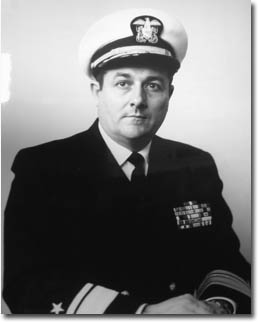
One is a September 29, 1969, memorandum from two of Kissinger's aides, Roger Morris and Anthony Lake, to Captain Rembrandt Robinson (see document 1), who simultaneously directed the Chairman's Staff Group of the Joint Chiefs of Staff at the Pentagon and the National Security Council's military liaison unit in the White House. In these key positions, Robinson played a central role in preparing the Duck Hook plans for attacks on North Vietnam. Through Robinson, moreover, the NSC could tap military planning advice without having to go through Secretary of Defense Melvin Laird, whom Kissinger considered an adversary on Vietnam policy. At the request of the White House, Robinson had prepared a long planning paper for the September Group, in which he had outlined Joint Chiefs of Staff plans to attack North Vietnam. Although this document has not yet been discovered or declassified, it is evident that the planning paper dissatisfied Morris and Lake--and probably Kissinger himself. Their September 29 memo to Robinson requested that he rework the paper thoroughly so that it presented "clearly and fully all the implications of the [Duck Hook] action, should the President decide to do it."
Lake and Morris explained that Robinson's memorandum should "make it clear that" the September Group believed "the President should be prepared to accept two operational concepts: Duck Hook "must be brutal and sustainable" and "self-contained." Regarding the latter requirement, the president would need to decide in advance "the fateful question of how far we will go. He cannot, for example, confront the issue of using tactical nuclear weapons in the midst of the exercise. He must be prepared to play out whatever string necessary in this case."
The second recently declassified document bearing on the nuclear question is dated October 2, 1969, and consists of two cover memoranda from Kissinger to Nixon introducing a long report prepared by NSC staffers on the current state of military planning for Duck Hook (see documents 2 - 2I). The report and its attachments explained that the basic objective of the prospective operation was to coerce Hanoi "to negotiate a compromise settlement through a series of military blows," which would walk a fine line between inflicting "unacceptable damage to their society" and bringing about "the total destruction of the country or the regime, which would invite major outside intervention [by the USSR or the PRC]."
The "concept of [Duck Hook] operations" was "markedly different from previous air and naval operations" against North Vietnam. Nixon, Kissinger, and their planners believed that President Johnson's prior bombing campaigns in the North had been "spasmodic" ones against limited targets associated with the war in South Vietnam (Republic of Vietnam). The Duck Hook operations, by contrast, would direct a sequence of "intense" air and naval attacks of "short duration" against the DRV to achieve a "lasting military and economic effect" and "generate [a] strong psychological impact on Hanoi's leadership." Aerial mining would serve to "quarantine" North Vietnamese ports, while aerial bombing would strike strategic targets heretofore off-limits. Among these was "the levee system in the Red River Delta." The report raised the nuclear issue in an attachment entitled "Important Questions" (see document 2I), which includes this question: "Should we be prepared to use nuclear weapons?"
The references to nuclear weapons in these documents are not substantive enough to settle the issue of whether Nixon or Kissinger specifically requested operations plans involving the use of nuclear weapons against North Vietnam, but they do reveal that in the first year of the Nixon administration some of Kissinger's top advisers believed that the matter of nuclear weapons use should be raised with military planners. This in turn suggests that Lake, Morris, and other September Group members understood that Nixon and Kissinger believed that nuclear weapons were potentially efficacious in the circumstances of late 1969, and that, therefore, their possible use should be given serious consideration in military contingency planning for Duck Hook.
Despite verbal threats directed against Hanoi and NSC planning for Duck Hook, Nixon pulled the plug on the prospective operation sometime between October 2 and October 6. His reasons were many. Secretary of Defense Laird and Secretary of State William Rogers opposed military escalation. Nixon began to doubt whether he could maintain public support for the three- to six-month period that Duck Hook might require. Another concern was that the three major antiwar demonstrations previously scheduled for October 15 and November 13-15--dates coincidentally bracketing the launch of Duck Hook--might additionally erode public confidence in his leadership, expand into larger demonstrations, and blunt the psychological impact of the operation upon Hanoi. In any event, Nixon had recently come to the conclusion that the North Vietnamese had been unmoved in the face of the military threats he had directed against them since July. The other side of this coin was that reduced enemy-initiated fighting in South Vietnam seemed to indicate that Vietnamization might be making progress--a good omen, if true, for it offered Nixon an alternative to Duck Hook. Furthermore, linkage diplomacy had thus far failed to leverage Soviet cooperation vis-à-vis North Vietnam, which had implications for Duck Hook's prospects for success.
After having cancelled Duck Hook, Nixon believed "it was important that the Communists not mistake as weakness the lack of dramatic action on my part in carrying out the ultimatum." In a bizarre move designed to compensate for the aborted Duck Hook operation, he set in motion the "Joint Chiefs of Staff Readiness Test," an elaborate and secret global military exercise carried out between October 13 and 30, 1969, that was tantamount to a nuclear alert. The origins of the idea for the alert may lie in an implicitly nuclear-related question posed in the "Important Questions" attachment to the October 2 report to Nixon on Duck Hook (see document 2I): "What military actions should we undertake concurrently, e.g., should we alert our strategic and/or the various theater forces?"
One of the largest secret military operations in American history, the exercise included a stand-down of training flights to raise operational readiness, Strategic Air Command ground alerts and "maintenance readiness" procedures, heightened readiness postures for overseas air units, stepped-up naval activity, increased surveillance of Soviet ships en route to North Vietnam, and a nuclear-armed B-52 "show-of-force" over Alaska. The purpose of the alert was to "jar" the Soviets and North Vietnamese into making negotiating concessions-perhaps by indicating to them that it was the preparatory phase of Duck Hook and/or a readiness operation in anticipation of Soviet reaction to massive U.S. bombing. The nuclear alert failed to intimidate either the North Vietnamese or the Soviets before the November 1 deadline, but it did have an unintended consequence: it caused the Chinese to go on alert-either in reaction to the U.S. alert or to steps the Soviets might have taken in response to the U.S. alert. (Note 6)
The nuclear option was still on President Nixon's mind in 1972, when he agonized about how to respond to the North Vietnamese Easter Offensive. On April 25, while discussing "Linebacker," the forthcoming U.S. aerial counterattack against the DRV, Nixon told Kissinger about his interest in using "a nuclear bomb" as an alternative to bombing North Vietnam's dike system, which was also a step he strongly favored. A nuclear attack against another target, he assumed, would cause fewer civilian casualties yet make a powerful "psychological" impact on Hanoi and the Soviets. But Kissinger and other advisers and planners had reservations, and in the face of these misgivings, which he may have privately shared, Nixon backed off from the use of nuclear weapons and settled on "merely" the implied threat of their possible use. (Note 7)
Leaders in Hanoi were continually aware of the possibility that the Nixon administration might drop nuclear bombs on North Vietnam, but they nonetheless expressed defiance. At a meeting in Paris on December 4, 1972, for example, Hanoi's chief negotiator, Le Duc Tho, told Kissinger that "we . . . sometimes think that you would also use atomic weapons because during the resistance against the French, Vice President Nixon proposed the use of atomic weapons. . . . If we do not achieve . . . [our] goal in our lifetime our children will continue the struggle. . . . We have been subjected to tens of millions of bombs and shells. The equal of . . . 600 atomic bombs. . . . The simple truth is that we will not submit and reconcile ourselves to being slaves. So your threats and broken promises, we say, that is not a really serious way to carry on negotiations." (Note 8)
As with previous presidential administrations, one or more nuclear-taboo considerations discouraged Nixon and Kissinger from using nuclear weapons in Vietnam. Their infatuation with the madman theory and their launching of a nuclear alert in 1969 suggest, however, that they may have been more serious than previous administrations in considering the use of nuclear weapons. Until more documents become available or former senior officials such as Henry Kissinger or Alexander Haig are willing to answer questions about these events, definitive answers remain elusive.
It appears that the taboo may also have taken hold in the case of the Bush administration's policy toward Iran. According to Seymour Hersh, "in late April [2006], the military leadership . . . achieved a major victory when the White House dropped its insistence that the plan for a bombing campaign include the possible use of a nuclear device to destroy Iran's uranium-enrichment plant at Natanz." Led by General Peter Pace, chairman of the Joint Chiefs of Staff, military and foreign policy advisers pointed to serious gaps in intelligence on Iran's nuclear program and warned of dire political, military, international, and economic repercussions should the administration choose the nuclear option. (Note 9) Whether, as with Vietnam, elements of the historic nuclear taboo prevent the Bush administration from using nuclear weapons in a "preemptive" attack on a presumptive adversary remains to be seen.
We had two bags of grass, seventy-five pellets of mescaline, five sheets of high-powered blotter acid, a salt shaker half full of cocaine, a whole galaxy of multi-colored uppers, downers, screamers, laughers…Also a quart of tequila, a quart of rum, a case of beer, a pint of raw ether and two dozen amyls. The only thing that really worried me was the ether. There is nothing in the world more helpless and irresponsible and depraved than a man in the depths of an ether binge. –Raoul Duke
It is hard to shed anything but crocodile tears over White House speechwriter Patrick Buchanan's tragic analysis of the Nixon debacle. "It's like Sisyphus," he said. "We rolled the rock all the way up the mountain...and it rolled right back down on us...." Neither Sisyphus nor the commander of the Light Brigade nor Pat Buchanan had the time or any real inclination to question what they were doing...a martyr, to the bitter end, to a "flawed" cause and a narrow, atavistic concept of conservative politics that has done more damage to itself and the country in less than six years than its liberal enemies could have done in two or three decades. -Hunter S. Thompson


