Demotruk said:
Rpruett said:
Demotruk said:
Rpruett said:
Demotruk said:
Your problem is that you're projecting your own values onto the general populace, when in truth the general populace simply doesn't share your values, as shown by the fact that many consoles with poor graphics compared to their contemporaries have won generations and continued to sell for years after. |
Contemporaries have never delved into the age of hardware the Wii has. It's uncharted territory.
|
What? The NES was way below it's contemporaries. What's different now?
|
Really? First of all any level of difference in the NES / It's contemporaries was far less then what we see now. Secondly, (NES lasted from Late 1985 to Late 1991 in North America and Thirdly of all who was the NES's technlogically superior opponents?
|
The Amiga and other game-centric PC's were believed to be the future for gaming at that time. They were vastly superior in technology to the NES. Even the other consoles were technologically well ahead of the NES, here's the comparison from wiki:
Comparison
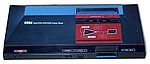
| Name | NES/Famicom | PV-1000 | Super Cassette Vision | Supergame VG 3000 | Sega Master System | Atari 7800 |
| Console |
 |
|
|
|
 |
 |
| Launch prices |
¥14,800
US$199.99
CA$240 |
$139.99 |
N/A |
n/a |
¥24,200
US$199.99 |
US$140.00 |
| Release date |
JP July 15, 1983
US October 18, 1985
|
NA October 1983
CA February 1986
EU 1986
EU / AUS 1987
|
NA 1984
|
JP 1985
|
JP 1985
NA June 1986
EU 1987
|
NA June 1986
EU 1987
|
| Media |
Cartridge and floppy disk (Japan only) |
Cartridge |
Cartridge |
Cartridge |
Cartridge and data card |
Cartridge |
| Top-selling games |
Super Mario Bros. (pack-in), 40.23 million (as of 1999)[4]
Super Mario Bros. 3, 18 million(as of May 21, 2003)[5] |
N/A |
N/A |
N/A |
Unknown |
Unknown |
| Backward compatibility |
None |
None |
Epoch Cassette Vision |
None |
Sega SG-1000 (Japanese system only) |
Atari 2600 |
| Accessories (retail) |
More... |
N/A |
|
|
|
|
| CPU |
Ricoh 2A03 (based on
MOS Technology 6502
1.79 MHz (1.66 MHz PAL)
|
D780C-1 (Z80A)
3.579 MHz |
PD7801G
4 MHz |
6507
1.19 MHz |
NEC 780C (Zilog Z80 clone)
3.57 MHz (3.54 MHz PAL) |
Custom, 6502C (based on
MOS Technology 6502)
1.79 MHz
|
| Memory |
2 KB main RAM
2 KB video RAM
256 bytes sprite RAM
28 bytes palette RAM |
2 KB + 1 KB (character generator) |
128 Bytes |
128 bytes |
8 KB main RAM
16 KB video RAM |
4 KB main RAM |
| Video |
64 sprites (8 per scanline)
256x240 resolution
13 simultaneous colors
53 color palette |
8 colors |
16 colors |
128 colors (16 colors with 8 intensity levels each) |
64 sprites (8 per scanline)
256x240 resolution
32 simultaneous colors
64 color palette |
Unlimited sprites
320x200 resolution
25 simultaneous colors
256 color palette |
| Audio |
Mono audio with:
- Two triangle waves
- One square wave
- One noise generator
- One DPCM channel
- One FM synthesizer (Famicom Disk system, Japan only)
|
|
Mono audio with:
- One tone generator
- One noise generator
- One 1-Bit PCM
|
Mono |
Mono audio with:
- Three square waves
- One noise generator
- 9-channel, 2-operator FM synthesizer (Japan only)
|
Mono audio with:
|
|
Practically all in that list don't even technically fall into the same generation and/or all of them represent a drastic failure of a system for many more ways than the graphics. Nintendo had unparalleled software dominance by forcing timed exclusivity contracts. Otherwise, companies probably would have made games for these other systems. As such it held on longer than it should have most likely. Which is a stark contrast to today. In fact it's almost completely opposite. Most outside third party companies are giving their support to the HD consoles with new IPs, etc.
Sony and Microsoft provide actual competition (Something that NES didn't face until Sega Genesis came out.) Which is really a more comparable example. NES versus a console a generation ahead in terms of hardware. Mind you, shortly thereafter Nintendo released the SNES.