Jay520 said:
miz1q2w3e said:
This is impossible since, like Osc89 said, a vertical stretch is just a horizontal compression.
...Define vertical stretching?
@bolded, what you're describing sounds like shifting...
|
A vertical stretch is only a horizontal compression sometimes. For example, take this graph:
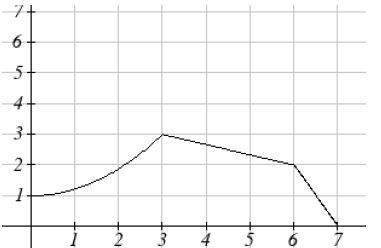
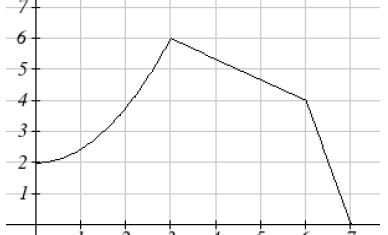
A vertical stretch would look like this: (Stretched by 2)
While a horizontal compression would look like this: (Compressed by 2)
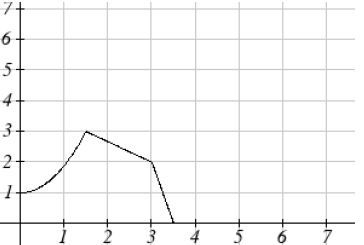
As you can see, the vertical stretch and horizontal compression are different.
By vertical stretching, I mean this:
changing f(x) = (x+2)^2 to f(x) = 2(x+2)^2
While by horizontal stretching, I mean this:
changing f(x) = (x+2)^2 to f(x) = (x/2 + 2)^2..
-
I will come back later to better express myself with graphs.
|
Look at the last two pics. They are practically the same graph now, albeit on different scales. I think you have issue with calling these two graphs "the same"? They just look, and behave, the same.
Your equations also show the relationship between vertical/horizontal scaling. You see the factor in the first equation has an absolute value greater than 1. You call this vertical stretching, but it is at the same time horizontal compression (see the intervals from my previous post).
In the second equation, the factor has an absolute value less than 1, and it results in horizontal stretching, aka vertical compression. Note that dividing by 2 is the same as multiplying by 0.5
Either way, the phenomenon you mentioned in the op WILL happen with vertical scaling, I have no doubt about this.
If you want to see this, just google you equation, i.e. type your equation into google, and see the results. You will notice that it displays the same (looking) graph for each case, it compresses and stretches based on the coefficient, and it flips when going from positive to negative. Do it in different tabs to compare.
y = 5*x^3, y = 1*x^3, y = 0.5*x^3, y = 0*x^3, y = -0.5*x^3, y = -1*x^3, y = -5*x^3
OR if you really think it makes a differece:
y = (x/0.2)^3, y = (x/1)^3, y = (x/2)^3, y = (x*0)^3, y = (x/-2)^3, y = (x/-1)^3, y = (x/-0.2)^3