 Currently Online


I support this very much because the technology is there, and I firmly believe we should put good use to everything we know about nuclear into exploring the universe. It takes 9 months to fly to Mars with the propulsion devices we currently use. Nuclear propulsion can get you to Mars in two weeks..
I urge everyone to sign up. This could change the future of mankind for the greater good.
source: http://www.centauri-dreams.org/?p=26152
It doesn't matter what part of the world you're from, I believe anyone can sign the petition as long as you create a White House account.
--------------------------------------------------------------------------------------------------------------------------------------------------
Article explaining more:
Tim Folger and Les Johnson (NASA MSFC) stood last summer in front of a nuclear rocket at Marshall Space Flight Center in Huntsville, Alabama. Johnson’s work in advanced propulsion concepts is well known to Centauri Dreams readers, but what he was talking to Folger about in an article for National Geographic was an older technology. NERVA, once conceived as part of the propulsion package that would send astronauts to Mars, had in its day the mantle of the next logical step beyond chemical propulsion. A snip from the story:
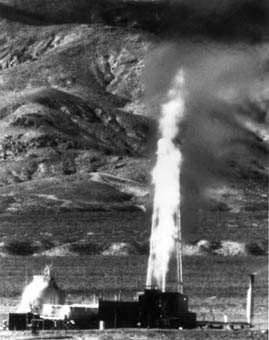
Johnson looks wistfully at the 40,000-pound engine in front of us… “If we’re going to send people to Mars, this should be considered again,” Johnson says. “You would only need half the propellant of a conventional rocket.” NASA is now designing a conventional rocket to replace the Saturn V, which was retired in 1973, not long after the last manned moon landing. It hasn’t decided where the new rocket will go. The NERVA project ended in 1973 too, without a flight test. Since then, during the space shuttle era, humans haven’t ventured more than 400 miles from Earth.
I’m looking forward to getting back to Huntsville and seeing Les, as well as a number of other friends in the interstellar community, at the 2nd Tennessee Valley Interstellar Workshop, coming up this February, where it may be that NERVA will have a place in the discussion of how we go about building a system-spanning civilization. You’ll want to give Folger’s article a look for comments not only from Les but Freeman Dyson and Andreas Tziolas (from the Icarus team), as well as Elon Musk, the 100 Year Starship’s Mae Jemison, and NASA’s Mason Peck.
Image: NERVA nuclear rocket being tested. (Smithsonian Institution Photo No. 75-13750).
In fact, there are a number of issues presented here that I’ll want to get back to later, but I can’t cover the rest of the story today. I’m all but out the door for a brief but intense period of Tau Zero work that will leave me no time to keep up regular posts here or even to moderate comments. More about this later, and more about Folger’s essay as well, and please bear with me through the temporary slowdown. Things should get back to normal by mid-day Thursday.
Speaking of NERVA, though, I’ll leave you with an interesting petition Gregory Benford alerted me to with regard to the development of nuclear thermal rockets, one that calls for an effort to:
Harness the full intellectual and industrial strength of our universities, national laboratories and private enterprise to rapidly develop and deploy a nuclear thermal rocket (NTR) adaptable to both manned and un-manned space missions. A NTR (which would only operate in outer space) will jump-start our manned space exploration program by reducing inner solar system flight times from months to weeks. This is not new technology; NTRs were tested in the 1960s (President Kennedy was a guest at one test). The physics and engineering are sound. In addition to inspiring young Americans to careers in science, technology, engineering and mathematics, a working NTR will herald a speedy and economical expansion of the human presence in the cosmos.
Going significantly beyond the Moon demands advances in propulsion of the kind that nuclear thermal rockets can deliver. Getting NERVA concepts out of mothballs and updating them with modern materials are necessary steps as we push out into the Solar System.