






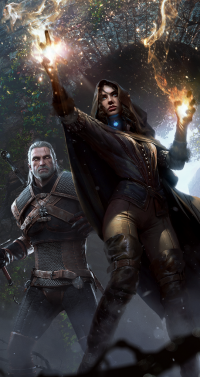


nothing really new but still interesting
If you've never played DotA, also known as Defense of the Ancients, trying to figure out how it all works can be confusing. This is especially true if you're hopping in with people who've been playing for years and have a fondness for lashing out at those less knowledgeable. It's a game type that grew out of Blizzard's Warcraft III community and has enjoyed widespread popularity since, spurring other developers to produce their own versions like Riot Games' League of Legends. Now that Valve's making a sequel, I think it's safe to say the spotlight on the sub-genre will be brighter than ever.
To prevent confusion over capitalization, I'm just going to write Dota for the rest of the article. According to Valve's senior project manager Erik Johnson, "When people talk about DotA they say Dota. It's kind of a word, at this point. For us it's just a word, or a brand name."
 The game works sort of like Diablo mixed with a competitive real-time strategy game mixed with a game of tug of war. At the beginning of a match players are split into two teams and the ultimate objective is to destroy the other team's base. To do so you'll control one unit, a hero, who utilizes a handful of special attacks and spells. The abilities differ wildly between the huge number of heroes, meaning you can head into battle as a tank, a damage dealing caster, or any number of other variations. Knowing your hero and how to effectively work with your teammates is key to victory.
You'll also need to manage streams of automated creatures, called creeps. These beasts spawn from both bases at regular intervals and it's up to you to fight alongside and through skillful play turn the tide of battle, eventually scything your way into the heart of the enemy base for the win. You'll also be gaining gold, experience and leveling up the whole time, giving you the opportunity to power up hero skills and also buy new equipment and items to further augment your abilities. It's a lot to process all at once.
For the sequel, Valve brought on Dota curator IceFrog to lead design. "It was apparent really early on that whoever was behind doing all the work on [Dota] was a really smart game designer," says Johnson. "I emailed IceFrog and asked him to come out here and we just wanted to meet him and pick his brain a little bit and we hired him on the spot…It was clear as day that he knew how to build games really well."
At Valve, the goal is to avoid fiddling too much with the underlying formula. "There's the core gameplay," says Johnson, "the actual game rules for how you play Dota. We'd be pretty hard-pressed to improve on that. I feel like IceFrog's done such a good job at that and it's something that his level of experience is so much higher with that community that it probably doesn't make a lot of sense for us to go in and change a lot of that, so the core gameplay is the same."

 @TheVoxelman on twitter


