
By using this site, you agree to our Privacy Policy and our Terms of Use. Close

Forums - Microsoft - Microsoft and LG partnership gives you 3D gaming on Xbox360

binary solo said:
I haven't read all the discussion so maybe it's been addressed already, but how does partnering with one TV manufacturer on 3D work? Does that mean there are going to be problems for people who own 3D TVs other than LG TVs and would like to do 3D gaming on their 360?

I have some vague recollection that Sony seemed to be implying that their PS3 3D will only be compatible with Sony TVs which is sucky. Then I saw that GT5 trailer where the PD guy was saying that they're busy making GT5 compatible with all 3D formats so it will play on all 3D TVs.

I'm really not liking the way 3D TV is starting off in such a fragmented way, and in the end it's detrimental to the adoption of 3D, in both TV and gaming.


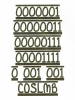
Everything will work with everything. Here is the 3D support formats found in a 2010 50 inch Samsung plasma (cheapest hdmi 1.4 3D TV on the market now)...straight from the manual. It supports every 3D format available. There is nothing PS3 or 360 can throw at it that it won't support.


Around the Network
disolitude said:
binary solo said:
I haven't read all the discussion so maybe it's been addressed already, but how does partnering with one TV manufacturer on 3D work? Does that mean there are going to be problems for people who own 3D TVs other than LG TVs and would like to do 3D gaming on their 360?

I have some vague recollection that Sony seemed to be implying that their PS3 3D will only be compatible with Sony TVs which is sucky. Then I saw that GT5 trailer where the PD guy was saying that they're busy making GT5 compatible with all 3D formats so it will play on all 3D TVs.

I'm really not liking the way 3D TV is starting off in such a fragmented way, and in the end it's detrimental to the adoption of 3D, in both TV and gaming.


Everything will work with everything. Here is the 3D support formats found in a 2010 50 inch Samsung plasma (cheapest hdmi 1.4 3D TV on the market now)...straight from the manual. It supports every 3D format available. There is nothing PS3 or 360 can throw at it that it won't support.

Good to know, for Samsung owners at least.

So, it still begs the question why MS is / needs to partner with a particular TV manufacturer? As part of their 3D strategy. Either 3D noobs like me are going to be all confused and think their shiny new non LG 3D TV won't work with 360 3D gaming, or MS are going to have to go out and tell everyone that 3D on 360 will work on all TVs so you don't really need to run out and buy a LG TV. Which of course isn't exactly going to help set LG 3D TV sales alight.

So it comes down to TV + console hardware bundling, nothing more than that?


“The fundamental cause of the trouble is that in the modern world the stupid are cocksure while the intelligent are full of doubt.” - Bertrand Russell

"When the power of love overcomes the love of power, the world will know peace."

Jimi Hendrix


I don't care who spear-heads it, I'm not interested in 3D.


Actually there are four different kinds of “formats”.
1) green/red
2) polarized
3) active shutter
4) screen masks

Number 1 is kinda the cheapest form in which you wear a green/red glasses. These will often also be included if you buy 3D DVD’s at this moment. The 3D effect is made by displaying green lines and red lines on the screen which will be filtered by the corresponding color in the glasses.

Number 2 is the one in cinema’s and the one that LG and other manufacturers use. In this case the 3D effect is made with using vertical and horizontal lines which are filterd by the glasses to the corresponding eye.

Number 3 is the one SONY uses and requires active shutter glasses which have to sychronize with your TV. The 3D effect in this case is made by displaying one frame for the left eye and the next frame is for the right eye and so on…. (Thats why one of the Bravia’s is 400Hz (200Hz per eye)).

Number 4 is not really used right now, because the technology is way from perfect. It requires no glasses, but you have to be exactly in front of your screen for it to work. The 3D effect is made by a mask over your screen, which will divert the light intended for the one eye to that specific eye. (That's why you have to sit in the center of the screen.)

The problems with number 1 and 2 is that you have to have an extra bright picture to be able to get the 3D effect and the glasses (especially the polarized) will filter the normal light around you too, which is the main source of the headaches some people get from watching that. Numbers 3 and 4 have the complete light spectrum available without affecting the 3D effect, which gives you more colordepth and more contrast.

Some of LG’s TV’s use passive (polarised) whereas other use active. Active is the ONLY way to get Full HD per eye. Either of which the TV will decode the PS3’s 3D imagery and output it how the TV likes (active or passive)
ALL of Sony’s 3D TV’s use active shutter.


DukeOfLuxembourg said:

Actually there are four different kinds of “formats”.
1) green/red
2) polarized
3) active shutter
4) screen masks

Number 1 is kinda the cheapest form in which you wear a green/red glasses. These will often also be included if you buy 3D DVD’s at this moment. The 3D effect is made by displaying green lines and red lines on the screen which will be filtered by the corresponding color in the glasses.

Number 2 is the one in cinema’s and the one that LG and other manufacturers use. In this case the 3D effect is made with using vertical and horizontal lines which are filterd by the glasses to the corresponding eye.

Number 3 is the one SONY uses and requires active shutter glasses which have to sychronize with your TV. The 3D effect in this case is made by displaying one frame for the left eye and the next frame is for the right eye and so on…. (Thats why one of the Bravia’s is 400Hz (200Hz per eye)).

Number 4 is not really used right now, because the technology is way from perfect. It requires no glasses, but you have to be exactly in front of your screen for it to work. The 3D effect is made by a mask over your screen, which will divert the light intended for the one eye to that specific eye. (That's why you have to sit in the center of the screen.)

The problems with number 1 and 2 is that you have to have an extra bright picture to be able to get the 3D effect and the glasses (especially the polarized) will filter the normal light around you too, which is the main source of the headaches some people get from watching that. Numbers 3 and 4 have the complete light spectrum available without affecting the 3D effect, which gives you more colordepth and more contrast.

Some of LG’s TV’s use passive (polarised) whereas other use active. Active is the ONLY way to get Full HD per eye. Either of which the TV will decode the PS3’s 3D imagery and output it how the TV likes (active or passive)
ALL of Sony’s 3D TV’s use active shutter.


Whoa Jimmy...a lot of the stuff here is half true.

1. red /green

2. polarized (passive shutter glasses) - there are 2 types of polarized methods. Liner and circular. Linear provides the best 3D. LG is doing a passive glasses display using circular method and are only TV company doing so, but they also have active shutter display.

3. Active shutters - within active shutter diplays you can have 6 methods of 3D.

Sidy by side, top and bottom, Interlaced, vertical stripe, checkerboard and frequency. All have their benefits but only frequency method can do 1080p (and needs hdmi 1.3 or 1.4). Every major manufacturer is making these and selling you shutter glasses for 200 bucks a pop.

4. face masks...tech isnt available for sale.

Both passive and active methods are able to display 1080p resolution to each eye and each has their own advantages. Passive TV displays can not do 1080p per eye but DLP projectors can...

TV companies are pushing active displays more as they are going to make most money with those. However nothing beats polarized theater setups.  Currently the best quality home 3D can be achieved with linear passive method...using 2 DLP 1080p projectors. A dual projector rig at home is even brighter than the cinema and has virtually no ghosting. All of these new active shutter LCD/Plasma displays will have slight ghosting.


Around the Network
binary solo said:
I haven't read all the discussion so maybe it's been addressed already, but how does partnering with one TV manufacturer on 3D work? Does that mean there are going to be problems for people who own 3D TVs other than LG TVs and would like to do 3D gaming on their 360?

I have some vague recollection that Sony seemed to be implying that their PS3 3D will only be compatible with Sony TVs which is sucky. Then I saw that GT5 trailer where the PD guy was saying that they're busy making GT5 compatible with all 3D formats so it will play on all 3D TVs.

I'm really not liking the way 3D TV is starting off in such a fragmented way, and in the end it's detrimental to the adoption of 3D, in both TV and gaming.

the partnership is only to publicize and to get people to know about that it exists.


Samsung partnered with some studios

Sony partnered with ESPN,IMAX and their own  media content


LG had nothing and at the same time MW wanted to lower Sony publicized 3D features as exclusivity.


Any console or media can be converted 3D through the new 3DTV's.But to be known is another thing.


And i never heard Sony saying only there TV's will be compatible with PS3.Sony were the first to announce 3DTV last year so it could be that they said it that time when other companies didn't announce their plans